




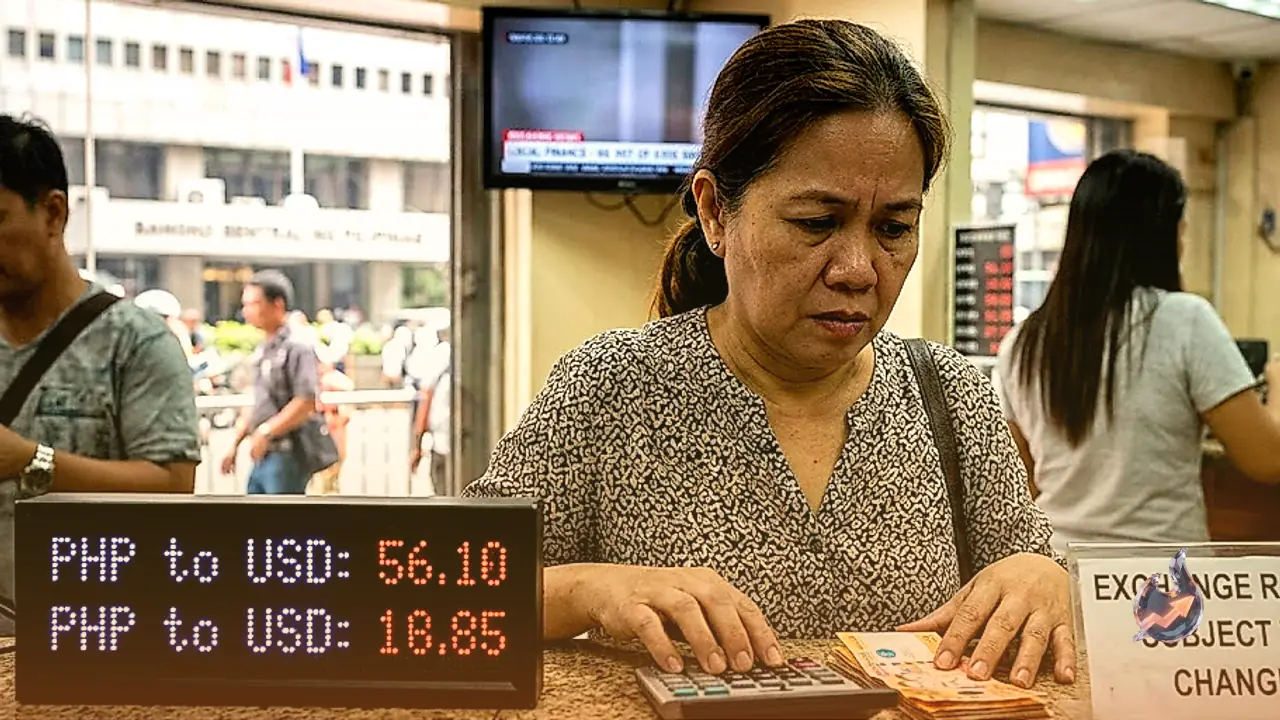

















The Philippine Peso continues to underperform relative to its Asian regional peers following a third consecutive 25 basis points interest rate increase by the Bangko Sentral ng Pilipinas, which brought the benchmark policy rate to 5.00%. Elias Haddad of Brown Brothers Harriman observes that despite the central bank characterizing its rate adjustment as a preemptive measure, monetary policy appears to be lagging behind market reality. With inflation persisting above the central bank's maximum tolerance threshold of 4%, negative real interest rates continue to exert downside pressure on the local currency. Concurrently, global currency and commodity markets are exhibiting cautious trading dynamics ahead of scheduled speeches by Federal Reserve Chair Kevin Warsh and key US economic data releases.
Bangko Sentral ng Pilipinas Delivers Third 25 bps Rate Increase
The latest monetary policy decision by the Bangko Sentral ng Pilipinas saw the central bank raise its key overnight reverse repurchase facility rate by 25 basis points to 5.00%. This move marks the third consecutive rate hike delivered by the institution in its ongoing attempt to manage domestic price pressures. The policy outcome aligned with the expectations of the majority of market participants surveyed prior to the announcement.
In a Bloomberg survey of 25 market analysts, 20 had correctly forecast a 25 basis point rate increase, while the remaining 5 analysts anticipated that the central bank would opt to keep interest rates unchanged. The official policy statement described the rate hike as a preemptive monetary action designed to mitigate upside inflation risks, specifically citing potential price surges stemming from severe El Niño weather conditions on agricultural products as well as impending wage adjustments across the domestic economy.
Elias Haddad Analysis: Monetary Policy Behind the Curve
Analyst Elias Haddad of Brown Brothers Harriman offers a contrasting evaluation of the central bank's policy stance. Haddad contends that with headline inflation already trending above the upper limit of the central bank's official 4% target range, the recent rate increase is more reactive than preemptive. Consequently, monetary policy remains behind the curve in addressing underlying inflationary dynamics within the economy.
As financial markets continue to price in expectations of additional monetary tightening, negative real interest rates remain a key headwind for the Philippine Peso. This interest rate environment has constrained the currency's attractiveness, causing PHP to lag behind neighboring Asian currencies in spot market performance.
Foreign Exchange Dynamics: GBP/USD and EUR/USD Trends
In broader foreign exchange markets, major currency pairs displayed volatile yet range-bound price action. GBP/USD initially tumbled to fresh six-day lows before reversing direction to gather upside momentum. On Thursday, the currency pair was trading just below the 1.3600 technical barrier. The broader US Dollar maintained a supportive backdrop as investors adopted a cautious stance ahead of major economic events scheduled for Friday.
Similarly, EUR/USD fluctuated around the 1.1650 handle following a temporary dip toward the 1.630 region earlier in the session. The euro's indecisive movement reflected overall hesitation in the US Dollar index as traders prepared for the release of the annual Non-Farm Payrolls revisions and the forthcoming Jackson Hole address.
Commodities Breakdown: Gold Nears $4,600 as Diesel Crack Spread Surges
Precious metals saw moderate recovery efforts during Thursday's trading session. Gold partially recovered from its Wednesday decline, advancing toward the $4,600 per troy ounce mark. Despite the modest uptick, gold prices remain somewhat constrained amidst a broadly firm US Dollar and cautious investor sentiment across global asset classes.
In contrast to flat price action in crude oil futures, middle distillate markets registered record-breaking movements. The US diesel crack spread, which measures the differential between ultra-low sulphur diesel futures and WTI crude oil, surpassed $100 per barrel for the first time in history. The spread touched an intraday record high of just over $102.00 per barrel, underscoring severe supply tightness in refined fuel markets even as crude oil prices appear relatively stable.
Markets Turn Focus to Fed Chair Kevin Warsh at Jackson Hole
Market participants worldwide are shifting their attention to the upcoming Jackson Hole Symposium, where Kevin Warsh is set to deliver his inaugural address as Federal Reserve Chair on Friday. Financial markets are looking beyond basic projections regarding whether the Fed will adjust interest rates at its September policy meeting.
Investors are seeking long-term clarity on the Federal Reserve's macroeconomic outlook, inflation trajectory, and balance sheet guidance. The combination of the NFP annual benchmark revisions and Fed Chair Warsh's speech is expected to dictate near-term direction across US Dollar pairs, Treasury yields, and broad market sentiment.