





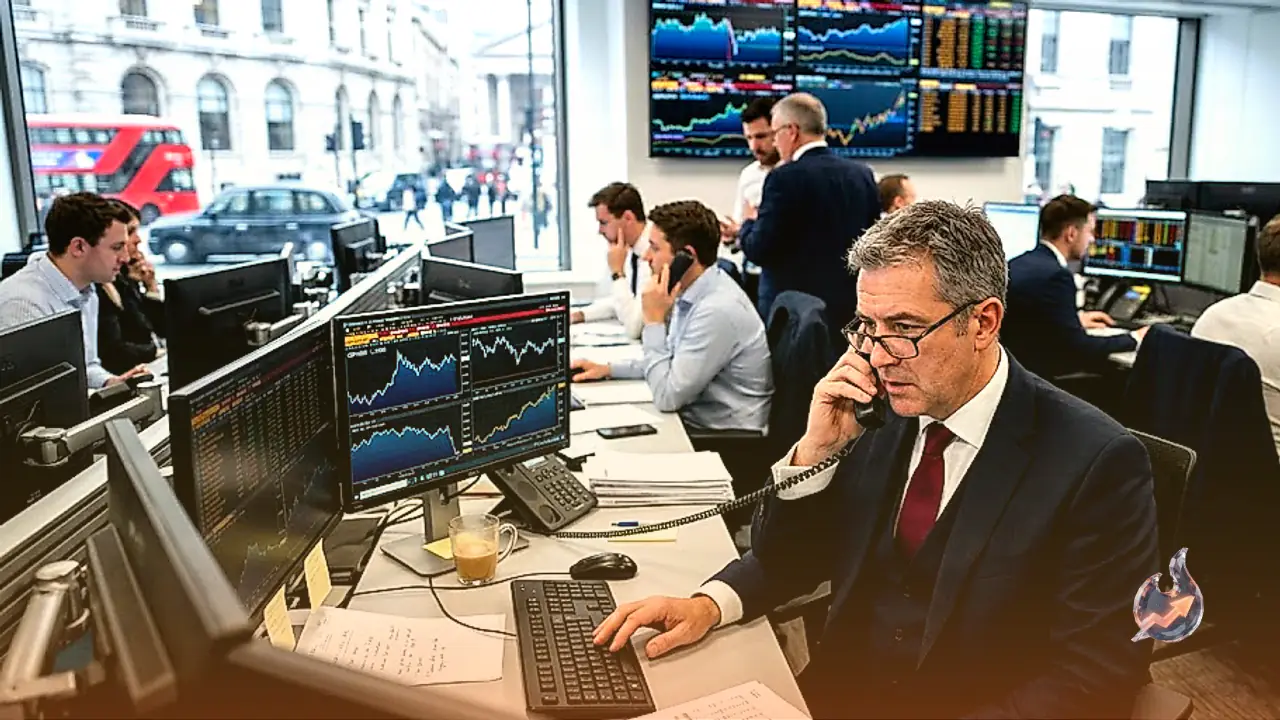


















The British Pound (GBP/USD) continues to trade sideways in a narrow consolidation range around the 1.3500 key psychological level. Despite extended testimony from Bank of England officials and the United Kingdom selling 30-year gilts at a historic 5.82% yield—the highest borrowing cost recorded since 1998—foreign exchange markets have displayed minimal immediate reaction. Live market data places the GBP/USD currency pair at 1.3500, holding well within its 52-week trading bounds of 1.3000 to 1.3800. FX participants are closely monitoring upcoming gross domestic product and inflation metrics to establish the next structural directional push for Cable.
Bank of England Rate Expectations and Monetary Policy Divergence
The Parliamentary hearing examined the July Monetary Policy Report alongside the central bank's decision to maintain the Bank Rate at 3.75%. The official voting record from the July meeting revealed a distinct split, with one policymaker voting to increase interest rates while three members voted to keep rates unchanged, a breakdown that has remained on the public record since the minutes were released. During the session, the Governor informed committee members that inflation risks in the UK remain tilted to the upside, though he affirmed that the economy is not on the brink of a recession. Crucially, the Governor urged the committee to dismantle the market assumption that the Bank operates on an unconditional trajectory to hike borrowing costs.
Interest rate swap markets are currently pricing in a full 25-basis-point rate hike by December, followed by an additional quarter-point increase by March 2027. However, this aggressive market curve contrasts sharply with broad economic consensus. In a comprehensive survey of 65 economists conducted between September 4 and September 8, all 65 respondents anticipate the Bank of England will hold the benchmark rate steady at its upcoming September 17 meeting. Furthermore, 57 of the 65 polled economists expect no further rate increases for the remainder of the calendar year. While the tone of the testimony was interpreted by market tracking tools as hawkish due to persistent inflation warnings, the central bank's pushing back against unconditional rate paths highlights an ongoing friction between market pricing and monetary policy guidance.
Record Gilt Auction Yields and UK Fiscal Headroom Pressures
The UK government bond market reflected rising long-term borrowing costs on Tuesday as debt issuance met heavy market pricing. Great Britain issued a 30-year gilt at a yield of 5.82%, marking the costliest government bond sale since modern record-keeping began in 1998. Yields on 30-year sovereign debt reached levels not observed in over two decades, signaling heightened investor compensation demands for holding long-duration British paper.
Independent fiscal analysis from Bloomberg Economics indicates that the UK government's available fiscal headroom ahead of the scheduled October 28 Budget has contracted significantly. Fiscal buffer estimates have shrunk to approximately half of the £23.6 billion headroom figure reported during the spring announcement. Although the Chancellor re-emphasized commitments to fiscal discipline and transparent spending controls during a major policy address on Monday, Tuesday's bond syndication prices demonstrated that fixed-income investors remain highly sensitive to UK sovereign debt issuance volumes and fiscal outlooks.
Friday Economic Calendar: GDP, Inflation Expectations, and CPI Data
The upcoming Friday trading session presents a crucial sequence of macroeconomic data releases for both sides of the GBP/USD currency pair. Early in the European session at 06:00 GMT, July UK Gross Domestic Product (GDP) figures are scheduled for release, with consensus forecasting flat growth (0.0%) following a 0.3% expansion in the previous reading. Simultaneously, industrial production and manufacturing output figures are expected to show modest gains of 0.1% each, recovering from prior contractions of 0.2% and 0.5% respectively. At 08:30 GMT, the Bank of England will release its consumer inflation expectations survey, which previously printed at 4.0%.
The focus will shift later in the session to the August Consumer Price Index (CPI) release at 12:30 GMT. Monthly headline inflation is projected to pick up to 0.4% from 0.1% previously, while the annual headline CPI rate is expected to remain steady at 3.4%. Core CPI, which excludes volatile energy and food components, is forecasted to cool slightly to 2.4%. Crucially, the UK's domestic data releases land six and a half hours prior to the US economic reports that directly shape global currency valuations and Fed interest rate expectations.
GBP/USD Technical Analysis, Support Levels, and Market Bias
From a technical analysis perspective, the 1.3550 resistance line continues to cap upside price action for GBP/USD. During the parliamentary testimony, intraday spot prices briefly breached 1.3550 before retreating beneath the hurdle within the hour. Above 1.3550, key resistance sits at 1.3600, a level that yielded during late August, followed by the August peak just below 1.3700, which serves as the macro ceiling for the current consolidation range.
On the downside, the 1.3500 handle represents a critical technical floor that the currency pair has defended over the past four consecutive trading sessions. The 50-day Exponential Moving Average (EMA) sits immediately below this psychological support. A sustained breakdown below 1.3500 opens clear path down toward 1.3450, with the 200-day EMA positioned near 1.3400 offering broader structural support.
The near-term technical bias remains short-term bearish while price action remains capped below 1.3550. Over the last four sessions, GBP/USD has consolidated horizontally while the daily Stochastic Relative Strength Index (Stoch RSI) collapsed from overbought territory above 90 to near 30. Live technical indicators show the 14-day RSI at 52 (neutral zone) and MACD hovering at 0.00. Event risk heading into Friday is asymmetric: a hotter-than-expected US CPI print could reinforce Federal Reserve rate hike expectations and trigger selling pressure on Cable, whereas a cooler reading could trigger USD unwinding. A daily close above 1.3550 would invalidate the bearish bias, whereas a breakdown under 1.3500 exposes 1.3450 as the primary downside target.
The History and Structure of the British Pound (GBP)
The British Pound Sterling (GBP) holds the distinction of being the world's oldest currency still in active use, originating in 886 AD. Serving as the official legal tender of the United Kingdom, Sterling ranks as the fourth most traded currency in the global foreign exchange market. According to 2022 global triennial survey data, the Pound accounts for approximately 12% of all daily FX transactions, representing an average daily volume of $630 billion.
In foreign exchange trading, the primary currency pair for Sterling is GBP/USD, historically termed 'Cable' in reference to the transatlantic telegraph cable that linked market quotes between London and New York. Cable accounts for 11% of global FX turnover. Other high-volume Sterling pairs include GBP/JPY, known in trading circles as the 'Dragon' (representing 3% of market turnover), and EUR/GBP (2%). The Bank of England (BoE), established as the nation's central bank, serves as the sole issuing authority for Pound Sterling banknotes.
Central Bank Mandate and Fundamental Value Drivers
The primary fundamental determinant of the Pound Sterling's exchange value is the monetary policy executed by the Bank of England's Monetary Policy Committee. The BoE operates under a statutory mandate to maintain price stability, targeting a annual consumer price inflation rate of 2.0%. The central bank's primary operational tool is adjusting the benchmark Bank Rate. When inflationary pressures escalate above target, the BoE implements rate increases to tighten credit conditions and curb consumer spending. Higher interest rates typically appreciate GBP by increasing yield differentials and attracting foreign capital inflows.
Conversely, when inflation decelerates below target or economic growth stalls, the central bank considers interest rate reductions to lower borrowing costs and stimulate economic investment. Beyond interest rate policy, key macroeconomic indicators including Gross Domestic Product (GDP), Purchasing Managers' Index (PMI) metrics, labor market statistics, and the national Trade Balance significantly influence Sterling valuation. A positive trade balance—reflecting higher demand for export goods—drives structural currency appreciation, whereas trade deficits or sluggish economic indicators tend to weigh on GBP exchange rates.
Broader Foreign Exchange Market Dynamics and Commodity Trends
In adjacent foreign exchange markets, AUD/USD traded above the 0.7200 level during the Asian session, hovering near its highest points since mid-May. Broad-based weakness in the US Dollar, driven by strength in the Japanese Yen, provided support for the Australian currency alongside rising expectations of Reserve Bank of Australia (RBA) monetary tightening, though mixed trade balance data out of China capped further upside gains. Meanwhile, USD/JPY fluctuated around 154.00 during the American session, recovering from an earlier six-month low below 153.00 as strong Japanese wage growth figures and Q2 GDP revisions bolstered market expectations for Bank of Japan (BoJ) policy normalization.
In global commodity markets, while crude oil futures displayed relative stability, distillate markets experienced historically high volatility. The US diesel crack spread—the market premium of ultra-low sulfur diesel futures over West Texas Intermediate (WTI) crude—surpassed $100.00 per barrel for the first time in history, recording an intraday high of $102.00 per barrel.