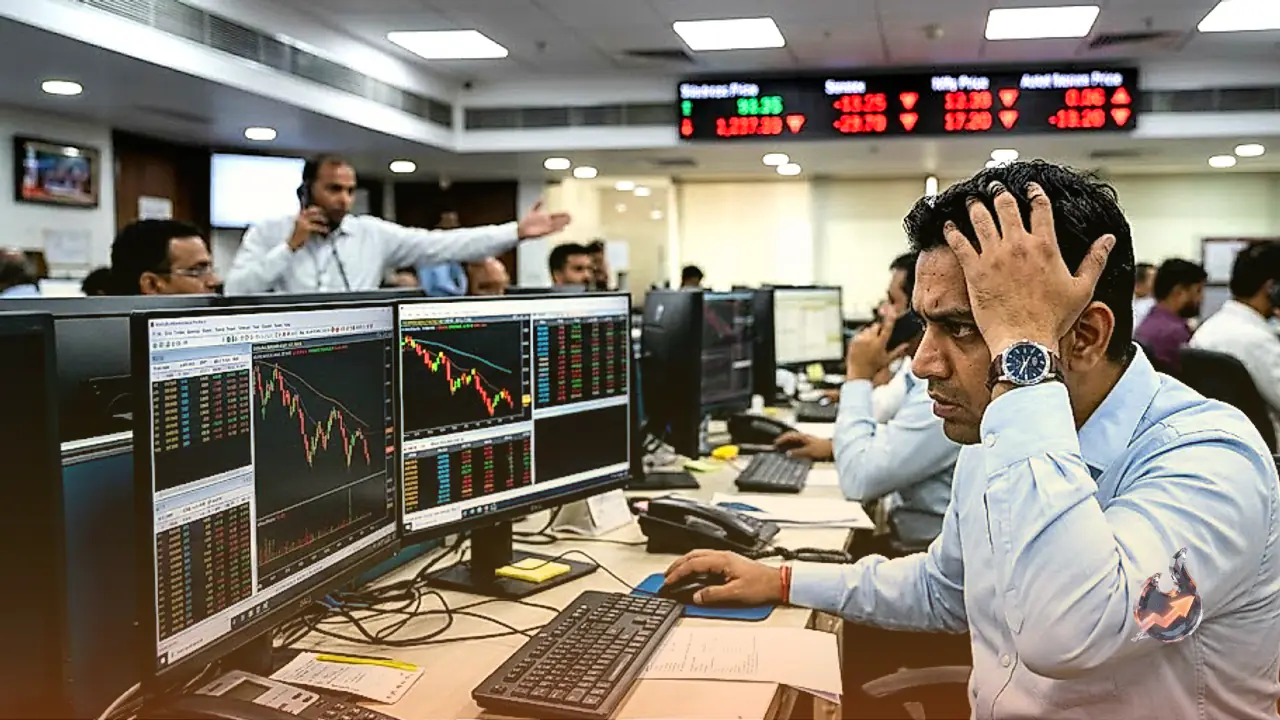

























The global financial landscape is currently navigating a complex maze of inflationary pressures, geopolitical tensions, and shifting monetary policies, with the South African Rand taking center stage. Market strategists at Societe Generale are closely monitoring the economic developments in South Africa, forecasting an imminent and decisive 25 basis point interest rate hike. This anticipated monetary tightening comes on the heels of a significant inflation surprise in June, which has sent ripples through the currency markets. At the same time, major currency pairs like the British Pound and Euro, alongside crucial commodities such as oil and gold, are reacting sharply to international conflicts and central bank meetings. Even the cryptocurrency sector is flashing early signs of a structural bottom.
South African Inflation Dynamics and SARB's Dilemma
The primary catalyst for the expected rate hike in South Africa is the unsettling trajectory of consumer prices. The headline Consumer Price Index (CPI) unexpectedly accelerated to 5.0% year-over-year in June. Accompanying this headline figure was a concerning rise in core inflation, which climbed to 4.1%. This data forcefully suggests that the inflationary pressures gripping the nation are no longer merely confined to the volatile energy sector. In fact, this recent print marks the fourth consecutive month that headline inflation has increased, completely reversing the progress seen when rates touched the South African Reserve Bank's (SARB) lower target boundary of 3% back in February.
Strategists point out that medium-term inflation expectations have consistently drifted higher in recent months. The surge in fuel prices has been a significant contributor, deeply affecting transportation and logistics costs across the nation. But it is the upside surprises in core service sectors that are truly alarming policymakers. Costs associated with rent, which form a massive part of consumer spending, along with healthcare services, hotels, and restaurants have all exceeded market forecasts. This broad-based price acceleration indicates that inflation is becoming entrenched in the domestic economy.
Geopolitics and the End of the Temporary Shock Narrative
These broadening price increases have heavily reinforced concerns regarding second-round inflation effects and the overall persistence of price instability. The situation is further complicated by the expansion of the Gulf war, which has introduced a new layer of macroeconomic uncertainty and strengthened the underlying case for further monetary tightening. These combined factors effectively negate the recent suggestions made by SARB Governor Kganyago, who had previously posited that the current inflation shock could ultimately prove to be a temporary phenomenon. Consequently, financial markets will be intensely focused on the central bank's upcoming assessment of inflation expectations. Traders and economists alike will be scrutinizing the policy statement to see whether policymakers explicitly signal that additional rounds of monetary tightening may be required as soon as September.
Technical Outlook for the USD/ZAR Currency Pair
In the foreign exchange market, a hawkish rate hike delivery by the central bank could trigger a significant technical breakdown for the US Dollar against the South African Rand. Analysts highlight that such a move could cause the critical 50-day moving average support level, situated around 16.4042, to give way completely. Current live market data corroborates this precarious positioning. As of the close-bell session, the USD/ZAR pair is currently trading at 16.41, down 0.30% from its previous close of 16.46. The pair remains confined within its broad 52-week range of 15.63 to 18.07.
The technical indicators suggest a looming shift, with key pivot levels currently resting at 16.40. First and second support levels are marked at 16.35 and 16.29, respectively, while upside resistance sits at 16.46 and 16.51. The 50-day Exponential Moving Average (EMA) sits exactly at 16.41, with the 20-day EMA at 16.40 and the 200-day EMA much higher at 16.69. The price action confirms an entrenched long-term downtrend, highlighted by a stark death cross where the 50-day EMA remains firmly below the 200-day EMA. Furthermore, the Average Directional Index (ADX) stands at a weak 19, signaling a range-bound market lacking strong trend conviction. The Stochastic oscillator shows the fast line at 58 trailing the signal line at 69, while the Average True Range (ATR) sits at 0.17, defining the daily volatility buffer. The price is resting near the midpoint (16.39) of the Bollinger Bands (16.20 to 16.57), waiting for a fundamental macroeconomic catalyst to define its next major directional move.
Broader Forex Market Trends: GBP/USD and EUR/USD
Beyond the South African Rand, the broader foreign exchange arena is exhibiting its own distinct patterns during Thursday's European trading hours. The British Pound's recent recovery attempts have stalled, with the GBP/USD exchange rate stubbornly staying below the crucial 1.3400 threshold. The upside potential for the Sterling remains firmly capped by a modest, yet persistent, bounce in the US Dollar across the board. Furthermore, cooler-than-expected inflation data out of the United Kingdom has fundamentally altered the interest rate outlook. This softer data has reduced the urgency for aggressive monetary tightening by the Bank of England, stripping the Pound of a key supportive pillar. Simultaneously, escalating geopolitical tensions in the Middle East have driven global capital toward safer haven assets, further pressuring riskier currency profiles.
Conversely, the Euro is holding onto its upbeat momentum for a second consecutive day. The EUR/USD pair is trading comfortably above the 1.1400 handle during the European session. The shared currency remains well-supported as traders position themselves ahead of the highly anticipated European Central Bank's interest rate decision. Market participants will be keeping a close eye on the accompanying press conference for any subtle hints or forward guidance regarding further rate hikes in the Eurozone.
Commodities: Crude Oil Surges as Gold Faces Headwinds
In the commodities sector, geopolitical friction is dictating price action. US crude oil prices have climbed aggressively to reach a fresh six-week high, pushing toward the $90 per barrel mark. This surge is directly attributed to a further escalation of tensions between the United States and Iran. The rising cost of crude oil is simultaneously fueling global inflation fears, which in turn bolsters market expectations for additional interest rate hikes by the US Federal Reserve.
These hawkish bets on the Federal Reserve's monetary policy path are weighing heavily on precious metals. Gold is currently holding a pullback near the massive $4,100 round figure during Thursday's European session. Because gold yields no interest, the prospect of higher interest rates diminishes its appeal compared to yield-bearing assets, keeping the yellow metal under persistent pressure despite the underlying geopolitical risks.
Cryptocurrency Market: Maturation and Bitcoin's Strength
The digital asset landscape is also providing compelling narratives, with signs of a potential market shift emerging. According to Bitwise Chief Investment Officer Matt Hougan, the next major cryptocurrency bull market could be driven by the deepening convergence between blockchain-based financial infrastructure and the traditional finance sector. In a report published late Tuesday, Hougan argued that the crypto sector might be showing early, yet significant, signs of reaching a macro market bottom. He highlighted a striking divergence in performance metrics: Bitcoin has managed to gain a robust 9% since July 1, showing remarkable resilience even as the tech-heavy NASDAQ 100 index experienced a notable 6% decline over the same period.
Altcoin Technicals: Ripple and Stellar Consolidation
While Bitcoin shows strength, major alternative cryptocurrencies like Ripple and Stellar are trading with marked caution as both tokens hover tightly around key technical levels. XRP is currently locked in a battle, testing stiff resistance at its 50-day Exponential Moving Average. Meanwhile, XLM continues to consolidate its price action around the vital $0.187 support zone. Market analysts note that mixed derivatives data for these assets carries a slight bearish tilt. This underlying data suggests that derivatives traders remain highly cautious in the current environment, keeping the next major directional move for these altcoins highly uncertain until a clear catalyst emerges.