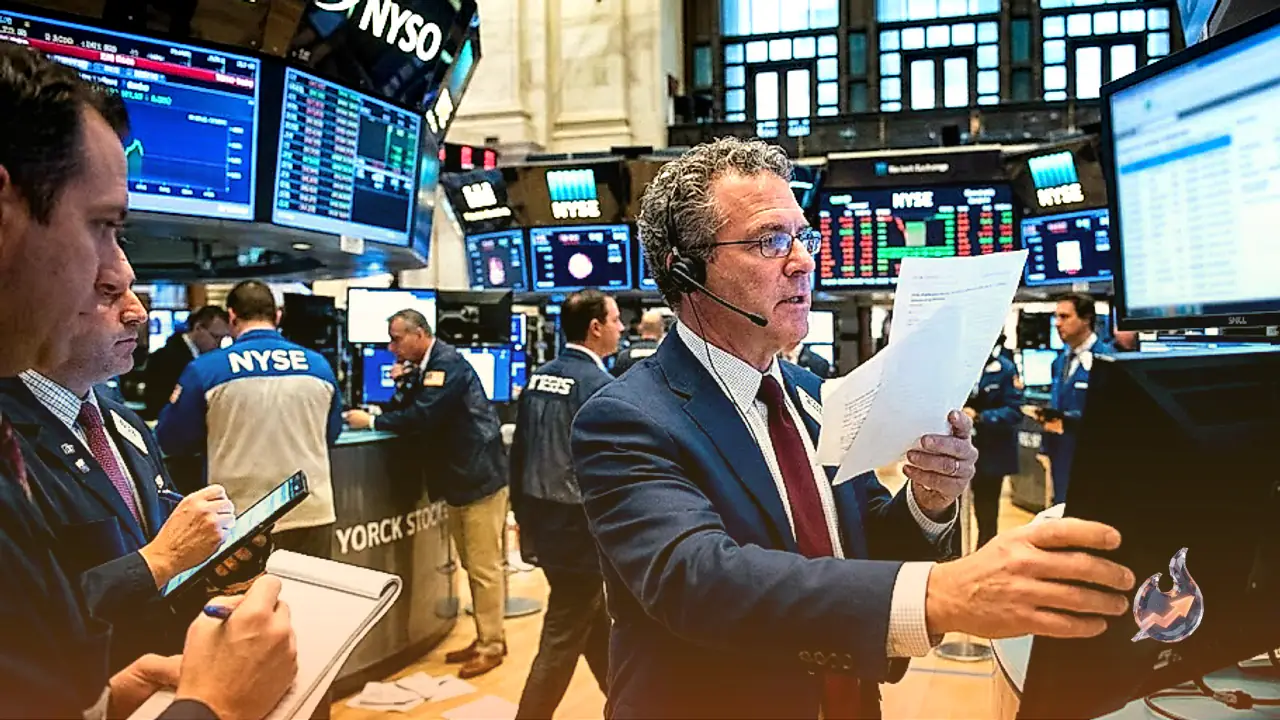

























Benchmark US equity futures staged a visible recovery during European trading hours on Wednesday, buoyed by receding expectations of imminent monetary tightening by the Federal Reserve. Sentiment across international bourses improved after New York Fed President Williams suggested that there is no pressing urgency to execute an interest rate increase at the upcoming October policy meeting. Compounding the relief rally, sovereign bond yields across the United States pulled back after touching multi-decade records in the previous trading session, alleviating acute valuation pressure from equities. Dow Jones futures climbed 0.39% to hover near 51,890, while S&P 500 futures advanced 0.23% to trade in the vicinity of 7,750. In tandem, Nasdaq 100 futures registered a 0.17% gain to reach roughly 30,660.
Sharp Recalibration in Monetary Policy Expectations
Capital markets rapidly adjusted their policy projections following the communication from central bank officials. The CME FedWatch Tool illustrated an abrupt downward shift in the perceived probability of an October rate hike, dropping to approximately 45% compared to the 70.9% reading logged just twenty-four hours earlier. This sudden repricing provided a stabilization anchor for risk assets. Market attention has now decisively pivoted toward the impending release of the Personal Consumption Expenditures price index, widely recognized as the central bank's foremost barometer for measuring underlying inflationary pressures. Further down the calendar, market participants are bracing for the September Nonfarm Payrolls report scheduled for release on Friday.
Sovereign Debt Yields Retreat After Historic Peaks
The easing in bond yields on Wednesday provided crucial breathing room for equity markets following intense selling pressure during Tuesday's cash session. The yield on the 30-year US Treasury bond had spiked to 5.62% on Tuesday, marking its loftiest valuation mark since June 2002. Concurrently, the 10-year Treasury yield touched fresh multi-year peaks near 5.3%, a level not witnessed since 2007. The relentless rise in borrowing costs had delivered a substantial blow to Wall Street in regular trading, dragging the Dow Jones Industrial Average down by 0.26%, while the S&P 500 contracted by 0.17% and the Nasdaq Composite slipped 0.09%. The pullback from these generational highs has curtailed immediate downside momentum.
Analyst Perspectives on Upcoming Inflation Metrics
Market strategists at ING indicated that front-end rates are positioned for heightened volatility ahead of data covering September ADP payrolls alongside August personal spending and PCE figures. ING strategists noted that core PCE is anticipated to tick up from 0.2% to 0.3% on a month-over-month basis, a projection that aligns with their internal forecasts. While acknowledging the pivotal status of the PCE metric within the Fed's reaction matrix, the strategists emphasized that participants will likely assign greater analytical importance to the subsequent September Consumer Price Index release due in two weeks. Consequently, Wednesday's print may primarily calibrate near-term rate probabilities rather than fundamentally altering the overarching inflation trajectory. The United States Bureau of Economic Analysis is set to publish the August PCE report at 12:30 GMT.
Structural Architecture of the Dow Jones Industrial Average
Formulated by Charles Dow, who also founded the Wall Street Journal, the Dow Jones Industrial Average represents one of the earliest and most enduring equity benchmarks in modern finance. The gauge comprises 30 of the most actively traded corporate titans across the American corporate landscape. Unlike capitalization-weighted barometers, the Dow relies on a price-weighted calculation methodology. This involves aggregating the individual stock prices of all 30 constituent enterprises and dividing the sum by an adjusted divisor, currently pegged at 0.152. Throughout its history, the gauge has attracted structural criticism from analysts who argue that a basket limited to 30 conglomerates lacks the comprehensive macroeconomic representation found in broader indices such as the S&P 500.
Core Drivers of Price Action in the Benchmark Gauge
Underlying fluctuations in the Dow Jones Industrial Average stem from an array of operational and macroeconomic catalysts. Primary among these is the collective corporate performance disclosed through quarterly earnings releases by its member organizations. Furthermore, macroeconomic releases originating both domestically and globally exert a profound sway over broader investor confidence. Policy rates orchestrated by the Federal Reserve are equally decisive, as they directly govern the corporate cost of borrowing. Given that heavily capitalized firms depend extensively on credit facilities, inflationary trajectories and subsequent central bank interest rate choices serve as direct determinants of index trends.
Dow Theory and Methodologies for Trend Identification
Technical market analysis continues to draw upon Dow Theory, a conceptual framework established by Charles Dow to evaluate overarching structural movements in equity prices. The foundation of this framework requires assessing the directional alignment between the Dow Jones Industrial Average and the Dow Jones Transportation Average, dictating that a legitimate primary trend is established only when both gauges move concurrently in the same direction. Volume serves as an indispensable confirmatory metric within this approach, which utilizes peak and trough formations. The doctrine divides market movements into three distinct phases: an accumulation phase where institutional capital establishes positions, a public participation phase where the broader retail base engages, and a distribution phase where early institutional capital executes its exit strategy.
Vehicles for Executing Index Exposure
Market participants access the Dow Jones Industrial Average through multiple financial instruments designed to suit diverse investment horizons. Exchange-traded funds allow traders to interact with the index as an individual security rather than purchasing distinct shares in each of the 30 member corporations, exemplified by the SPDR Dow Jones Industrial Average ETF (DIA). Meanwhile, futures contracts allow market operators to position around expected future levels of the index. Options contracts grant the legal right, absent the obligation, to execute purchase or sale orders at a fixed strike level prior to expiration. Furthermore, mutual fund structures allow retail investors to hold diversified exposure across the constituent holdings.
Movements Across Currency, Bullion, and Digital Asset Markets
Beyond US equity futures, asset classes registered notable volatility on Wednesday. In foreign exchange markets, the AUD/USD currency pair declined toward two-month troughs near 0.6950 during the Asian trading session, weighed down by softer-than-projected Australian trimmed mean CPI data for August that tempered expectations for additional Reserve Bank of Australia rate hikes, while Chinese PMI releases failed to furnish positive momentum. The USD/JPY pair hovered below the 157.00 threshold, where persistent expectations of a hawkish Bank of Japan and looming official intervention risks countered disappointing Japanese industrial production and retail sales figures, supported further by a broader pullback in the greenback.
Gold prices continued in a consolidative range below the $4,200 per ounce threshold heading into European trading hours. A retreating US Dollar alongside easing sovereign Treasury yields generated modest support for the precious metal, though lingering higher-for-longer monetary rhetoric prevented a decisive breakout. In the cryptocurrency sector, decentralized finance token Aave dipped under $161 after jumping over 10% during Tuesday's session, with blockchain metrics pointing toward active profit realization. Concurrently, Aave founder Stani Kulechov indicated ongoing evaluation of a native token-burning architecture within the framework of Aavenomics 3.0, representing a potential structural catalyst for the asset.