




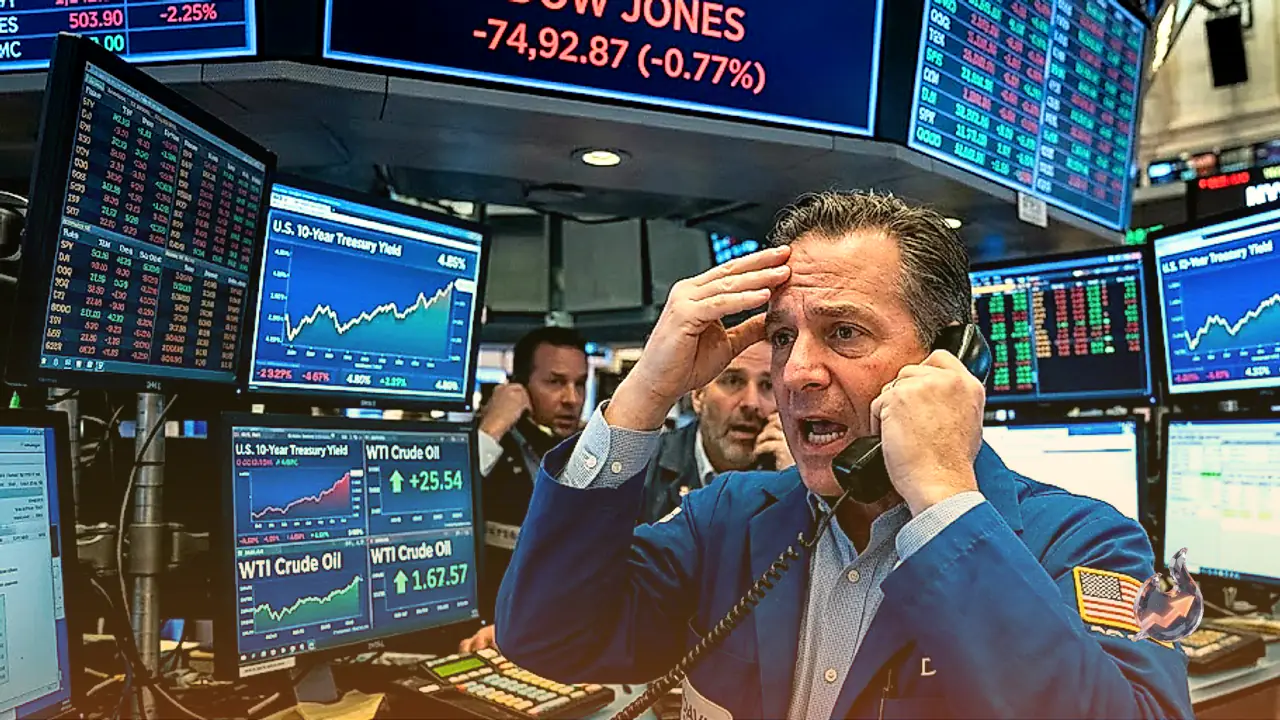




















The Australian Dollar traded within a constrained range at the start of the week, caught between domestic expectations of central bank policy tightening and persistent strength in the US Dollar fueled by elevated Treasury yields and rising energy costs. The AUD/USD currency pair changed hands around 0.7020 on Monday, showing minimal net movement on the session as currency traders refrained from aggressive positioning ahead of pivotal policy declarations from Australia's monetary authorities.
Reserve Bank of Australia Prepares for Key Policy Verdict
Market participants overwhelmingly anticipate that the Reserve Bank of Australia (RBA) will raise its Official Cash Rate (OCR) by 25 basis points (bps) during its policy meeting on Tuesday, lifting the benchmark cost of borrowing from 4.35% to 4.60%. Such an adjustment would push the benchmark interest rate in Australia to its highest mark in 15 years, while simultaneously representing the domestic central bank's fourth rate increase executed over the course of the current calendar year.
Despite the historical significance of the benchmark level, market strategists note that the immediate upside for the Australian currency could remain muted because pricing structures have already factored in the 25-basis-point increment. Market attention is consequently positioned to shift beyond the immediate policy move toward the central bank's verbal guidance regarding the prospective interest rate path in forthcoming sessions.
Federal Reserve Trajectory and Elevated Treasury Yields
In the United States, the US Dollar maintained resilient backing as Treasury yields held ground near multi-year peaks. The Federal Reserve raised its policy rate by 25 basis points in September, establishing the target band at 3.75%-4.00% while offering explicit signals that additional policy tightening might prove necessary to return inflationary pressures back toward the central bank's stated 2% threshold.
Heightened expectations for an October interest rate hike by the Fed, compounded by inflation concerns stemming from firming global crude oil prices, have fortified the greenback across foreign exchange desks. Notably, parallel dynamics have emerged between the Fed and the Bank of Japan (BoJ), with both monetary authorities raising rates by 25 bps last week, both navigating persistent price risks, and both stipulating that ensuing rate adjustments remain tied to evolving economic data.
Geopolitical Standoff and US-Iran Diplomatic Efforts
Broader market sentiment remains sensitive to developments across the Middle East. Indirect diplomatic negotiations between the United States and Iran are scheduled to resume on Monday or Tuesday with the state of Qatar serving as an intermediary. The agenda for these mediated talks centers on an altered version of the seven-day framework initially outlined by Tehran on the sidelines of the United Nations General Assembly.
Geopolitical tensions escalated after Donald Trump rejected a truce framework presented by Iranian representatives, keeping risk premiums elevated and crude oil prices elevated. The continued standoff has driven investors toward safe-haven assets, adding further momentum to the US Dollar while dampening risk appetite across international currency desks.
Technical Indicators and Key Price Horizons
From a technical standpoint, the AUD/USD pair continues to protect the critical psychological threshold of 0.7000 at the open of the trading week, hovering close to its softest levels recorded since August 4 amid sustained greenback demand. Initial overhead resistance is positioned at the horizontal structure of 0.7045, situated directly beneath the 100-hour simple moving average (SMA) at 0.7047, which together form a clustered barrier against intraday rebounds. Additional structural hurdles stand at 0.7075 and the 200-hour SMA at 0.7082, followed by secondary resistance checkpoints at 0.7105 and 0.7140.
Conversely, immediate downside support is identified at 0.7004, prior to a foundational floor at 0.6984. A breach below this lower demarcation would indicate deeper weakness along the hourly trend structure.
According to live market data, the asset trades at 0.7024, reflecting a 0.21% gain over the prior close of 0.7009. The 14-period RSI sits at 35, highlighting prevailing bearish momentum, while the MACD histogram registers at -0.00 against a -0.00 signal line. The ADX reading stands at 29, confirming an active trend environment. Moving averages indicate an EMA20 at 0.7098, an EMA50 at 0.7094, and an EMA200 at 0.6965, with an ongoing golden cross reflecting an underlying long-term uptrend, alongside the SMA200 at 0.7024. Bollinger bands span from 0.6994 to 0.7264 around a 0.7129 midline. Intraday levels establish the pivot at 0.7021, resistances at R1 0.7031 and R2 0.7037, and supports at S1 0.7014 and S2 0.7005, within an overall 52-week trading corridor of 0.6422 to 0.7277.
Cross-Asset Movements in Foreign Exchange, Gold, and Crypto
Dollar resilience reverberated across multiple global financial sectors. In currency pairs, USD/JPY drew persistent buying interest on dips, erasing a portion of Friday's declines that had been driven by market talk regarding potential official intervention to stabilize the Japanese Yen. However, the release of dovish minutes from the Bank of Japan curbed the Yen's defensive momentum, while oil-fueled inflation expectations and October Fed rate hike probabilities propelled USD/JPY back toward the 158.00 threshold.
In the metals sector, gold prices experienced sharp downward momentum at the start of the week, sliding toward the $4,100 per ounce boundary for the first time in eight weeks under the weight of surging bond yields and a robust dollar. In digital assets, the privacy-focused cryptocurrency Zcash traded beneath $1,550 on Monday following a 4% descent during the previous trading day. Institutional participation remained evident with over $35 million in weekly net inflows, even as retail engagement softened, evidenced by a roughly 10% reduction in ZEC futures open interest over a 24-hour cycle.