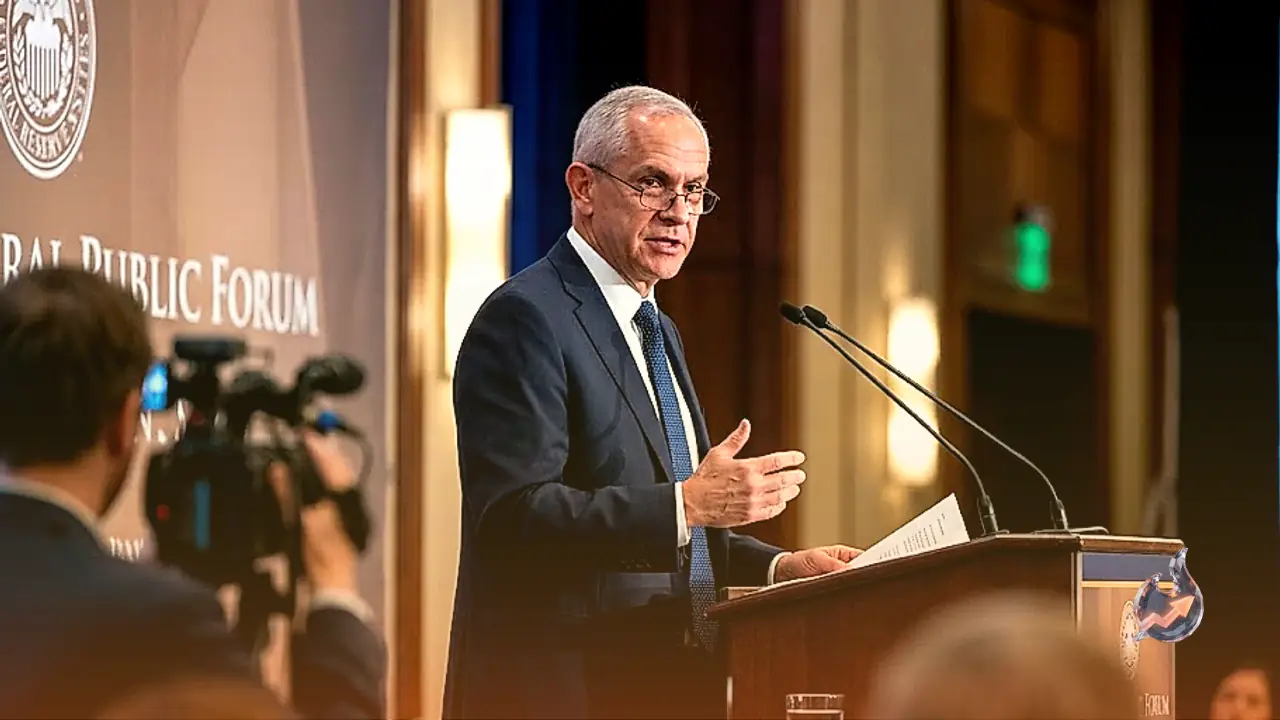

























Borrowing costs for American home buyers have surged to their highest level since November 2023, creating fresh headwinds across the real estate sector and intensifying pressure on household budgets. Driven by elevated inflation readings, ongoing disruptions in Middle Eastern energy flows, and multi-decade highs in benchmark bond yields, the average 30-year fixed mortgage rate has climbed to 7.49%. This sharp escalation in borrowing expenses comes at a critical juncture, directly reshaping consumer sentiment and economic debates just weeks ahead of national legislative elections.
Surging Treasury Yields and the Real Mechanism of Mortgage Costs
While public discussion often assumes that home loan costs move in lockstep with the benchmark interest rate set by the Federal Reserve, mortgage pricing is predominantly determined by long-term yields in the government bond market, specifically the yield on the 10-year US Treasury note. On Monday, that benchmark yield climbed past 5.3%, marking its highest level in 24 years. When institutional investors demand higher returns on sovereign debt, private mortgage lenders must lift borrowing rates to protect their profit margins and offset long-term holding risks.
The sharp run-up in Treasury yields reflects growing unease over sticky inflation, the underlying strength of domestic economic activity, and the federal government's massive funding requirements. To finance persistent budget shortfalls, the Treasury must continuously issue large volumes of debt securities, which in turn siphons capital away from private credit markets. Lawrence Yun, chief economist at the National Association of Realtors (NAR), noted that the rapidly expanding federal budget deficit is consuming an increasing share of private savings, leaving a smaller pool of available capital for the domestic mortgage market.
The War in Iran, Energy Supply Shocks, and Persistent Inflation
Geopolitical hostilities involving the United States, Israel, and Iran, which erupted in late February, serve as a primary catalyst for the recent spike in borrowing costs. Disruptions to critical energy export routes across the Middle East triggered an immediate rally in crude oil prices, raising transport, manufacturing, and consumer expenses throughout the economy. According to data from the Bureau of Economic Analysis (BEA), annual inflation as measured by the Personal Consumption Expenditures (PCE) Price Index accelerated to 3.4% year-over-year in August, up from 2.8% in February, keeping price growth well above the central bank's 2% target.
Since the outbreak of the conflict in Iran, 30-year mortgage rates have risen by roughly 1.4 percentage points. Fixed-income investors, confronted with renewed inflation risks, have demanded higher yields across all maturities. US Treasury Secretary Scott Bessent linked the rise in consumer prices and loan rates directly to the energy shock produced by the Middle Eastern hostilities, asserting that once the Iranian conflict is resolved, energy markets will regain stability, inflation will trend back toward official targets, and the 10-year yield and mortgage rates will fall. However, market analysts caution that broader fiscal imbalances and sovereign debt growth may keep yields elevated even if energy markets cool.
A 40 Trillion Dollar Debt Pile and Bond Market Pressures
The structural expansion of federal debt has compounded pressure on borrowing benchmarks. Total US government debt recently crossed the historic $40 trillion threshold, sustaining widespread investor concerns regarding the future supply of sovereign bonds. When the federal government must issue unprecedented volumes of debt securities during periods of elevated interest rates, debt service costs multiply and market yields stay elevated.
This dynamic creates a crowded marketplace for fixed-income assets. Because investors can obtain guaranteed returns above 5% on risk-free government paper, residential mortgage-backed securities must offer significantly higher yields to secure funding. The ultimate burden falls squarely upon household borrowers, who face substantially higher monthly principal and interest obligations when attempting to finance home purchases.
Sharp Contraction in Loan Applications and Buyer Hesitation
Elevated financing costs have exacerbated affordability strains in a housing market already constrained by years of elevated property valuations. Data released by the Mortgage Bankers Association (MBA) reveals that weekly mortgage applications dropped by 4.2%, touching their lowest level since February 2025. Total mortgage application volume has been nearly cut in half since January, with loan refinancing activity suffering an especially severe decline.
MBA Chief Economist Joel Kan observed that existing homeowners have virtually no financial incentive to refinance at current rate levels, while the abrupt surge in borrowing expenses has forced numerous prospective buyers to retreat from the purchase market entirely. Millions of homeowners who locked in ultra-low mortgage rates near 3% during the pandemic era are refusing to put their properties on the market, as selling would require taking on a replacement mortgage at more than double the interest rate. This lock-in effect has restricted residential mobility and caused a severe shortage of available housing inventory.
Jeffrey Mezger, executive chairman of KB Home, stated that elevated mortgage rates have intensified affordability constraints, which, combined with geopolitical instability and broader economic headwinds, have prompted prospective home buyers to exercise heightened caution. This soft demand is feeding through to residential construction schedules, builder sentiment, and broader home improvement sectors.
Campaign Commitments Confront Market Realities
The renewed ascent of borrowing rates creates a prominent political dilemma for Donald Trump, who placed lower housing costs and expanded homeownership at the center of his 2024 presidential campaign. Addressing the Economic Club of New York in September 2024, Trump stated his administration would prioritize lowering mortgage rates, aiming to bring them down to 3% or potentially lower.
The current market trajectory presents a stark contrast to those initial targets. Freddie Mac records indicate that when Trump returned to office in January 2025, the average 30-year fixed rate stood at 6.96%. The rate moderated gradually to 5.98% by late February 2026 before reversing sharply upward following the outbreak of the conflict in Iran, eventually reaching 7.49% in the latest MBA release.
In response to rising costs, the administration has rolled out several targeted initiatives. In January, Trump called on mortgage agencies Fannie Mae and Freddie Mac to back the purchase of $200 billion in mortgage-backed securities to help temper financing yields. The administration has also endorsed measures restricting large institutional investors from buying single-family residential homes and sought to streamline regulatory hurdles for home construction. Nonetheless, consumer sentiment remains primarily driven by actual monthly loan statements rather than policy proposals.
Central Bank Rate Hikes and Monetary Tightening
Federal Reserve monetary policy has introduced additional complexities into the lending landscape. In September, the central bank lifted its policy rate by 25 basis points, representing its first rate hike since 2023, in an effort to contain renewed inflationary impulses. While policymakers have indicated that an additional rate increase may be warranted before year-end, financial markets do not anticipate adjustments at the late October meeting.
This hawkish monetary posture has raised capital costs throughout the banking system. The clash between administrative desires for cheaper credit and central bank tightening underscores the difficult policy environment created by external commodity shocks. As long as inflation prints remain elevated above official thresholds, monetary authorities have limited scope to ease borrowing conditions.
Midterm Elections, Young Voters, and Key Battlegrounds
The spike in home financing costs arrives just four weeks before the November 3 midterm elections, where the Republican Party is defending its majorities in both the House of Representatives and the Senate. A Reuters/Ipsos survey concluded on Monday identified the cost of living as the single most critical concern among voters, while Donald Trump's job approval rating fell to a low of 32%.
Housing affordability is proving particularly influential among younger demographics. A CNBC survey conducted in July showed that affordable housing ranks as the top policy issue for Americans between the ages of 18 and 34, surpassing food inflation and institutional governance concerns. The economic strain is acutely visible in critical swing states like Pennsylvania, Michigan, and Texas.
According to NAR figures, an annual household income of at least $100,000 is now required to afford a median-priced home with a 10% down payment in nearly 49% of US metropolitan markets, up from just 6% of metro areas in 2019. Democrats have leveraged elevated borrowing costs to challenge the administration's economic stewardship, while Republicans maintain that housing inflation originated under the previous administration of Joe Biden. However, with the election rapidly approaching, voter choices are increasingly dictated by the immediate reality of monthly household bills.