






















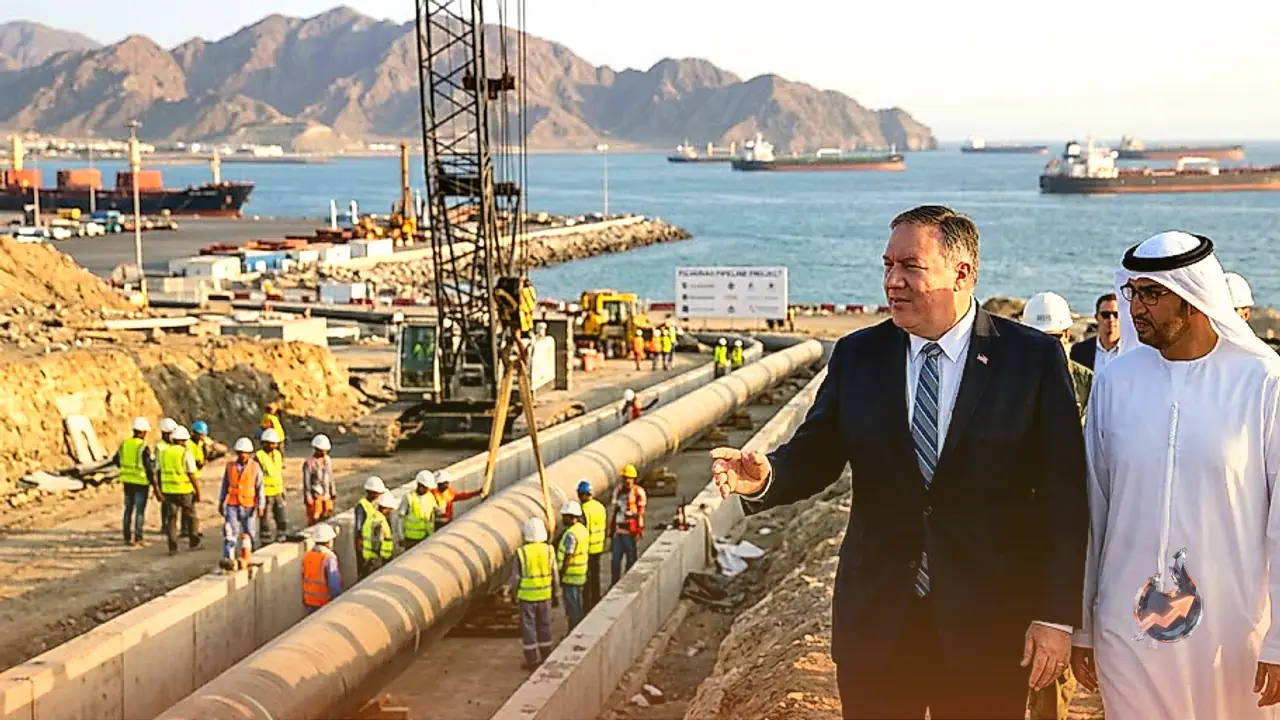

In a major geopolitical and economic move aimed at stabilizing regional energy corridors, the administration of US President Donald Trump has proposed committing $5 billion to a new reconstruction fund. The initiative is designed to rebuild vital infrastructure across the Middle East damaged during the conflict with Iran, while systematically reducing regional reliance on the Strait of Hormuz for crude oil and natural gas shipments. The proposal addresses long-standing vulnerabilities in maritime transit routes that handle a critical share of international energy supplies.
The Framework of the Partnership for Allied Construction & Trust
The reconstruction effort will be structured around a dedicated entity named the Partnership for Allied Construction & Trust. Management of the platform will be led by the US Development Finance Corporation, which has been tasked with deploying capital, coordinating rebuilding activities, and fostering regional economic expansion. Project planners have drafted a framework outlining four core investment priorities designed to restore economic resilience across participating territories.
At the top of the priority list are capital investments directed toward bypassing the Strait of Hormuz, creating alternative land-based or maritime shipping routes that can function independently of potential maritime closures. The second focus centers on the direct restoration of interrupted energy flows and critical material exports to return revenue and supply lines to normal capacity. The third priority targets infrastructure hardening, upgrading physical and technical defenses on vital assets to protect them from future military strikes. Finally, the initiative designates funding for repairing essential domestic infrastructure networks and reviving disrupted national import channels.
Crude Oil Reaction and Characteristics of the WTI Benchmark
As details of the reconstruction initiative emerged, global crude oil benchmarks registered immediate pullbacks. West Texas Intermediate (WTI) crude fell 3.60% during trading hours to settle near $91.80 per barrel. WTI represents one of the world's most closely watched crude grades, serving alongside Brent and Dubai Crude as the three foundational benchmarks for international energy pricing.
Within the commodity markets, WTI is characterized as a light, sweet crude due to its lower relative density and reduced sulfur concentrations. These chemical traits allow refineries to process WTI into high-demand end products like gasoline and diesel with greater efficiency and lower processing costs. Produced across the United States, WTI is transported and stored via the storage facilities at Cushing, Oklahoma, an interconnection widely acknowledged as the pipeline crossroads of the world. Because of its liquidity and widespread trading volume, WTI price movements are cited as standard indicators of broader energy market health.
Fundamental Forces Shaping Oil Valuations and Inventory Metrics
The price trajectory of WTI crude reflects shifting dynamics between global production capacity and consumer demand. Accelerated global economic activity typically expands industrial fuel usage, driving market values higher, whereas periods of macroeconomic stagnation contract consumption and depress prices. Concurrently, regional conflicts, political instability, and trade sanctions introduce direct supply disruptions that trigger market volatility. Currency valuations also play a central role, as crude oil contracts are priced in US Dollars. A weakening greenback generally lowers acquisition costs for foreign buyers, whereas a strengthening dollar makes crude purchases more expensive across overseas markets.
Market participants also closely monitor periodic stock updates to gauge physical balance trends. Weekly inventory publications from the American Petroleum Institute (API) and the Energy Information Agency (EIA) offer detailed views into US storage shifts. Reported drawdowns in crude inventories typically signal firming demand conditions that provide upward momentum for prices, while inventory builds point toward surplus supply that softens valuations. API issues its statistical overview every Tuesday, followed by the EIA assessment the subsequent day. Historically, the two datasets align within a 1% variance approximately 75% of the time, with institutional traders placing higher reliance on the EIA figures due to the agency's official government standing.
OPEC Production Quotas and Policy Influence
Global crude flows remain substantially influenced by the Organization of the Petroleum Exporting Countries (OPEC), a coalition of 12 oil-producing states that convenes twice per year to establish unified member output targets. Adjustments to these quotas directly alter market availability. When member nations agree to restrain production volumes, tighter market conditions generally prompt price increases. Conversely, raising collective production ceilings introduces additional supply, exerting downward pressure on international spot prices. Market analysis also extends to the broader OPEC+ alliance, which integrates ten non-OPEC crude-producing allies, with Russia serving as the coalition's most prominent non-OPEC participant.
Foreign Exchange Dynamics: US Dollar Strength Across Major Currency Pairs
Financial cross-currents from the Middle East and central bank policy stances generated notable price action across major currency pairs. In early Asian trading, the AUD/USD pair held above the 0.7100 mark in a consolidation phase, showing minimal reaction to hawkish policy commentary from Reserve Bank of Australia Assistant Governor Sarah Hunter. Currency traders maintained cautious positions ahead of an upcoming bilateral summit between Donald Trump and Xi Jinping scheduled for later in the week. A hawkish monetary outlook from the Federal Reserve, combined with geopolitical instability, provided ongoing support to the US Dollar and capped upward momentum for the Australian currency.
Simultaneously, the USD/JPY cross traded just under the mid-157.00 zone, where concerns regarding potential official market intervention by Japanese authorities helped temper further depreciation in the Yen. The currency dynamics followed the Bank of Japan's recent decision to lift its benchmark short-term interest rate target from 1.00% to 1.25% through a 7-2 vote. Although this rate increase propelled borrowing costs to a 31-year high as part of Japan's ongoing policy normalization, market observers characterized the central bank's accompanying stance as dovish, keeping the Yen under persistent pressure against a firm greenback.
Precious Metals Behavior and Sovereign Bond Pressures
In the metals sector, gold prices staged a modest recovery during the Asian session, though the asset struggled to develop directional momentum and stayed below the $4,400 threshold. The pullback in crude oil prices tempered near-term inflation anxieties, pulling US government bond yields lower and providing brief structural support for non-interest-bearing bullion. Nonetheless, the greenback's persistence near levels not seen since late July continued to restrict substantial upward attempts in precious metals.
As global financial markets enter the concluding weeks of the third quarter, trading desks are managing a complex mix of falling energy costs, heightened equity index futures in the US and Europe, and underlying volatility across sovereign debt markets. Volatility has remained heavily concentrated within sovereign bond segments, where European and US yields experienced upward spikes late on Friday, reflecting persistent reassessments of global interest rate paths.