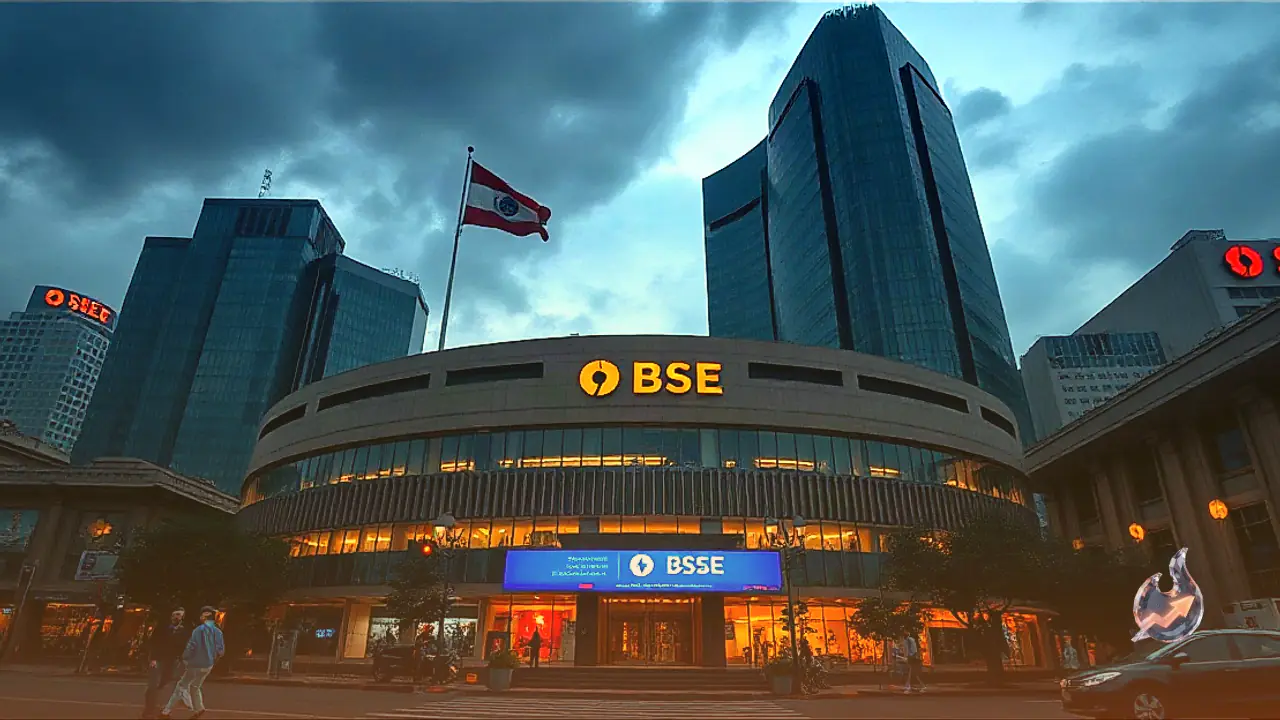
























A defining shift in India's equity benchmark unfolded on Wednesday, September 30th, as BSE entered the benchmark Nifty 50 index for the very first time. The stock exchange stepped in to replace information technology heavyweight Wipro following the latest semi-annual index reconstitution. Despite achieving this historic milestone, trading sentiment remained subdued during early market hours. BSE shares dropped 3% to trade at Rs. 3,103 apiece on the NSE. The decline extends a broader short-term pullback, with the counter retreating 5.29% across the preceding five trading sessions as profit-taking set in alongside shifting brokerage assessments.
Methodology Behind the Landmark Index Rebalancing
The semi-annual rebalancing framework was originally announced by the NSE on August 10 and formally took effect after market hours on September 29. BSE earned its benchmark entry on the back of an extraordinary expansion in its free-float market capitalisation, driven by an extended surge in valuation over the preceding twelve months. Index methodology requires that any incoming stock must command a six-month average free-float market capitalisation at least 1.5 times greater than that of the company being displaced. Under the latest review metrics, BSE logged an average six-month free-float market valuation of approximately Rs. 1,40,879 crore, comfortably surpassing Wipro's recorded average of Rs. 55,930 crore to clear the qualification barrier with ease.
Wipro Moves to Nifty Next 50 Amid Contrasting Share Moves
As BSE crossed into the blue-chip gauge, Wipro exited the 50-share benchmark and was reassigned to the Nifty Next 50 index. Market analysts had long singled out Wipro as one of the most vulnerable candidates for retention during periodic evaluations. However, stepping away from the headline benchmark does not remove Wipro from the wider institutional spotlight, as the IT company remains an integral component of the broad Nifty 100 basket. In contrast to the price pressure on BSE, Wipro shares gained ground on Wednesday morning, rising 2.3% to trade at Rs. 160.39 apiece on the NSE. Passive tracking vehicles adjusting their portfolios to align with the revised Nifty 50 weightings are anticipated to drive capital outflows from Wipro.
Passive Inflow Expectations and Diverging Brokerage Views
Securing a spot in the benchmark basket is anticipated to unlock sizeable institutional allocations for the exchange. Analysis from Axis Capital projects that passive index funds could acquire roughly 15.7 million BSE shares, translating into an estimated demand worth around $657 million. Even so, the sharp historical rally and index inclusion have brought contrasting views among prominent research desks regarding BSE's intermediate prospects. Macquarie maintains an upbeat stance, arguing that emerging business opportunities can sustain around 16% revenue growth between FY26 and FY30. Conversely, Jefferies and Nuvama have raised cautions regarding evolving regulatory frameworks, CAS mandates, and underlying trading risks. Nuvama had downgraded its stance on BSE from Buy to Hold in the previous month, slashing its price target from Rs. 4,090 to Rs. 3,240. That revision came after Nuvama had earlier assigned a zero percent probability to BSE entering the Nifty 50 during the September 2025 review, having believed it stood virtually no chance of even joining the Nifty Next 50.
Broad Reconstitution Across Nifty 100 and Next 50
The semi-annual exercise spurred sweeping adjustments beyond the headline gauge. Having graduated out of the Nifty Midcap 150, BSE is now an official constituent of the Nifty 100. That index witnessed five fresh additions, bringing in BSE, Hitachi Energy India, Polycab India, Vedanta Aluminium Metal, and Vodafone Idea. Simultaneously, the Nifty Next 50 saw a parallel reshuffle of five names, inducting Hitachi Energy India, Polycab India, Vedanta Aluminium Metal, Vodafone Idea, and the transitioning IT bellwether Wipro as passive fund managers recalibrate their asset allocations.