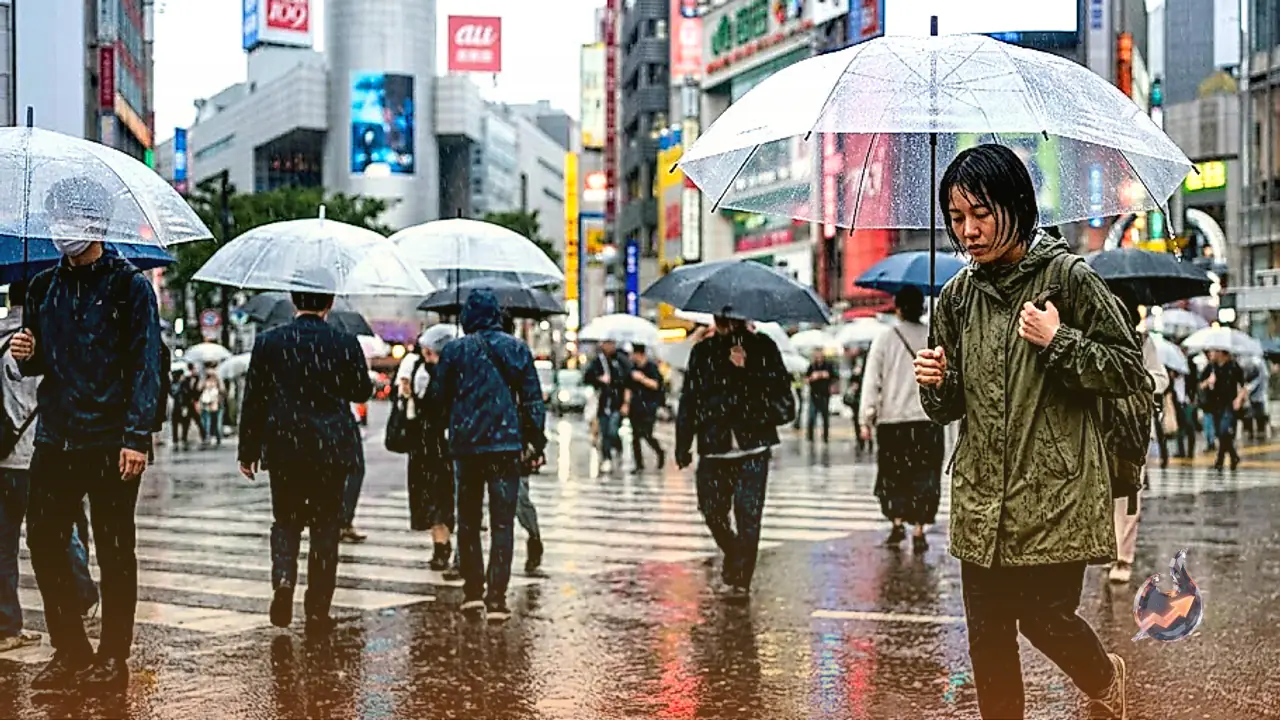
























The Japanese capital is navigating an unprecedented meteorological ordeal as a relentless sequence of wet days grips the metropolitan area. While the transition from late summer to autumn typically brings clearer skies and pleasant intervals, the weather patterns over Tokyo have taken an extraordinarily persistent turn toward grayness and moisture. Beginning on August 27 and extending through September 30, the city experienced rainfall on every single calendar day, with Wednesday marking the 35th consecutive day of precipitation. This unbroken stretch easily eclipses the previous benchmark set in 2019, when the capital recorded 33 straight days of rain. Looking back across the historical registry, Tokyo has never witnessed such an enduring run of wet weather in roughly 140 years of continuous meteorological observations. This unusual spell does not mean the metropolis has been inundated by uninterrupted torrential downpours at every hour; rather, the period has featured a mix of heavy downpours, sustained drizzles, and intermittent light showers that together maintained the continuous streak.
Official Meteorological Standards Behind Counting Wet Days
Understanding how Tokyo reached this milestone requires looking at the measurement criteria maintained by the Japan Meteorological Agency. Under the agency's official guidelines, the classification of a wet day is defined by a very low threshold, counting even the most minimal accumulations of water. Specifically, a precipitation total of less than 0.5 millimeters is legally and technically sufficient for a day to be cataloged as an official rainy day. Consequently, several days across this 35-day timeline experienced barely discernible sprinkles or brief passing mists rather than substantial downpours. However, the prolonged presence of cloud cover and persistent atmospheric moisture meant the official streak remained unbroken, producing a continuous run that broke century-old records and fundamentally altered daily life throughout the metropolis.
Persistent Autumn Rain Front and Compounding Low Pressure Systems
A convergence of several overlapping atmospheric anomalies explains why this wet system refused to dissipate over central Japan. As peak summer temperatures begin to decline, masses of warm, humid maritime air flowing from southern waters collide directly with advancing cool currents arriving from the north. This boundary generates what meteorologists classify as an autumn rain front. In typical years, such a frontal boundary travels across the Japanese archipelago relatively quickly, allowing crisp, dry air masses to follow in its wake. This season, however, the front became exceptionally stagnant over the region surrounding Tokyo, continuously manufacturing cloud banks and sustaining repeated bouts of rain without the customary cleansing breaks of dry weather.
Typhoon Moisture Supercharging Total Rainfall Accumulation
The severity of this protracted weather pattern was amplified by the periodic arrival of tropical cyclones in the waters surrounding Japan. As successive typhoons tracked past the archipelago, their circulation pumped immense volumes of tropical moisture and warm, vapor-rich air straight into the stalled frontal zone. When this abundant oceanic moisture intersected with the stationary boundary, rainfall rates surged dramatically. A striking demonstration of this interaction occurred on September 21, when Typhoon Dujuan triggered torrential downpours across central Tokyo, dumping approximately 156 millimeters of precipitation on that single date. The continuous presence of these dynamic factors, alongside rotating low-pressure disturbances, denied the capital any prolonged period of high pressure and dry winds that could have shattered the wet cycle.
Beyond setting an endurance record for consecutive wet days, the total volume of water dumped across Tokyo during this timeframe reached astonishing proportions. By September 28, central districts of the capital had absorbed roughly 629 millimeters of rainfall throughout the month. This accumulation represents approximately three times the historical monthly average typically expected in September. Residents and city infrastructure have therefore had to contend not merely with the statistical annoyance of daily rain, but with a massive, cumulative deluge that saturated soils, tested urban runoff systems, and severely limited any natural drying process.
The Burden of Rain Fatigue on Mind and Body
Facing weeks under heavy cloud canopies with hardly a glimpse of direct sunlight, Tokyo's population has begun exhibiting widespread symptoms of what observers identify as rain fatigue. The concept extends far beyond ordinary annoyance over carrying an umbrella or stepping through puddles. Rain fatigue describes the composite physical weariness, sluggishness, and psychological strain triggered by extended stretches of dim lighting, oppressive humidity, continuous precipitation, and constant disruption to ordinary daily routines. When human bodies are denied consistent sunlight and open-air activity over multiple weeks, biological rhythms and mental well-being experience notable deterioration.
Daily Life Disrupted Across Homes, Commutes, and Outdoor Spaces
The prolonged absence of regular sunshine in Tokyo has manifested across multiple facets of urban life, depressing personal productivity and general mood. Deprived of the natural energizing influence of bright daylight, many residents report feeling chronically drained, with normal daylight hours feeling somber, heavy, and uninspiring. On the domestic front, the extreme humidity has made laundering and drying clothes indoors an exhausting chore, with moisture lingering inside living quarters and creating damp, uncomfortable indoor environments. Daily commuting routines have similarly suffered, as workers and students endure perpetual dampness, delayed transit connections, and restricted mobility that leaves them largely confined indoors.
Furthermore, the perpetual gloom and damp atmosphere have altered sleep quality for many citizens, fostering morning lethargy and persistent daytime drowsiness. When gray skies linger for over a month and outdoor plans are continuously scrubbed, feelings of frustration, irritability, and mild despondency naturally mount. The complete suspension of outdoor leisure, including jogging, recreational walking, sports, and park visits, has visibly diminished physical activity levels across the population. This historic 35-day stretch of damp weather in Tokyo serves as a vivid reminder of how persistent atmospheric systems can reshape the daily rhythm, health, and spirit of an entire global metropolis.