























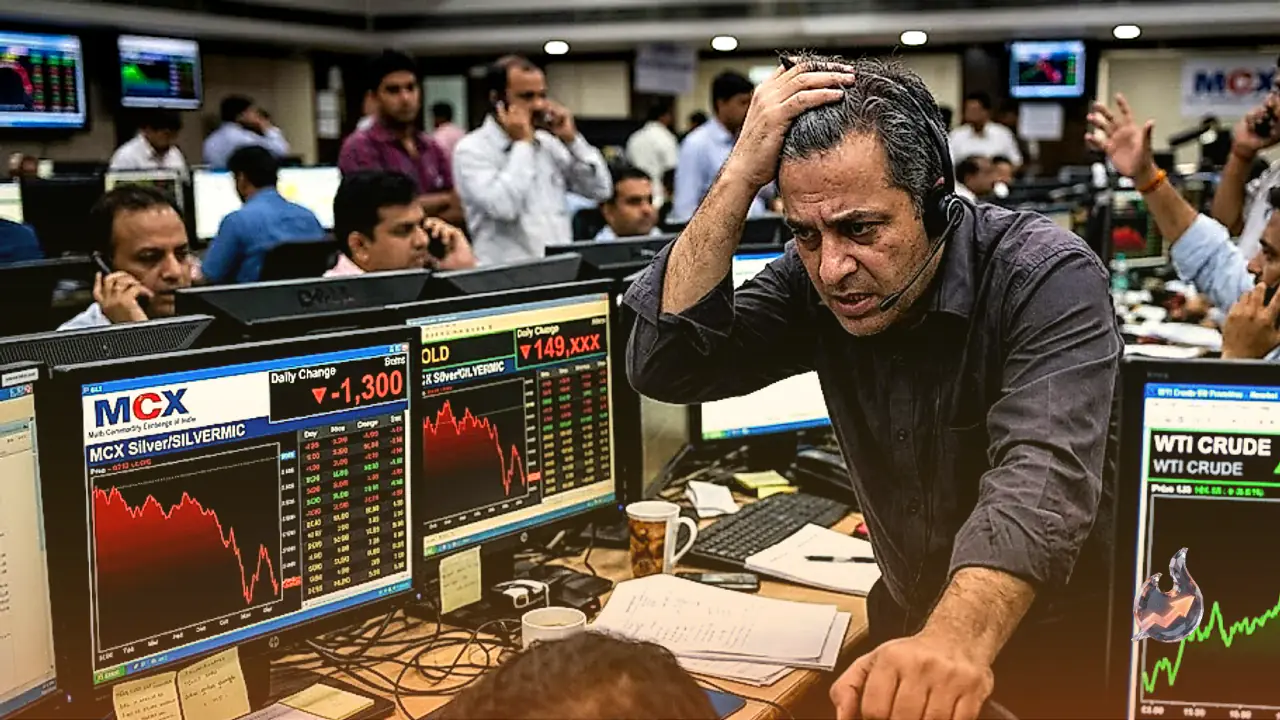

Precious metals faced intense selling pressure across domestic and international exchanges on Wednesday, pulling both gold and silver below key benchmark levels. On the Multi Commodity Exchange, silver dropped by nearly Rs 1,300, or 0.6 percent, trading near Rs 2,25,966 per kilogram after touching an intraday low of Rs 2,25,651 per kilogram. This decline completely erased the previous Rs 2.28 lakh per kg milestone recorded just yesterday following a temporary pause in sovereign bond yields. Similarly, MCX gold slipped by Rs 492, or 0.33 percent, to trade around Rs 1,49,628 per 10 grams, hovering close to its intraday low of Rs 1,49,505 per 10 grams. The slide pushed domestic gold contracts beneath the Rs 1.50 lakh mark achieved in the preceding session.
Global Bullion Slips to Two-Month Troughs
Weakness in the international bullion market continues to dictate price action in Indian precious metals. Spot gold fell 0.50 percent during early Wednesday trading to around $4,144 per ounce before struggling near $4,145 per ounce. In tandem, spot silver dropped by approximately 1 percent to trade near $60.86 per ounce, remaining pressured around $60.9 per ounce. These levels represent two-month lows for both commodities. Rising crude oil benchmarks and supply anxieties stemming from the Middle East have reignited broader inflationary threats, wiping out recent safe-haven gains across precious metal markets.
Energy Crisis Deepens as Crude Climbs
A primary catalyst weighing on precious metals is the renewed momentum in energy markets. Crude oil benchmarks rose by 1 percent, intensifying concerns over an escalating energy crisis. US West Texas Intermediate crude traded above $90 per barrel, while global benchmark Brent crude crossed $101 per barrel. Escalating regional hostilities in the Middle East have heightened the risk to maritime energy routes, as Iran stepped up attacks on commercial tankers passing through the Strait of Hormuz in recent days, and Saudi armed forces continued active combat with Houthi fighters. These elevated energy prices are feeding into global inflation expectations and complicating central bank projections.
Treasury Yields Hover Near Multi-Decade Highs
Sovereign bond markets remain another focal point for bullion investors. United States Treasury yields continue to hover near multi-decade peaks, driven by stubborn inflation, expanding fiscal vulnerabilities, and massive debt issuances tied to artificial intelligence investments. While the benchmark 10-year US Treasury yield paused its relentless climb to trade around 5.26 percent, pulling back slightly from a 24-year high of 5.33 percent, yields remain up by 110 basis points year-to-date. This overarching upward trend keeps pressure on policymakers for continued monetary tightening. Concurrently, the US dollar index held stable around the 102 mark.
Broader financial markets are pricing in an approximately 80 percent probability that the Federal Reserve will hold interest rates steady this month, influenced by slower-than-projected employment additions in September alongside downward revisions to payroll tallies for the preceding two months. Market participants are waiting for the release of the September Federal Open Market Committee meeting minutes on Wednesday. According to an assessment from Morningstar, these minutes carry significant weight as they will detail the policy reasoning behind the September decision to increase the federal funds rate by 25 basis points.
RBI Monetary Policy Committee Weighs Rate Decision
On the domestic front, Reserve Bank of India Governor Sanjay Malhotra and the six-member Monetary Policy Committee are scheduled to announce their October 2026 monetary policy resolutions on Wednesday. The central bank confronts an intricate macroeconomic landscape characterized by elevated crude oil prices and high Treasury yields. The decision whether to implement a rate hike or preserve the status quo carries major ramifications across retail savings, borrowing costs, and domestic inflation metrics. Financial markets are widely anticipating that the RBI may mirror the US Federal Reserve by delivering a 25 basis point rate increase, effectively terminating an 11-month-long dovish monetary stance.
GST Council Considers Overhauling Bullion Import Tax Framework
Regulatory developments could also reshape Indian precious metal imports in the coming days. The GST Council is reviewing a proposal to eliminate preferential tax concessions historically granted to government-nominated trading enterprises, including MMTC and the State Trading Corporation of India. Scheduled for discussion at the GST Council meeting on October 8, the proposal seeks to align commercial banks, nominated import agencies, and bullion exchanges under a standardized tax regime. Under the existing framework, commercial banks and select nominated agencies pay 3 percent GST on bullion imports, whereas specific government trading entities have retained exemptions originally granted in 2017. Standardizing these rules would remove legacy exemptions across the precious metal supply chain.