



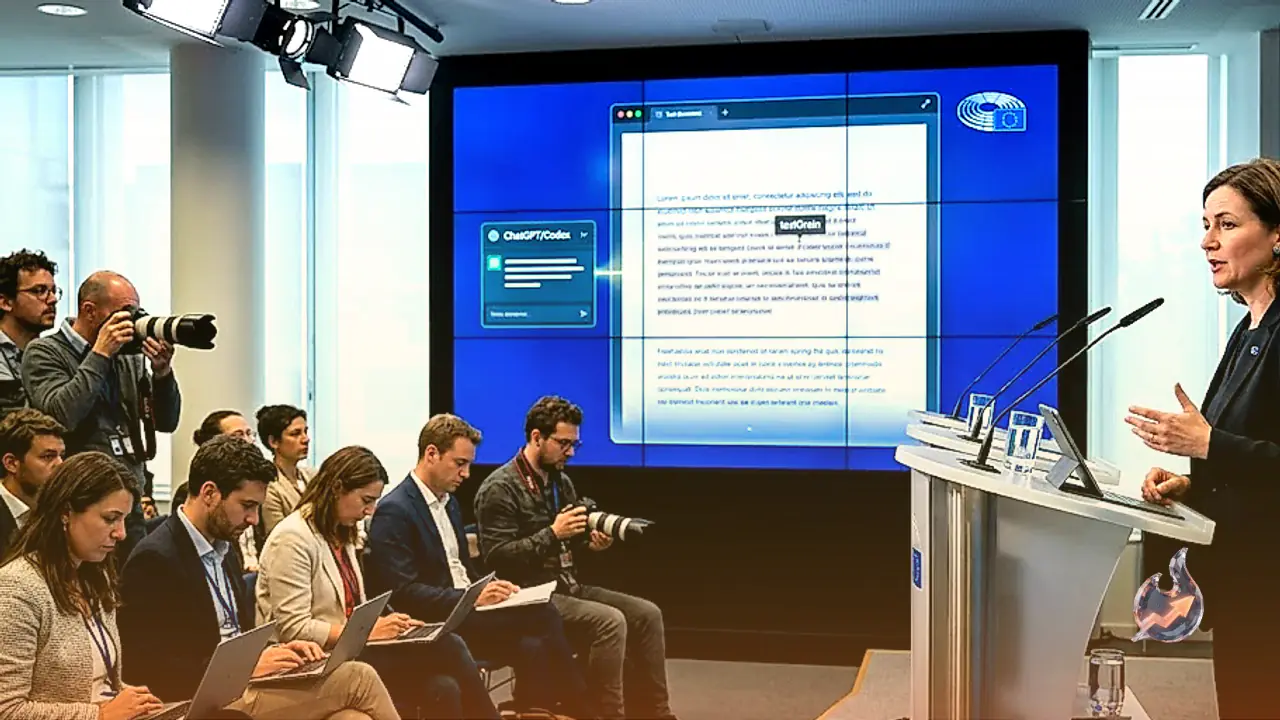



















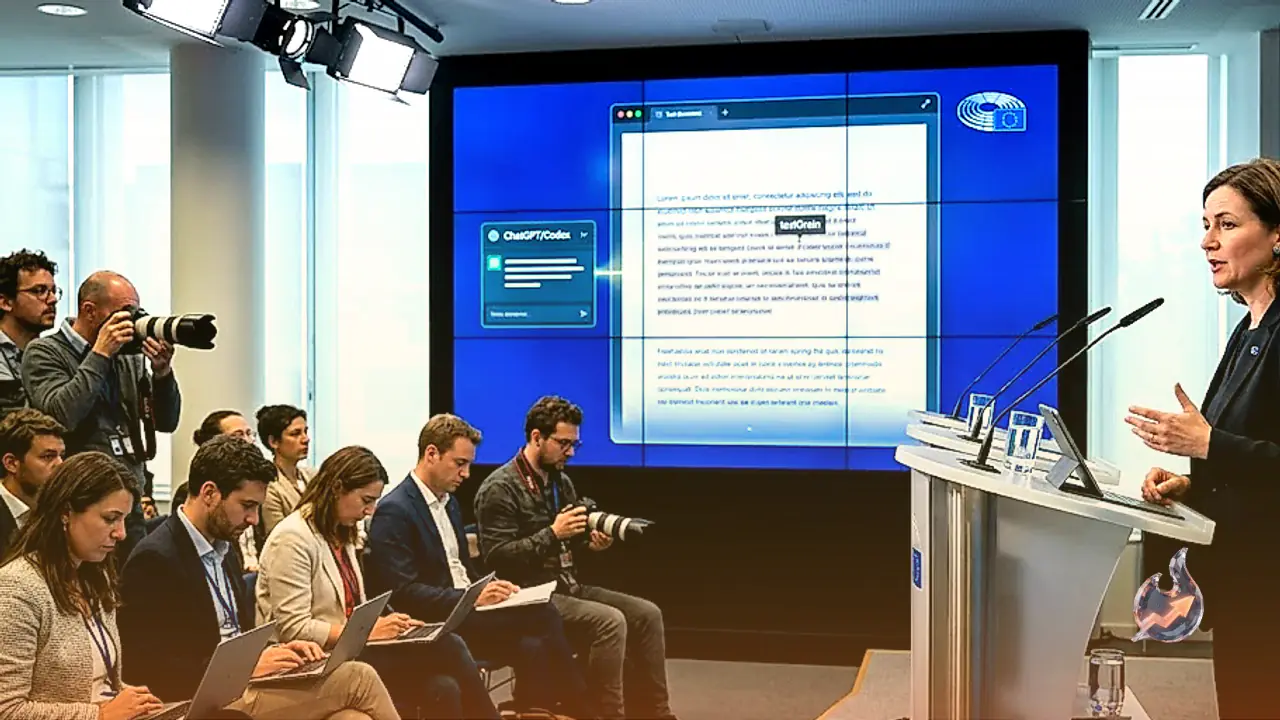

A major shift is underway in how artificial intelligence outputs are tracked and identified across digital platforms. Artificial intelligence developer OpenAI has announced plans to incorporate an invisible watermark into text generated by ChatGPT and Codex for users located in the European Union. The move is designed to make it substantially simpler to confirm whether a piece of written material originated from an artificial intelligence system or was drafted manually.
Regulatory Drivers and Phased Rollout Schedule
The primary catalyst for this technical transition is the EU AI Act, which has established strict new transparency standards regarding synthetic and algorithmically created material. OpenAI announced the update on October 5, 2026, stating that the watermarking architecture will be deployed to eligible European Union accounts across ChatGPT and Codex over the coming weeks.
For now, default watermarking is restricted entirely to European Union borders. Everyday consumers using ChatGPT outside the European Union will not see the system enabled automatically on their standard accounts. Nevertheless, OpenAI confirmed that commercial API clients worldwide will have the freedom to opt in to text watermarking across selected model architectures. In tandem with the rollout, the company is actively developing a specialized detection utility engineered to identify its signature watermark in text excerpts.
How the textGrain Mechanism Functions
OpenAI refers to its underlying watermarking technology as textGrain. Unlike traditional watermarks that place logos, stamps, or obvious visual markers over media, textGrain is completely undetectable to the naked eye. Users reading or copying ChatGPT outputs will observe no odd symbols, strange punctuation, or unexpected typographic styling.
Instead of modifying layout attributes, textGrain alters the probability distribution governing how individual words and phrases are chosen, establishing a subtle statistical pattern throughout the generated passage. This systematic rhythm remains imperceptible to human readers but can later be deciphered by a dedicated detector model. Crucially, OpenAI affirmed that textGrain avoids using invisible spaces, zero-width characters, or erratic punctuation marks, ensuring that output quality, conversational fluidity, and core model capabilities remain entirely uncompromised.
Detection Accuracy and Operational Constraints
Despite the sophisticated mathematical framework, OpenAI stressed that textGrain does not represent a completely flawless text verification solution. Benchmarking conducted by the company reveals that at an established 1% false-positive threshold, the detection engine successfully identifies approximately 80% of 200-token passages within psychology-focused material. When analyzed passages expand to 400 tokens, the detection reliability climbs to around 95%.
However, significant analytical constraints persist. Shorter sentences, complex mathematical calculations, language translations, and heavily restructured or edited paragraphs present serious detection hurdles. Furthermore, the mechanism cannot parse the proportional contribution of a human editor in an edited draft, meaning it cannot quantify what fraction of a finalized text was authored manually. OpenAI also highlighted that the absence of a detectable watermark does not automatically certify that an article was composed by a human writer, as variations in editing or unwatermarked alternative models could yield similar negative detection signals.