
















Robust domestic coal output continues to serve as an indispensable financial and operational buffer for India, protecting the broader economy from severe international fuel price swings at a time when global energy markets remain under prolonged tension. Addressing industry stakeholders during the Mining for Future conference in Panjim, Goa, Coal Secretary Vikram Dev Dutt detailed how sustained indigenous mining has prevented widespread energy disruptions across the country over recent turbulent months.
Supply Chain Turbulence and Grid Reliability
Geopolitical turbulence stemming from the West Asia conflict triggered significant supply bottlenecks in liquefied natural gas (LNG) and liquefied petroleum gas (LPG) flows starting in late February. While global supply strains left several importing nations vulnerable to price spikes and shortages, adequate coal reserves positioned at domestic pitheads and power stations enabled Indian authorities to secure an uninterrupted flow of electricity nationwide. The coal ministry acknowledged the pivotal cooperation extended by sector stakeholders in preserving grid reliability throughout that high-pressure window.
Pressures across the broader fuel complex are far from over, with the International Energy Agency projecting global gas markets to remain tightly constrained through 2027. The severe pricing impact has already registered across Asian spot markets, where LNG averaged USD 17.5 per MBtu during the second quarter. That pricing benchmark stood 45 percent higher compared to the corresponding period twelve months earlier, underscoring the severe cost penalties associated with import dependency.
Sustained Consumption Trends and Economic Protection
Strong internal production lines directly underpin macroeconomic stability during periods of international market instability. Dutt emphasized that every domestic tonne produced effectively insulates the national economy from sharp overseas swings. On a planetary scale, worldwide coal demand is on track to touch an unprecedented record of 8.94 billion tonnes in 2026, indicating that the conventional fuel remains vital to foundational baseload needs globally.
Long-term national forecasting models reflect an identical upward trajectory for internal consumption. NITI Aayog projects that domestic coal requirements will climb steadily from roughly 1.25 billion tonnes in 2025 to surpass 2.6 billion tonnes by 2050 under current policy frameworks. The sustained ramp-up reflects the heavy industrial requirements of an expanding developing economy requiring massive base energy supplies.
Demand Resilience Under Decarbonization Targets
Significantly, internal demand projections show sustained coal consumption even under scenarios enforcing strict climate benchmarks. NITI Aayog calculations indicate that coal usage will remain elevated above 1.8 billion tonnes even along an ambitious net-zero transition pathway. Heavy manufacturing segments, specifically steel and cement, alongside commercial thermal power generation, remain the three largest coal-consuming pillars as national industrial capacity scales up.
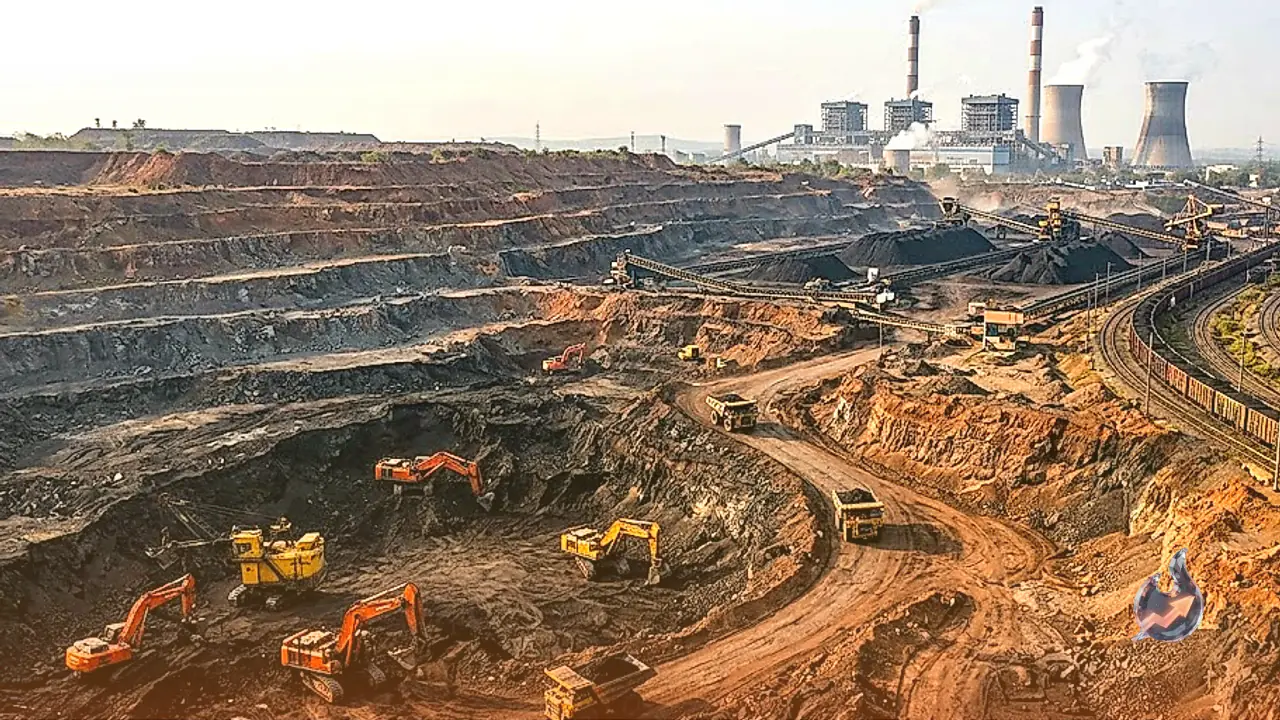
India achieved an annual extraction volume of 1,041 million tonnes of coal during 2025-26, highlighting the scale of national operational capabilities. Coal generation continues to deliver greater than 70 percent of India's aggregate electricity generation, illustrating why internal supply security remains the foundational centerpiece of the broader energy infrastructure.
Environmental Rehabilitation and Community Welfare
Alongside volume targets, current ministerial initiatives emphasize ecological sustainability, technological modernization, and community welfare. Particular focus is being placed on scientific mine closure protocols and comprehensive land restoration once active operations conclude. This structural shift aims to prevent abandoned mining tracts from degrading into barren industrial wastelands.
Dutt underlined that exhausted mining territories must be transformed into co-created, ecologically vibrant habitats in active partnership with surrounding populations. By coupling systemic ecological repair with social stability and local economic well-being, the administration seeks to ensure that resource extraction does not compromise long-term environmental viability.