






















Bicycle Bell and Five Decades of Flavour, Vasudev Bari Serves Tangy Grams in GhazipurIndia
21 Sept 2026, 8:05 am (3 hours ago)· 0

Bicycle Bell and Five Decades of Flavour, Vasudev Bari Serves Tangy Grams in Ghazipur

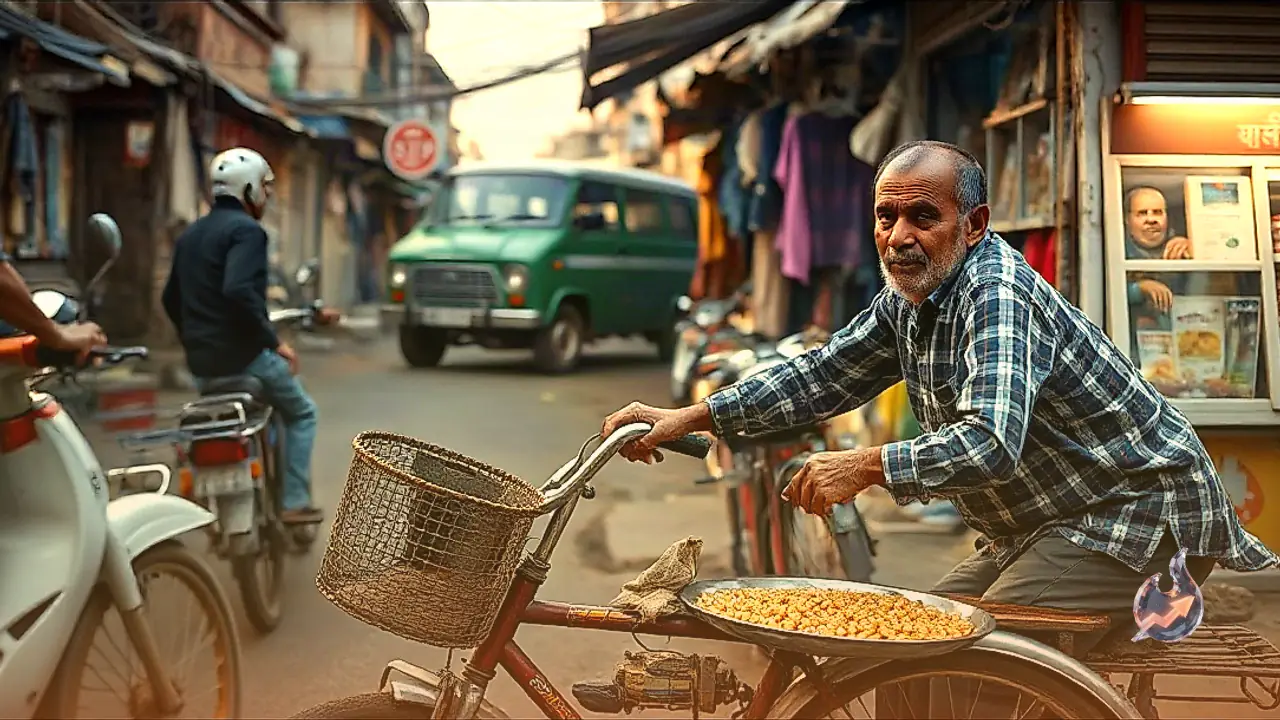
In Urdu Bazar of Ghazipur, 60-year-old Vasudev Bari has been pedalling his bicycle to sell spicy grams for five decades. Priced at just 20 rupees a plate, his traditional snack continues to rival modern fast food.

When the bell of an old bicycle chimes through the lanes of Urdu Bazar in Ghazipur, residents immediately recognise that Vasudev Bari has arrived with his beloved snack. At around 60 years of age, Vasudev continues to pedal through the streets every day, delivering familiar flavours directly to local doorsteps. For him, this trade is far more than an ordinary livelihood, representing an enduring way of life built over decades. The stainless containers and aromatic spices mounted neatly on his cycle frame have earned him an unmistakable identity across the entire neighbourhood.

A Careful Blend of Wholesome Ingredients and Spices

Vasudev arranges all his components systematically across the carrier of his bicycle before setting out. Alongside boiled chickpeas, he carries moong dal, an assortment of seasonings, and complementary pantry essentials. Every serving is tailored to suit the specific preference of the individual customer. Upon request, he adds freshly diced tomatoes, crisp onions, a squeeze of lemon juice, and a balance of piquant spices into the legume base. These humble and fresh ingredients combine harmoniously to create the distinctive tangy taste that attracts people of all ages.

Also read

Daily Rounds and Warm Encounters in the Neighbourhood

The moment Vasudev enters the residential streets of Urdu Bazar, familiar patrons spot him from a distance and call out to stop his bicycle. Schoolchildren and elderly residents alike regularly halt his ride to enjoy a fresh serving of spiced grams. Vasudev notes that his daily routine involves stepping out for roughly three hours, yet within that short window, a steady stream of neighbours gathers around his cycle. The brief outing consistently draws clusters of eager buyers looking forward to their routine afternoon bite.

Affordable Pricing Facing Modern Fast Food Trends

In an era increasingly dominated by processed snacks and fast food options, Vasudev has preserved the appeal of authentic regional street food. He prepares every portion right before the buyer on his bicycle setup, charging approximately 20 rupees per plate. This economical price point, combined with wholesome ingredients, makes it a convenient and nutritious option for the local public. Vasudev observes that while culinary fashions have shifted dramatically over the years, the classic demand for freshly mixed, zesty street snacks remains entirely secure.

Five Decades of Dedication and Community Trust

Vasudev Bari has dedicated roughly five decades to this singular craft, treating every customer as a meaningful part of his long journey. The finished serving of chickpeas, moong lentils, tomatoes, onions, and handcrafted masala reflects skills refined across half a century. His steadfast presence has turned an everyday bicycle and a modest street preparation into a cherished culinary tradition throughout the neighbourhood.


Questions & Answers

Where does Vasudev Bari operate and what does he sell?
Vasudev Bari sells spicy chickpeas and moong dal from his old bicycle in Urdu Bazar, Ghazipur.
How old is Vasudev Bari and how long has he been in this trade?
He is around 60 years old and has been engaged in this trade for five decades.
What is the cost of a plate of his spiced grams?
A plate of his seasoned gram preparation costs approximately 20 rupees.
Which ingredients are combined in the snack?
Chickpeas and moong dal are mixed with tomatoes, onions, lemon juice, and seasonings based on customer preference.
How long does Vasudev spend on his daily rounds?
Vasudev sets out on his bicycle rounds for roughly three hours each day.

Comments 5

Omar AL Mansoori@omar-mansoori·1h ago

This report highlights how local economies and micro-supply chains continue to thrive on traditional models despite the rapid rise of modern consumerism. Spanning half a century, such enduring micro-enterprises demonstrate that against capital-intensive fast-food chains, low-overhead decentralized street vending remains a resilient anchor for community economic stability and cultural continuity.

Arjun Mehta@arjun-mehta·1h ago

This account of Vasudev Bari transcends a simple human-interest feature, serving as a profound reflection on the unorganised micro-economy that forms the backbone of local Indian commerce. At a time when corporate fast-food chains aggressively dominate urban markets, a vendor sustaining a twenty-rupee nutritious snack business for half a century demonstrates the deep resilience of grassroots enterprises. For policymakers, this highlights the urgent need to integrate street vendors into formal welfare frameworks, ensuring that traditional livelihoods and local culinary heritage are adequately protected amidst rapid modernization.

Ayesha Siddiqui@ayesha-siddiqui·1h ago

Vasudev Bari's five-decade journey is not merely a personal struggle, but a testament to the resilience of the informal economy. Across South Asian urban markets, such micro-entrepreneurs sustain grassroots supply chains without corporate backing. However, persistent inflation and infrastructure deficits constantly threaten the livelihoods of these street vendors. Without robust policy-level social security and financial protection frameworks, this traditional source of income risks gradual extinction, which would heavily impact local market diversity.

Karan Malhotra@karan-malhotra·2h ago

Vasudev Bari's five-decade tradition of vending spiced grams on a bicycle for 20 rupees in Ghazipur's Urdu Bazar highlights a remarkable grassroots model of food safety and self-regulation. Operating continuously for fifty years without formal institutional oversight demonstrates how deeply earned community trust and consistent hygiene practices can sustain local micro-enterprises across generations.

Ravikash Gupta@ravikash·2h ago

Vasudev Bari's five-decade business continuity proves that the unorganized sector and micro-entrepreneurship form the backbone of the Indian economy. Operating without digital marketing or formal financial frameworks, relying purely on personal reliability and consistency for fifty years while sustaining a 20-rupee price point despite inflationary pressures is a unique economic model. This highlights a grassroots model of local economy and consumer trust that large corporate entities and modern startups constantly strive to emulate.

Citizen journalism

Become a TrendKia journalist

Voice of the people

Share news, photos and videos from your area with TrendKia and let your voice reach the nation. Every citizen a journalist.

Join now
CH 01 LIVE
TrendKia TV ON AIR
Chamar no WhatsApp