






















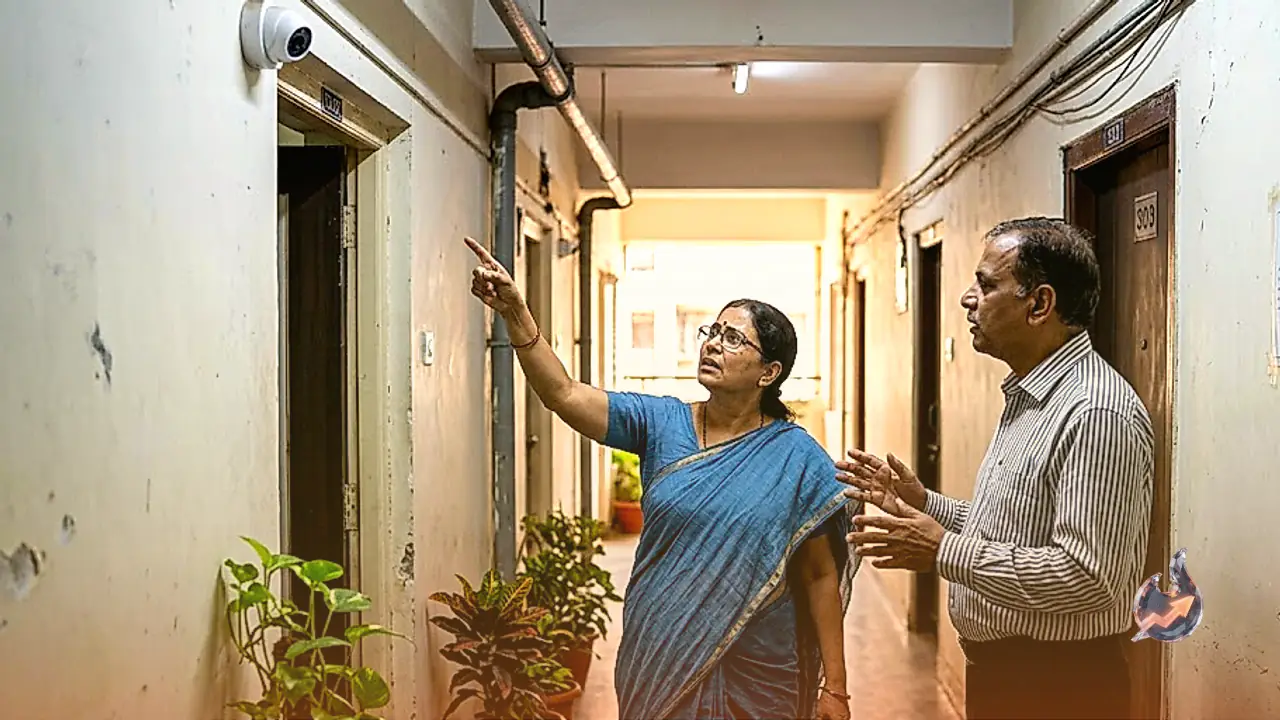

Installing CCTV cameras has become a fundamental security measure across modern residential complexes, particularly in bustling metro cities like Delhi and Mumbai where property rentals form a primary revenue source. However, tensions frequently erupt when landlords attempt to install surveillance equipment directly facing a rented flat's entrance door, balcony, or private passage. Landlords argue that these cameras are meant to safeguard their real estate assets, whereas tenants view them as a direct intrusion into their daily lives. The legal boundary between property ownership and individual privacy has been refined through specific statutory provisions and major judicial precedents in India.
Property Ownership vs Fundamental Right to Privacy
Under Indian jurisprudence, property owners maintain a legitimate right to secure their physical premises by taking reasonable surveillance measures. However, this authority is not absolute and cannot override the constitutional guarantees granted to residents. In a landmark 2017 ruling, the Supreme Court of India declared that the Right to Privacy is an intrinsic part of the Right to Life and Personal Liberty under Article 21 of the Constitution. Consequently, owning a building does not authorize a landlord to subject a legal tenant to continuous or intrusive monitoring, as a tenant's right to personal space takes precedence within their rented dwelling.
Statutory Protections Under Property and Information Technology Laws
Tenant rights are codified across key legal statutes in India. Section 108(c) of the Transfer of Property Act, 1882 guarantees a tenant the right to quiet enjoyment and peaceful possession of the property without unlawful interruption, provided they abide by the tenancy agreement terms. Furthermore, Section 66E of the Information Technology Act, 2000 strictly addresses privacy violations. Capturing, publishing, or transmitting images of a person's private space without their explicit consent constitutes a criminal offense. Violators face severe penalties, including imprisonment for up to 3 years, a fine up to Rs 2 lakh, or both.
Judicial Precedents: The 15 Camera Surveillance Case
Courts across India have consistently stepped in when surveillance exceeds reasonable boundaries. A notable case brought before the Calcutta High Court highlighted the fine line between security and harassment. In that instance, a landlord had set up 15 CCTV cameras across the internal and external areas of a property, with 5 cameras specifically positioned to monitor the tenant's entry points and daily movements. Even though the landlord claimed prior tenant consent, the court ruled that several of those cameras unlawfully invaded the tenant's privacy. The judgment reaffirmed that initial consent does not grant a landlord perpetual freedom to record a tenant's private routines.
Permissible Locations and Legal Boundaries for CCTV
Landlords are legally required to demonstrate a valid security necessity when installing cameras in shared spaces, such as primary building gates or main entryways. However, cameras must never be directed toward flat interiors, private balconies, or living areas where personal activities occur. If a camera angle captures the interior of a tenant's home or impedes their quiet enjoyment of the premises, the tenant has full legal standing to object, request re-positioning, or initiate criminal proceedings under the IT Act.