

















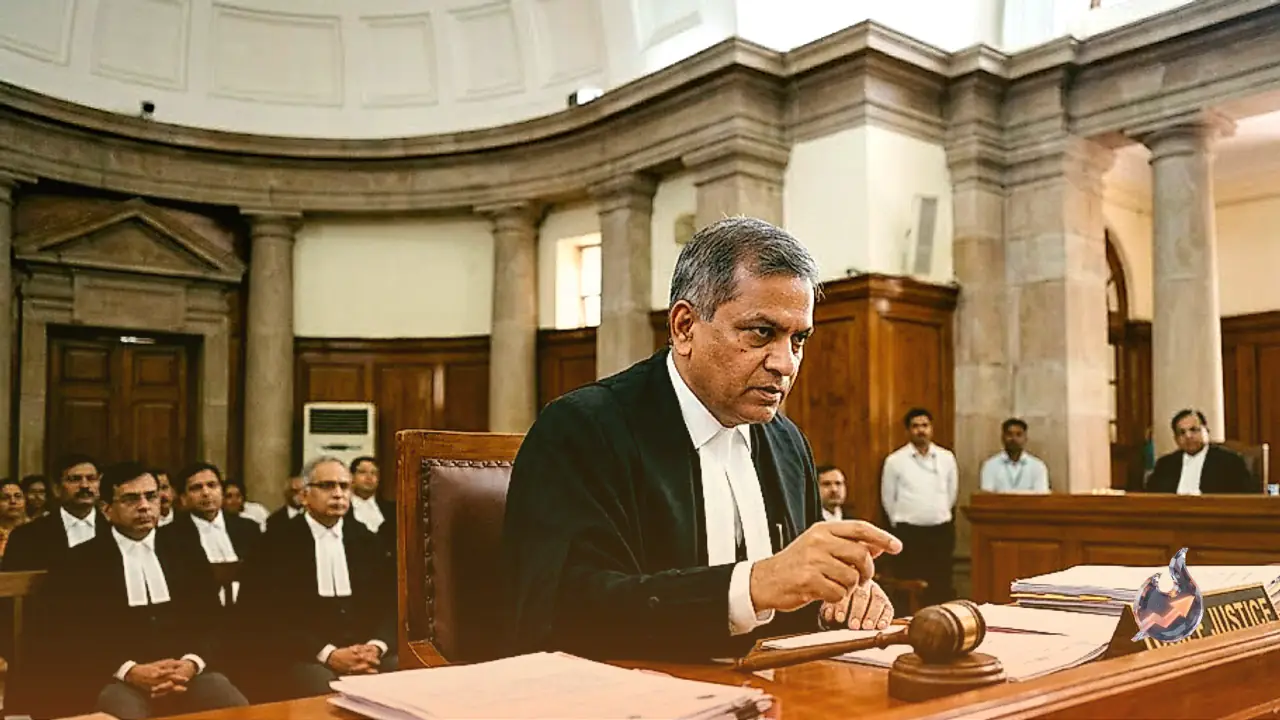

In the ongoing legal proceedings concerning the Aravali hills, the Supreme Court adopted an extremely firm stance on Monday. The high-powered expert committee tasked with defining the region and outlining its conservation measures had sought an additional six months, asking for a deadline extension until February 28, 2027. However, the bench led by Chief Justice Surya Kant completely dismissed this request, making it clear that the panel must work day and night to deliver its final report by November 30, 2026.
The court warned that no further extensions would be granted beyond this deadline. It cautioned that if the committee fails to produce the report within the stipulated timeframe, the entire panel could be reconstituted. The five-member high-powered committee is headed by Kanchana Devi, Director General of the Indian Council of Forestry Research and Education. The committee had argued that conducting a comprehensive and robust scientific assessment of the Aravali range required additional time to study land, environment, water resources, and the socio-economic conditions of local populations.
Despite these explanations, the bench declined to extend the timeline for now. At the same time, the court instructed the committee to submit interim reports on critical issues as they progress, meaning they do not need to wait for the final compiled report to advance essential matters. Furthermore, the court mandated that the committee must consult all relevant stakeholders, including tribal communities from Rajasthan and Gujarat, before finalizing its recommendations.
The definition of the Aravali range has been a subject of long-standing dispute and legal contestation. The outcome of this definition directly dictates where strict environmental protection norms will apply and where commercial activities such as mining will be restricted or regulated. The committee had previously stated that the entire matter cannot be determined through a single land morphology standard or isolated evidence due to the complexity of the terrain.
Earlier, the committee had submitted its compliance report on August 31, indicating that a comprehensive final evaluation requires integrating geographic information, environmental conditions, geological formations, hydrology, and socio-economic data. The process also entails spatial analysis, sensitivity assessments, expert reviews, ground-level physical verification, and extensive consultations with all affected parties.
Meanwhile, the Supreme Court decision has drawn political reactions, with the Congress party expressing disappointment over the refusal to grant more time. Congress leader Jairam Ramesh termed the court's order unfortunate and incomprehensible, arguing that the additional time sought by the panel was entirely justified given the ecological sensitivity of the region and the need for a thorough study.
With the fresh directives in place, the committee now faces a race against time to synthesize all scientific, environmental, and social aspects of the Aravali landscape before the strict November 30, 2026 deadline. The matter has been scheduled for its next hearing on December 2, placing immense pressure on the panel to deliver tangible results swiftly.