





















The aggressive political confrontation erupting around Chief Election Commissioner Gyanesh Kumar is the outcome of a swiftly executed strategic maneuver. The controversy surrounding the functioning of the Election Commission was initially sparked by statements from the Cockroach Janata Party (CJP) and its founder Abhijeet Dipke. Dipke had demanded the immediate resignation of Gyanesh Kumar and announced plans to launch a large-scale mass agitation starting October 2 from Mumbai. This call caught the attention of the Congress leadership, which recognized that staying silent risked allowing a newly emerging youth platform to capture public discontent and street-level momentum. Within 24 hours, Rahul Gandhi moved to take control of the narrative, calling for immediate nationwide protests. On Friday, Congress party workers poured onto the streets across the country to stage aggressive demonstrations outside election offices.
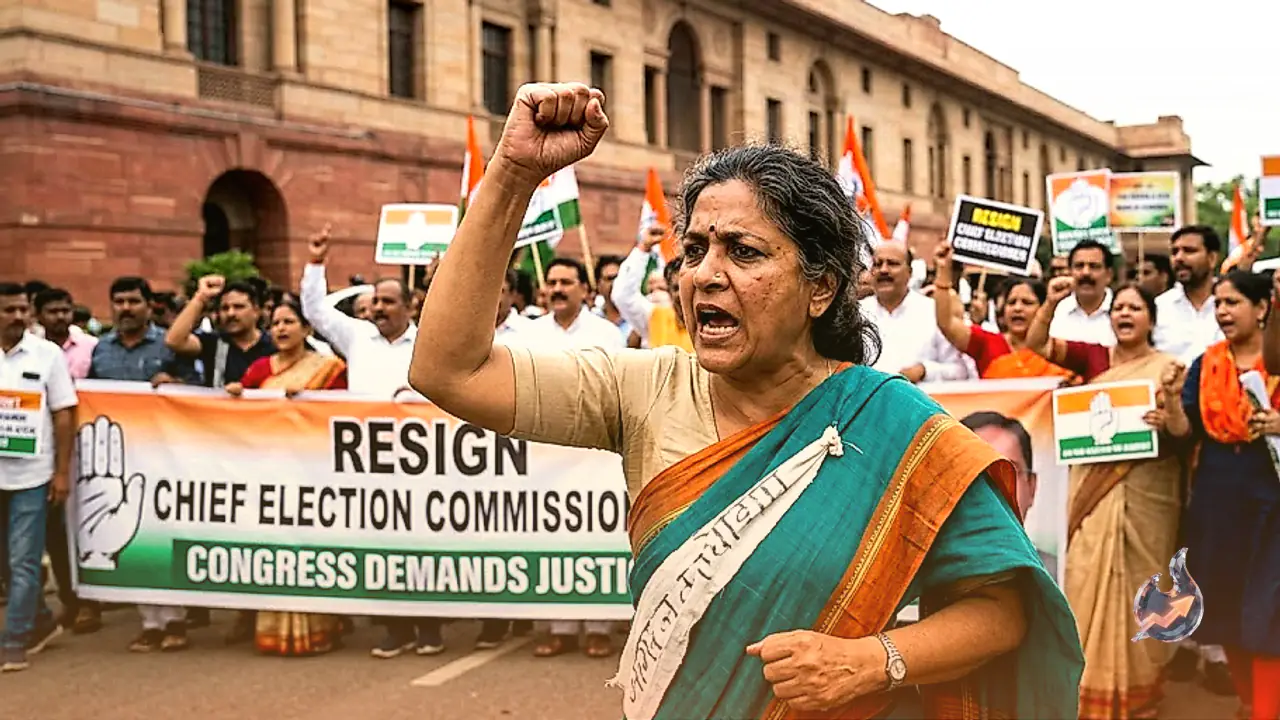
Scenes of demonstrators clashing with police, breaking through barricades, confronting water cannons, and the combative rhetoric from Rahul Gandhi underscored a clear political objective: maintaining the party's position at the forefront of the opposition space. Rather than letting an outside collective dictate terms, the demonstration was an effort to project the organization as the primary force challenging constitutional authorities over electoral fairness.
The Threat of an Independent Youth Agitation
Abhijeet Dipke had not only attacked the Election Commission but had also directed sharp criticism toward conventional opposition parties. He contended that established political groups legitimized compromised elections simply by participating in them. This critique struck directly at a sensitive vulnerability for Congress and other mainstream opposition formations. The strong digital reach of CJP and its traction among younger citizens presented a distinct challenge to traditional party structures.
CJP had issued an ultimatum giving Gyanesh Kumar until Saturday to step down, threatening to launch an agitation termed 'Jantar Mantar 2.0' on Gandhi Jayanti, October 2. Congress strategists recognized that if Dipke managed to mobilize thousands of students and youth onto the streets, the leadership of anti-establishment sentiment could slip away from conventional parties. Consequently, the party decided not to wait until October 2. On September 25, Congress pre-empted the timeline by organizing coordinated picketing outside Election Commission offices across every state.
Internal Dissent Inside the Commission Fuels the Fire
The unrest gained significant momentum following disclosures regarding sharp internal disagreements within the Election Commission itself. According to these details, Election Commissioners Sukhbir Singh Sandhu and Vivek Joshi had formally recorded written objections to decisions made by Gyanesh Kumar on at least 14 separate occasions over the preceding 10 months. The matters in dispute involved sensitive operational issues, including procedures for deleting names from voter lists, registering new electors, and altering guidelines governing Form 6.
These recorded dissents from within the constitutional body provided substantial political ammunition to critics. CJP seized upon the revelation to allege that millions of voters had been systematically removed from electoral rolls under an organized strategy. As soon as the information entered the public sphere, Rahul Gandhi held a press conference to escalate the offensive against Gyanesh Kumar directly. Calling the Chief Election Commissioner an impediment to democratic norms, he called for his immediate resignation.
Coordinated Demonstrations Across the Country
The protest campaign quickly moved from verbal attacks to coordinated street action. Starting early Friday morning, confrontational visuals emerged from various parts of India. In the national capital, Youth Congress cadres gathered on Raisina Road, wearing masks bearing the likeness of Gyanesh Kumar and wrapping their hands in metal chains as they attempted to march toward the Election Commission headquarters. Protesters breached police barriers before security personnel intervened, detaining several leaders including Delhi Congress president Devender Yadav.
Similar unrest unfolded across regional capitals. In Patna, law enforcement deployed water cannons to disperse gathered party cadres. In Assam, state party unit chief Gaurav Gogoi was taken into custody alongside workers while leading protests on the streets. Demonstrations, blockades, and picketing of state election offices were also reported from Kolkata, Chandigarh, Jammu, and Arunachal Pradesh. Through these coordinated regional actions, Congress effectively diverted media focus and public attention away from the proposed youth rally and centered the controversy on its own agitation.
The Battle for Youth Leadership and Narrative Control
CJP does not function as a conventional electoral entity; it developed as a protest movement reflecting frustration among educated, unemployed youth and younger demographics. Its ability to transition from social media commentary into street-level mobilization posed an uncomfortable development for legacy political parties. Rahul Gandhi has persistently sought to position himself as the foremost champion of student concerns, unemployment issues, and constitutional safeguards.
Allowing a spontaneous, youth-led movement to take ownership of charges regarding electoral transparency threatened to diminish the political relevance of established opposition parties. By moving aggressively, Rahul Gandhi ensured that his party absorbed the energy of the issue. Although CJP had planned to inaugurate its agitation on October 2, Congress initiated street action a full week prior, seeking to send a definitive message that it remains the sole organization equipped to mount an expansive challenge to institutional authorities.
Election Commission Response and Ongoing Friction
As demonstrations intensified, the Election Commission sought to downplay allegations of systemic bias. In its clarification, the institution maintained that differences of view and administrative debates among commissioners are routine in any multi-member statutory body. The commission stated that all actions regarding electoral roll revisions, including Special Summary Revisions (SSR), are conducted strictly in compliance with statutory rules and established legal procedures. Despite this official explanation, opposition leaders continue to sustain their pressure, treating voter list modifications as an active political battleground.