



















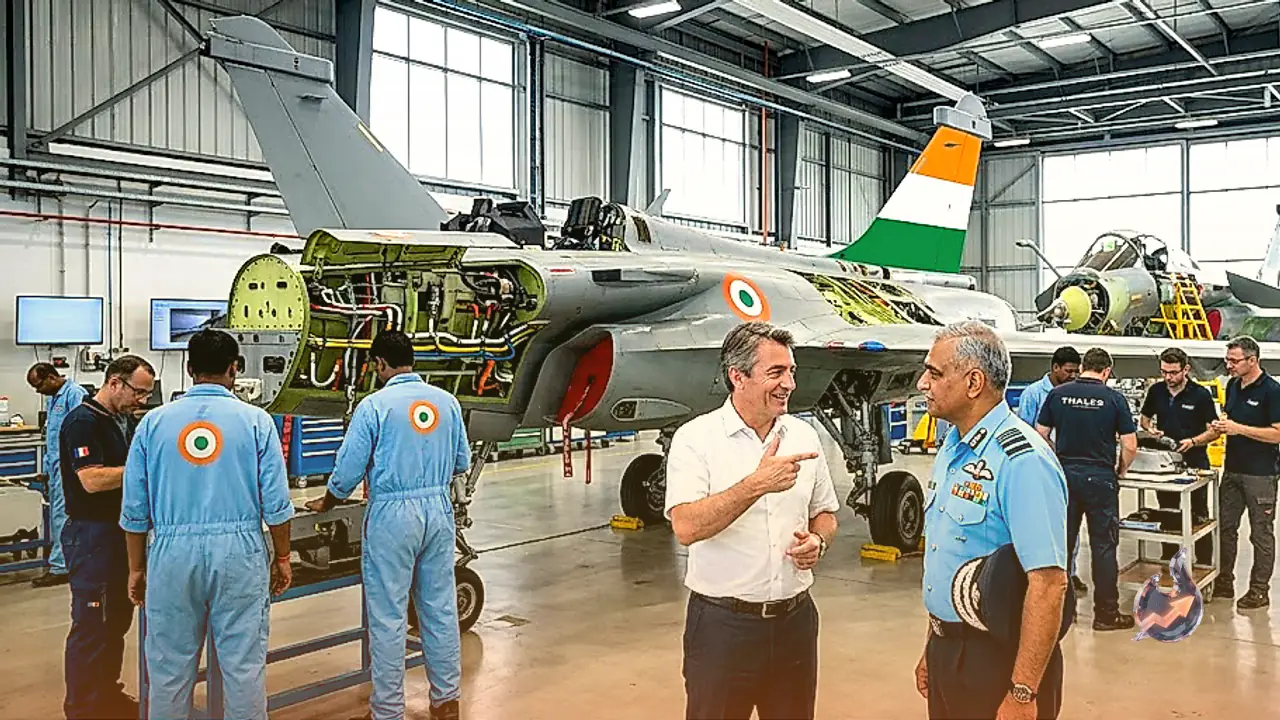

India's Rafale fighter jet program has just received a significant vote of confidence from its French manufacturer. Dassault Aviation has committed to providing 40 years of technical backing for every Rafale jet built in India, meaning the country's Made-in-India Rafale fleet will not run into spare parts or maintenance troubles for the next four decades. For the Indian Air Force, which plans its fleets on multi-decade timelines, this kind of long-range commitment carries real weight.
The assurance lands at a moment when the regional balance of airpower is under close watch. China already operates a fleet of roughly 500 stealth fighter jets, and there is growing talk that Pakistan could acquire a fifth-generation jet from its close ally China, with a deal reportedly possible before long. India's air force, by contrast, still leans mainly on fourth-generation fighters. To close that technology gap, India has launched the AMCA project, under which fifth and, eventually, sixth-generation fighter jets will be developed domestically. That programme is moving forward at pace, but until it matures, the Su-30MKI and the Rafale remain the backbone of the Indian Air Force's strike capability.
India's Biggest-Ever Defence Deal With France
India has signed an agreement with France to acquire 114 Rafale fighter jets, with most of these aircraft to be built inside India. The overall deal is valued at around Rs 3.25 lakh crore, making it the largest defence deal in the country's history. Tied to this mega deal is fresh news that Dassault Aviation has agreed to provide long-term manufacturer support for the India-built Rafale jets. According to reports, the company has committed to Original Equipment Manufacturer, or OEM, support for 40 years from the rollout or delivery date of every Rafale produced in India.
First Jet by 2030, Dassault's Backing Runs Till 2070
If production stays on its planned schedule, the first Made-in-India Rafale could roll out around 2030, while the last aircraft may be handed over to the Indian Air Force by 2036-37. That means the entire fleet stands to benefit from spare parts, maintenance and technical assistance all the way into the 2070s. According to a report from the Indian Defence Research Wing, this long-term support package covers continuous availability of spare parts, regular maintenance, technical assistance, and periodic upgrades as needed. The arrangement has been designed with an eye on both the Rafale's current F4 standard and the future F5 configuration, so the Indian Air Force can keep the aircraft operationally capable across its entire service life.
Rafale Parts Will Now Be Made in India
The standout feature of this arrangement is its heavy emphasis on indigenisation. Under the plan, Rafale spare parts, several key components, and important systems will now be manufactured within India itself. This will involve expanding the role of Tata Advanced Systems along with several other Indian companies. Maintenance, repair and overhaul, or MRO, hubs will also be developed domestically. There is also the possibility of cooperation with the French company Safran in certain engine-related areas. This is expected to reduce India's reliance on the French supply chain, cut down maintenance costs over time, and give a fresh boost to the country's aerospace industry.
The Big Lesson From the Mirage-2000 Experience
This entire model has effectively been shaped by lessons learned from the Indian Air Force's Mirage-2000 fleet. After Mirage-2000 production was discontinued, sourcing spare parts became an ongoing challenge. On several occasions, parts had to be salvaged from older aircraft just to keep the fleet flying, and upgrade programmes ended up costing far more than originally estimated. That experience is why the new Rafale project has built in long-term support and local production right from the outset, aiming to avoid a repeat of those problems.
A Fresh Boost in Capability for the Air Force
In terms of capability, the Rafale's current F4 and upcoming F5 versions will hand the Indian Air Force new strength. These include cutting-edge sensors, advanced network-centric warfare capability, integration of modern weapons, and eventually Manned-Unmanned Teaming capabilities. There are also plans to integrate Indian-origin missiles such as Astra and Rudram into the Rafale, further expanding the use of indigenous weapons. The guarantee of OEM support until 2070 should give the Indian Air Force greater confidence at an operational level and help it plan its finances over the long term. At a time when the air force is working to expand its squadron strength, and indigenous fighter jet programmes like the Tejas MK2 and AMCA are still in development, the Rafale fleet is set to provide a crucial interim capability.