




















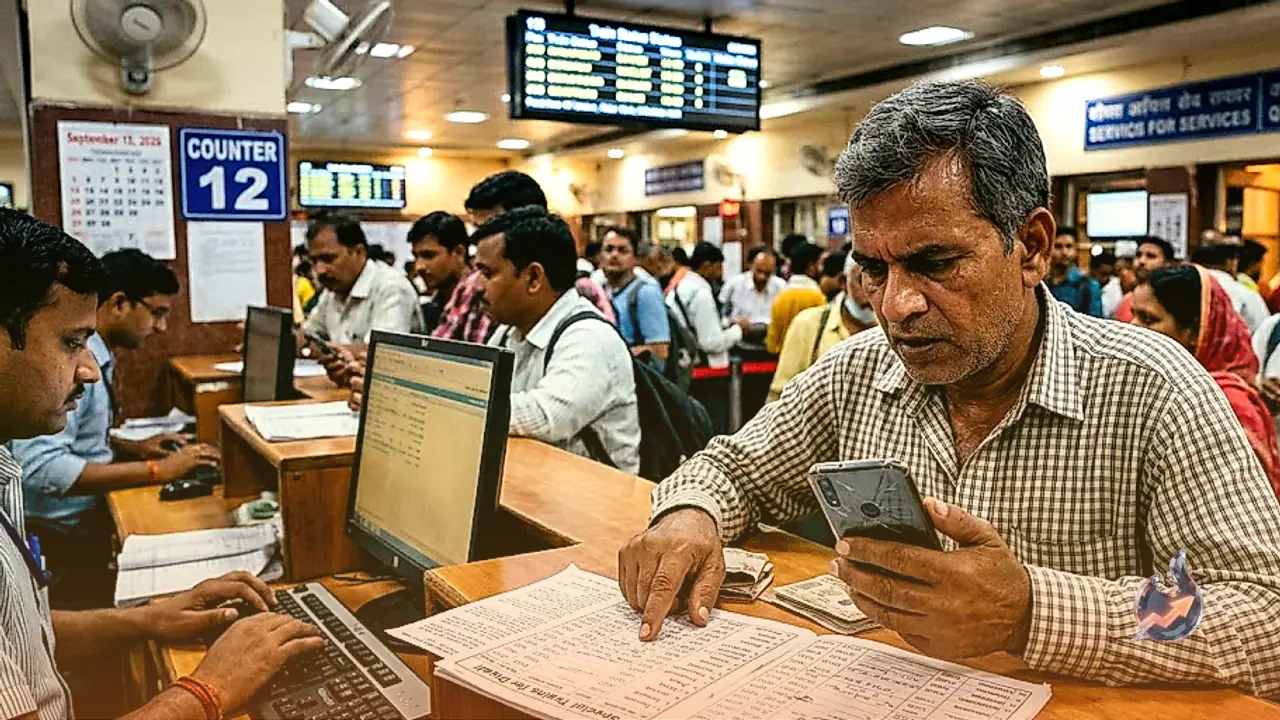

For millions of working professionals, students, and families residing away from their native towns, securing a train berth for Diwali is one of the most critical aspects of festival planning. With Diwali falling on November 8, 2026, the rush for railway reservations has commenced in full measure. High demand is expected not only for Diwali travel but also for the subsequent Chhath Puja festival, which attracts heavy passenger traffic towards Uttar Pradesh, Bihar, and neighbouring states. Understanding advance booking regulations and acting promptly is essential to avoid long waitlists or expensive alternative transport arrangements.
Understanding the 60-Day Advance Booking Rule for Festive Journeys
Under the advance reservation period (ARP) framework governed by Indian Railways, passengers are allowed to reserve train berths up to 60 days before the scheduled date of travel. In calculating this 60-day window, the date of journey itself is excluded. Consequently, there is no single opening date for all Diwali travel; instead, each traveller must calculate their booking date backward from their intended day of departure.
For instance, a passenger intending to travel home on November 5, 2026, saw their advance booking window open on September 6, 2026. Passengers planning to travel on November 8 or return post-festival must track their respective 60-day target dates. Because demand on trunk routes outstrips total seating capacity within minutes of opening, logging in on the exact opening day offers the best chance of securing a confirmed berth.
Special Trains for Uttar Pradesh and Bihar Passengers
To absorb the festive rush, Northern Railway has introduced dedicated Festival Special train services linking key Northern industrial hubs with high-demand destinations across Uttar Pradesh and Bihar.
A major service pair connects Varanasi Junction and Delhi Junction. Train No. 04209 departs Varanasi at 10:15 pm and arrives at Delhi Junction at 1:45 pm the following day. Its corresponding return service, Train No. 04210, leaves Delhi at 6:50 pm and reaches Varanasi at 9:50 am. Operating on designated days from early October through late November, this pair will complete a total of 50 trips over the holiday period.
Passengers travelling between central Uttar Pradesh and the National Capital Region have an additional option with the Ayodhya Cantt. to Anand Vihar Terminal Festival Special. Operating as Train Nos. 04213 and 04214, these services will complete 36 trips across October and November.
To cater to passengers moving between Punjab and Bihar, Indian Railways has scheduled Train Nos. 04511 and 04512 between Chandigarh Junction and Patna Junction. This service stops at major intermediate stations including Ambala Cantt., Saharanpur, Roorkee, Moradabad, Bareilly, Varanasi, Buxar, Ara, and Danapur. Another pair, Train Nos. 04615 and 04616, links Firozpur Cantt. Junction with Patna Junction, providing crucial transit capacity for travellers from Punjab. Authorities have indicated that additional special services may be deployed if demand escalates further.
Pre-Booking Preparations: Strategies to Secure Confirmed Berths
On high-demand routes, available berths sell out almost instantaneously once the reservation counter opens. Spending time during the booking window searching for trains or typing passenger details can lead to missed reservations. Proactive preparation before the window opens is vital for a successful booking.
Travellers should pre-configure passenger master lists in their official railway booking accounts. Pre-saving names, ages, and berth preferences ensures that passenger data populates automatically at checkout. Additionally, shortlisting two or three alternate trains along the same corridor allows passengers to quickly attempt a secondary booking if their primary choice fills up immediately.
Before confirming payment, passengers should thoroughly verify all entered journey parameters, including the date of travel, boarding station, destination, train number, and travel class. Modifying errors after confirmation is often impossible when berth availability drops to zero.
Alternative Solutions if Preferred Tickets Are Sold Out
If tickets on primary trains become unavailable, travellers can utilize several practical workarounds. Shifting the planned travel date by just one or two days can significantly improve seat availability on heavily burdened routes.
Exploring alternative departure or arrival stations within major metro areas is another effective strategy. For example, travellers in the Delhi NCR area can look for trains originating from Anand Vihar Terminal, Hazrat Nizamuddin, or Delhi Sarai Rohilla if New Delhi berths are exhausted. Similarly, booking to or from adjacent regional stations can open up additional train options.
Relying exclusively on Tatkal reservations remains a high-risk approach during peak festive travel. Tatkal quotas are limited, and extreme nationwide demand makes obtaining a guaranteed seat through Tatkal uncertain.
Official Railway Tools, Helpline, and Complaint Support
To stay updated throughout the booking process and journey, passengers should utilize official railway platforms. Live train tracking, schedule verification, and platform information are accessible via the National Train Enquiry System (NTES).
For passenger assistance, general inquiries, or service complaints, the official Indian Railways helpline number 139 operates continuously. Passengers can also access support services and log grievances through the RailMadad mobile app and online portal.