


















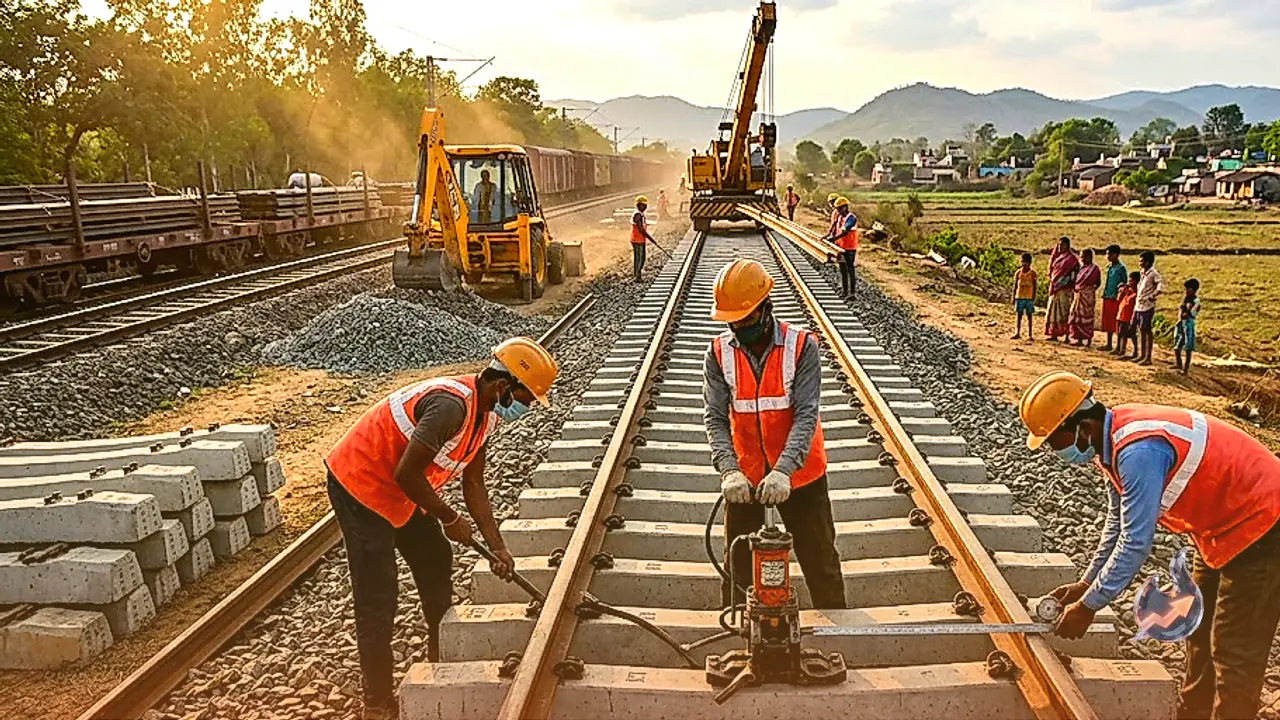

The central government has taken a major step to strengthen India's railway network in the eastern states of Odisha and Jharkhand. At a meeting chaired by Prime Minister Narendra Modi, the Cabinet Committee on Economic Affairs approved two significant multi-tracking railway projects for the region. The two projects together carry a price tag of around Rs 3,907 crore, and once completed, they will add nearly 145 kilometres to the Indian Railways network, making train operations in the area faster and smoother.
Which Routes Will Be Upgraded
Union Minister Ashwini Vaishnav briefed reporters after the Cabinet meeting and explained that the government has cleared work on two separate rail stretches. The first involves doubling the existing Paradeep-Haridaspur rail line, giving the route a second track. The second is the addition of a fourth line on the Rajkharsawan-Dangoaposi rail section, a stretch that currently sees heavy traffic. Railway officials have set a target of completing both projects by 2030-31. They say the added capacity will significantly ease congestion on these busy corridors.
About 14 Lakh People Set to Benefit Directly
The two projects will directly affect four districts across Odisha and Jharkhand. The new line and the added capacity are expected to improve rail connectivity for around 1,526 villages in the region, making travel considerably easier for residents. According to government estimates, close to 14 lakh people stand to gain directly from the upgrade. The benefits will not be limited to passengers alone, officials say, as the projects are also expected to generate employment opportunities and boost local businesses in the area.
A Boost for Tourism and Mineral Transport
Better rail access will also make it easier to reach key tourist destinations in the region, including the Lalitgiri Buddhist complex, the Shree Baldevjew Temple and the Meghahatuburu Hills. Alongside passenger benefits, the upgraded lines will speed up the movement of essential minerals such as coal, iron ore, dolomite, limestone and gypsum. Railway estimates suggest the added capacity will support close to 44 million tonnes of extra freight movement every year, a boost that is expected to benefit the mining and industrial sectors operating in the region.
Environmental and Economic Gains
The government argues that expanding the rail network will reduce dependence on road transport, which in turn should translate into fuel savings and lower emissions. Officials estimate the projects will save around 6 crore litres of oil annually while cutting carbon emissions by close to 29 crore kilograms every year, an impact the government compares to planting about 1 crore trees. The two projects fall under the PM Gati Shakti National Master Plan, and officials say they will strengthen the country's logistics framework while giving a fresh push to development in this part of Odisha and Jharkhand.