























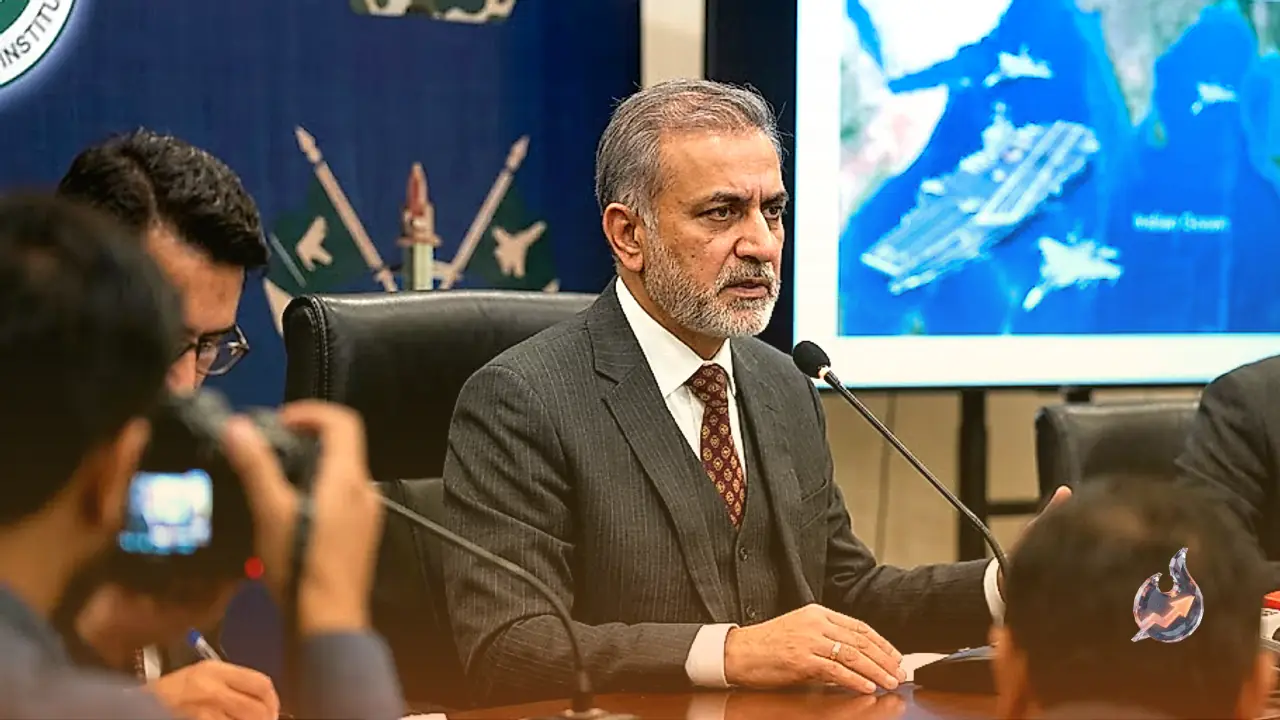

The ongoing modernization of the Indian Navy and the strategic expansion of its maritime aviation assets in the Indian Ocean have drawn significant attention from defense experts across the border. Concerns are growing among Pakistani military analysts regarding India's upcoming deployment of Rafale-M maritime fighter jets aboard the indigenous aircraft carrier INS Vikrant. The integration of these advanced aircraft is projected to significantly enhance India's naval power projection, creating a formidable force balance in international waters that complicates defensive planning for regional neighbors.
Naval Aviation Upgrade and Aerial Superiority Dynamics
Pakistan has invested heavily in modernizing its aerial capabilities in recent years, purchasing 36 J-10CE multirole fighter jets from China. Official documentation from the United States Department of Defense, commonly known as the Pentagon, confirms that the Pakistan Air Force currently maintains 36 of these Chinese-built platforms within its operational inventory. These jets were acquired to serve as a cornerstone of Pakistan's tactical air defense strategy.
In contrast, India finalized a major defense agreement in 2025 to procure 26 Rafale-M fighter jets from France specifically tailored for naval operations. Unlike conventional land-based aircraft, the Rafale-M is purpose-built to execute short take-offs, arrested recoveries, and complex maritime strike missions directly from aircraft carrier decks. Defense analysts evaluating the technical specifications note that the Rafale-M holds a distinct operational edge over the J-10CE in terms of radar capabilities, advanced avionics, weapons integration, and network-centric warfare capabilities. However, military strategists emphasize that actual combat outcomes remain subject to broader tactical leadership, logistics, and operational execution.
The Strategic Strength of the Carrier Strike Group
Beyond individual fighter aircraft performance, defense experts emphasize that India's primary strength lies in the comprehensive operational structure of its Carrier Strike Group (CSG). A single Indian CSG functions as a mobile, self-contained military task force designed to dominate vast expanses of ocean territory. Surrounding the flagship aircraft carrier, the strike group incorporates guided-missile destroyers, multi-mission frigates, attack submarines, fleet replenishment ships, long-range search radars, electronic warfare platforms, and an integrated multi-layered air defense shield.
Modern frontline warships, including the Visakhapatnam-class and Kolkata-class destroyers, form an essential defensive umbrella around the carrier. These vessels carry sophisticated sensor suites and air defense systems engineered to detect, track, and intercept incoming threats, such as adversary combat jets, unmanned aerial vehicles (drones), and anti-ship cruise missiles, at extended standoff ranges. Furthermore, the Rafale-M jets carry the potent Meteor Beyond Visual Range (BVR) air-to-air missile. This state-of-the-art missile capability empowers Indian naval aviators to engage enemy airborne targets long before they enter visual range. Under operational conditions, the Rafale-M acts as the outermost defensive perimeter, backed by two additional layers of ship-based missile interceptors operating beneath it.
Indigenous Aircraft Development and Long-Term Carrier Vision
While foreign procurements provide immediate operational capabilities, India's naval strategy relies heavily on long-term self-reliance. The nation is actively advancing its indigenous Twin Engine Deck Based Fighter (TEDBF) program. Developed specifically for carrier operations, the TEDBF project is designed to replace the navy's existing fleet of Russian-built MiG-29K fighter jets over the coming years, ensuring indigenous technological sovereignty in naval aviation.
Simultaneously, discussions and strategic evaluations are underway regarding the construction of a third, larger aircraft carrier for the Indian Navy. Expanding the carrier fleet would enable India to maintain continuous dual-carrier operations across both the eastern and western seaboards, further cementing its strategic maritime posture in the wider Indo-Pacific region.
Evolution into a Recognized Blue Water Navy
Military analysts observing these developments note that the Indian Navy has successfully transcended traditional coastal defense roles. Through sustained investments in long-range guided missile destroyers, nuclear and conventional submarines, carrier-borne strike aircraft, and network-centric command networks, India is establishing itself as a prominent Blue Water Navy capable of projecting power across open oceans.
As a result, discussions among defense analysts highlight how the maritime balance of power in the Indian Ocean is progressively tilting in India's favor. The planned induction and full operational deployment of Rafale-M fighters on INS Vikrant represents a decisive milestone in this ongoing naval transformation.