
















Rahul Gandhi has maintained a consistent offensive against the ruling dispensation, alleging that the Bharatiya Janata Party secures electoral triumphs not through grassroots popularity but via direct institutional support from the Election Commission. Several opposition outfits have joined this chorus, raising pointed objections regarding the Special Intensive Revision or SIR of electoral rolls. Yet, seasoned political observers and treasury benches question whether blaming constitutional machinery sufficiently explains a decades-long pattern of political shrinkage, or whether the grand old party urgently needs an unsparing audit of its own organizational health, leadership efficacy, and programmatic outreach.
Grave Allegations Require Verifiable Evidence
The scope of Gandhi's political critique extends far beyond the poll watchdog, directly naming Prime Minister Narendra Modi, Home Minister Amit Shah, and the Rashtriya Swayamsevak Sangh as architects of institutional capture. The party insists that the autonomous poll-conducting apparatus tilts the playing field to favor the ruling establishment. Demanding free, transparent, and scrupulously monitored balloting remains the foundational right of every political opposition in a constitutional democracy. Nevertheless, when accusations strike at the integrity of premier oversight bodies, they must be substantiated with granular proof and documented discrepancies rather than unsubstantiated rhetorical salvos. Questioning the referee cannot substitute for addressing systemic internal decay that has systematically separated the party from vast voting demographics.
Amit Shah Cites Four Decades of Electoral History
Rebutting the opposition's charges, Home Minister Amit Shah placed Congress's own electoral balance sheet into sharp relief. His counter-argument was straightforward: if irregularities in electoral roll revisions and poll commission partiality are the true drivers of Congress's defeats, what explains its structural collapse across vast states where it has failed to form governments for decades on end? Shah emphasized that rather than seeking external alibis, the opposition leadership must undertake a sober internal post-mortem to determine why voters consistently reject its platform across distinct geographies.
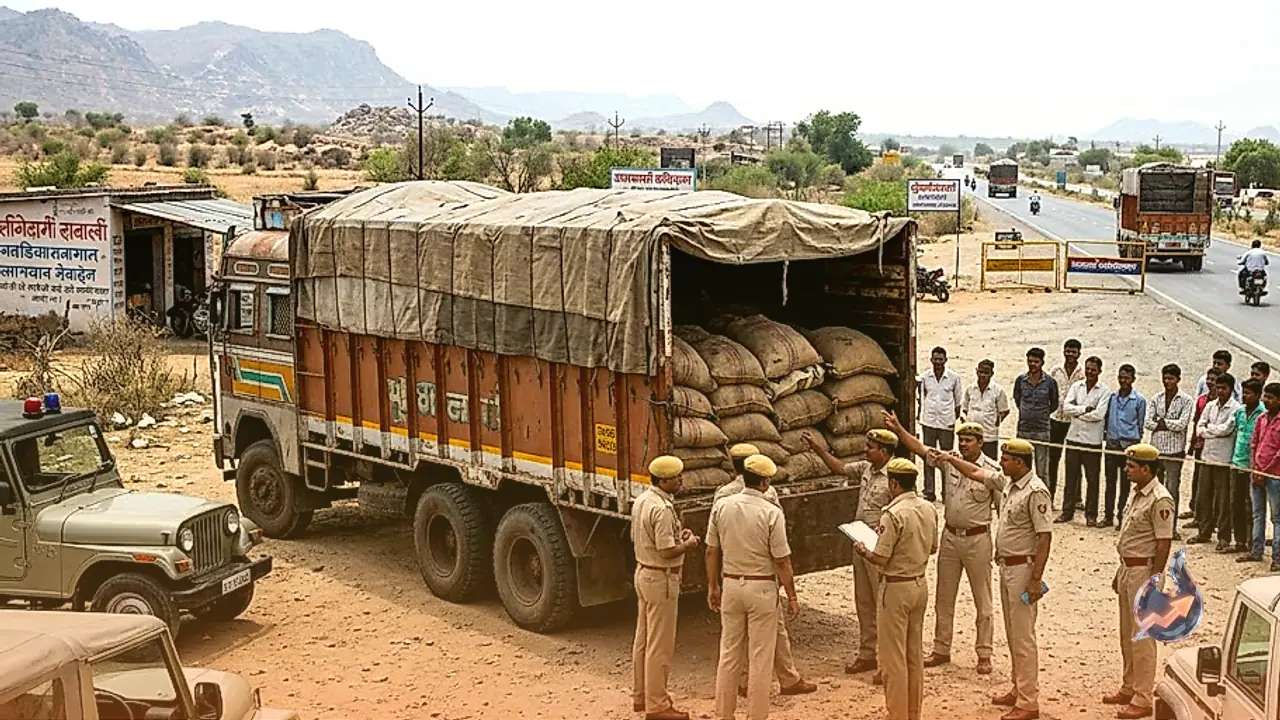
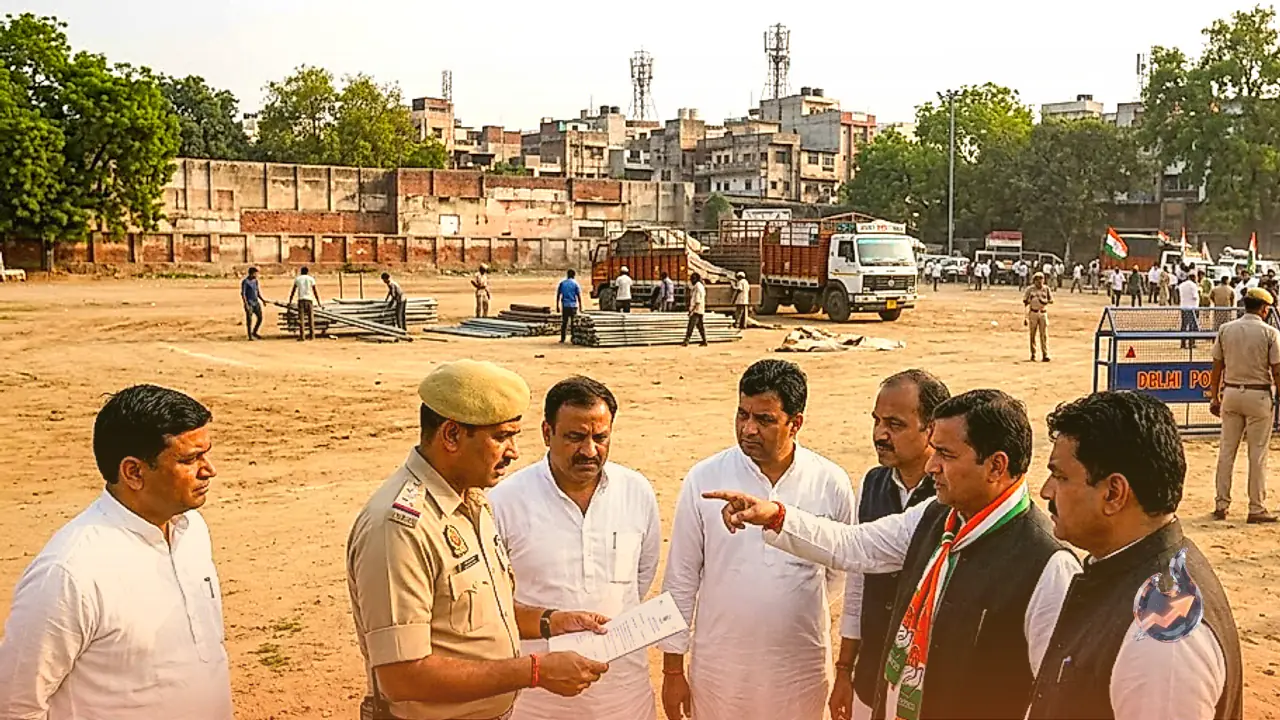
Shah's remarks immediately prompted sharp retorts from senior Congress functionaries, though each pursued an entirely separate line of defense. Jairam Ramesh challenged the government to disclose the precise number of infiltrators detected during the SIR exercise, how many illegitimate names were expunged from the voter registries, and how many individuals were ultimately deported from Indian soil. Simultaneously, Pawan Khera raised strong objections against the massive security mobilization and heavy police presence deployed around Delhi's Jantar Mantar. Adding to the debate, party general secretary KC Venugopal characterized Shah's pronouncements as an advance proclamation of future poll outcomes, accusing the ruling party of preemptively seeking to influence electoral processes.
Structural Blind Spots Overshadowed by Political Clashes
Amid these fast-paced political skirmishes, the substantive debate concerning sustainable electoral competitiveness receded into the background. While scrutinizing the operational integrity of voter lists and demanding administrative rigor during SIR is legitimate, the party has yet to demonstrate a coherent blueprint for rebuilding its depleted voter coalitions in regions where it has remained absent from administrative power for generations. The core takeaway from Shah's intervention remains unassailable: vocal criticism of governmental authority cannot serve as a permanent surrogate for repairing foundational organizational weaknesses.
Four Decades Without an Independent Parliamentary Majority
Hard electoral data underlines the historical depth of this structural impasse. More than four full decades have elapsed since the Congress party last secured an outright, self-reliant parliamentary majority in the Lok Sabha. The last time it crossed the threshold was during the 1984 general elections, held under extraordinary national trauma following the assassination of then Prime Minister Indira Gandhi, when the party clinched 404 seats out of the 543 elected constituencies. In every general election contested thereafter, the party has fallen short of an independent majority.
Under the stewardship of Rajiv Gandhi, the party went to the polls in 1989 and 1991, failing to secure a single-party majority on both occasions. A significant rebound occurred under Sonia Gandhi in 2004 and 2009, when the party won 145 and 206 seats respectively, piecing together the United Progressive Alliance with regional allies to govern at the Center for a decade. Even during those resurgent phases, however, the organization remained far removed from an outright legislative majority on its own strength.
The electoral fortunes experienced a severe downslide in the 2014 general election, which saw the party plummet to a historic nadir of just 44 seats. In 2019, it managed only a marginal uptick to 52 seats. Although the 2024 parliamentary contest saw a recovery to 99 seats, the tally still leaves the party vastly distant from the halfway mark in the 543-member house. These recurring milestones demonstrate that the party's core vulnerability long predates modern SIR exercises or recent updates to voter registries, making administrative proceduralism an inadequate explanation for generational political contraction.
Persistent Decline Across Critical State Arenas
Once the undisputed political force commanding state assemblies across India, Congress finds itself severely weakened across multiple key provinces. In Tamil Nadu, more than six decades have passed since the party last had its own chief minister in office, leaving it fundamentally reliant on regional alliances. In West Bengal, the party has spent decades on the political periphery, marginalized by distinct regional contenders. In Uttar Pradesh, historically the country's preeminent political battleground and a traditional party bastion, Congress has been unable to mount a serious bid for power on its own for decades. Parallel realities prevail in Gujarat and Odisha, where the party has experienced extended, multi-decade exclusions from government.
Each state presents its own sociological matrix and competitive dynamics. In several territories, powerful regional players emerged by consolidating social groups previously aligned with Congress. In other theatres, the Bharatiya Janata Party systematically expanded its footprint through ideological consolidation and dedicated cadre mobilization. The central challenge confronting the grand old party is reading these evolving local realities and crafting tailored strategies rather than relying on historical legacies. Evoking past national accomplishments cannot restore contemporary voter trust; that requires robust grassroots organizational machinery, empowered state leaders, and relentless day-to-day engagement with civic grievances.
Street Demonstrations Cannot Replace Deep Groundwork
Political commentator Bikram Upadhyay notes that Amit Shah's advice reflects practical electoral dynamics that no modern political machine can afford to ignore. Organizing transient demonstrations and assembling a few thousand party workers in the capital cannot deliver victory across vast, complex constituencies. Political organizations must build continuous, deep-rooted contact networks in rural villages, mofussil towns, and marginalized neighborhoods, engaging systematically with local hardships and delivering tangible policy alternatives.
This institutional imperative applies across the spectrum of Indian democracy. Peaceful assembly and public agitations remain indispensable components of democratic life. Demanding full accountability from the Election Commission and safeguarding the sanctity of electoral rolls are essential duties of an alert opposition. However, when administrative critiques become a recurring shield to deflect from organizational deficits, candidate selection weaknesses, and ideological vagueness, voters inevitably look elsewhere. Lasting political revival demands relentless grassroots construction, inspiring local leadership, and an unbroken bond of trust with the electorate.