





















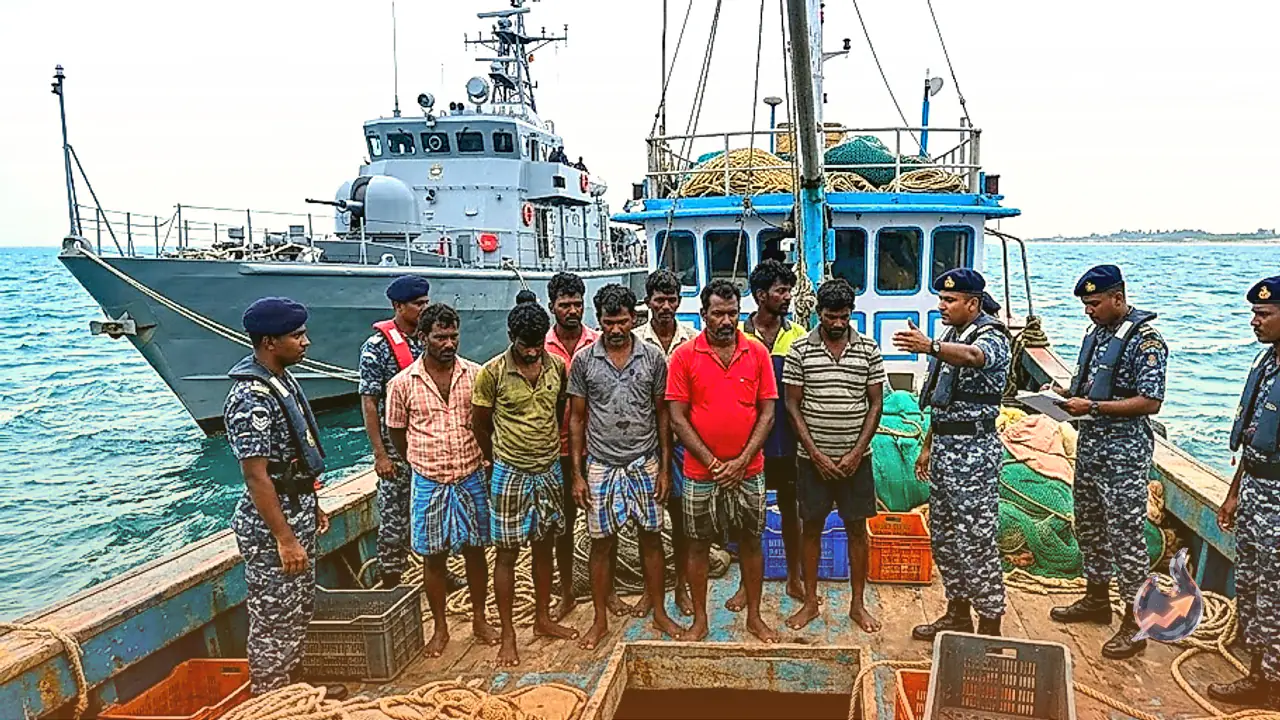

The maritime boundary conflict between neighboring nations has escalated once again following the detention of nine Indian nationals. The Sri Lankan Navy has confirmed the arrest of these individuals, along with the seizure of their primary fishing trawler. Authorities allege that the crew deliberately crossed the International Maritime Boundary Line and engaged in unauthorized fishing activities within the territorial waters of the island nation. This incident highlights the continuing friction over fishing rights in the resource-rich waters that separate the two countries, adding another complicated chapter to a historical dispute. For decades, this contested zone has heavily influenced local coastal economies and broader bilateral diplomacy.
Surveillance Operation and Interception
According to official naval statements, the apprehension took place during a targeted marine surveillance operation designed to protect local resources. Naval personnel detected a massive cluster of Indian fishing vessels operating well within Sri Lankan jurisdiction. The specific group involved in this incident was intercepted north of Talaimannar, a coastal settlement located on the northwestern edge of the island. The authorities reported that a fleet exceeding 50 Indian trawlers had encroached deep into the waters south of Iranativu. When the naval patrol units initiated their enforcement action, these foreign vessels were actively conducting heavy fishing operations.
During the course of this maritime security operation, naval forces successfully isolated and intercepted one specific trawler from the larger fleet. The nine crew members aboard the vessel were immediately taken into custody without any reported resistance. The boat itself was impounded by the responding authorities to prevent further use. Following standard enforcement protocols, the detained individuals and their confiscated vessel were subsequently transferred to the jurisdiction of the fisheries inspector based in Mannar. They are now awaiting further legal proceedings under the strict marine conservation and fisheries laws implemented by the island nation. The exact identities and hometowns of the arrested men have not been publicly disclosed by the authorities at this time.
Ongoing Dispute Over Traditional Fishing Grounds
This latest enforcement action occurs against a backdrop of persistent tension regarding maritime borders and marine resource access. The fishing dispute remains one of the most highly sensitive and complex issues dominating bilateral diplomatic relations between New Delhi and Colombo. Fishing communities residing in Tamil Nadu have consistently demanded sustained access to their traditional fishing grounds located within the Palk Strait, citing generations of historical usage. Conversely, the island nation maintains a firm and unyielding stance, strictly enforcing its territorial sovereignty and continuing heavy crackdowns on any unauthorized foreign vessels entering its waters.
Environmental Concerns and Border Realities
Over recent years, authorities in Colombo have significantly intensified their coastal patrols and surveillance mechanisms to deter cross-border incursions. A primary environmental and economic concern for the island nation is the widespread use of mechanized bottom trawlers by the incoming fleets. Officials argue that this highly aggressive method of fishing causes severe, lasting damage to the delicate marine ecosystem and completely devastates the seabed. On the other side of the dispute, the Indian fishing community cites the rapid and severe depletion of fish stocks on their own side of the border. They argue that the extreme close proximity of the international boundary often leads to entirely unintentional crossings while desperately pursuing the dwindling daily catch.
Mounting Arrests in a Contested Waterway
Data released by the naval authorities underscores the massive scale of the ongoing territorial conflict. As of April 15 this year alone, a total of 128 Indian nationals had already been detained on serious allegations of poaching within the territorial waters of the island nation. Furthermore, authorities had successfully impounded 18 Indian fishing trawlers during that exact same time period. The Palk Strait, the famously narrow body of water separating the northern coast of the island from Tamil Nadu, serves as a crucial economic zone for both populations. It remains one of the most heavily exploited fishing grounds in the entire South Asian region, drawing immense fleets from both sides of the maritime border.
The strict geographical reality of this incredibly narrow waterway ensures that it remains a constant flashpoint for bilateral friction. Crews from both nations frequently face sudden detention on accusations of violating the established maritime boundaries. While diplomatic channels between New Delhi and Colombo frequently host high-level discussions aimed at finally resolving the long-standing dispute, practical solutions remain stubbornly elusive on the ground. The routine, predictable cycle of border incursions, subsequent arrests, and the permanent seizure of expensive fishing equipment continues to disrupt the daily lives of the impoverished coastal communities relying entirely on these waters for their basic livelihood.