






















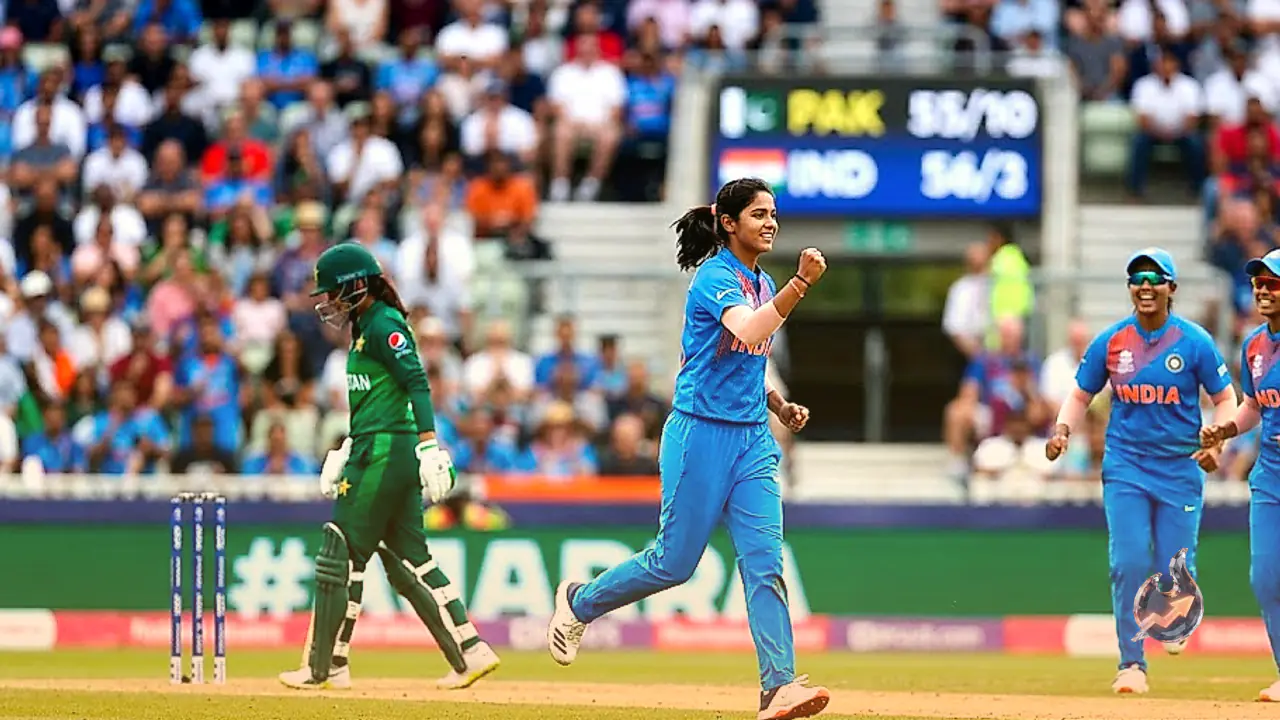

India's four-pronged spin attack produced one of the most one-sided contests of the Women's Asia Cup T20 campaign, bowling Pakistan out for just 55 runs. Left-arm spinner Shree Charani was the chief destroyer with figures of three wickets for seven runs, leg-spinner Prema Rawat returned three for nine, Deepti Sharma took two wickets while conceding only five runs, and Shefali Verma added one wicket for 10 runs. Chasing a modest target, India cruised home by seven wickets with as many as 68 balls to spare.
The win did not change India's position at the top of Group A, where a semifinal spot had already been secured. Having won all three of their league-stage matches, the side closed out the group phase on six points, finishing comfortably clear at the summit of the table.
Pakistan's team had never previously been dismissed for a lower total in a Twenty20 International, meaning the 55 all out now stands as the worst batting outing in the side's format history, a stark measure of just how dominant the Indian bowlers were.
Three quick blows undid a promising start
Pakistan's innings had actually opened brightly, with the top order putting together 27 runs without losing a wicket inside the first four overs, and it looked as though the side was building towards a big total. Shefali Verma broke that opening stand by removing Muneeba Ali, handing India their first breakthrough of the innings. The floodgates truly opened once Charani was introduced into the attack. She accounted for Shawal Zulfiqar, Gull Feroza and Ayesha Zafar in a devastating spell, and by the time she had taken her second and third wickets in the sixth over, Pakistan had slumped to 29 for three. There was no recovery from there, and the innings folded for 55 soon after.
The method behind Charani's spell
The 22 year old is now just one wicket short of reaching the 50 wicket mark in T20 International cricket, a milestone that underlines how quickly she has established herself in India's bowling unit. She attributed her consistent performances to keeping her approach uncomplicated and staying focused on the basics rather than overthinking her plans. According to her, the emphasis is entirely on her own game and on executing her role correctly, rather than reacting to the opposition or the pressure of the situation. Before the match, an assessment of the pitch convinced her that the surface would offer turn, so she built her entire spell around bowling straight at the stumps and trusting the pitch to do the rest of the work.
Charani also described how the bowling unit prepares collectively before taking the field.
"We discuss what needs to be done in the match," Charani said.
She explained that she, Prema Rawat, Deepti Sharma and Radha Yadav sit together ahead of matches to work out a shared plan, and that once the more experienced bowlers among them, Deepti and Radha, settle on an approach, the rest of the group tries to carry it out once play begins.
High praise for her spin partner
Charani had special words of praise for Rawat, whose leg spin repeatedly troubled the Pakistan middle order through the innings. She described her as an instinctively gifted cricketer who brings far more to the side than just her bowling, pointing to her fielding as well as her ability to chip in with useful runs whenever needed, calling her a well-rounded package for the team. Assessing the surface, Charani felt that a total in the region of 120 would have counted as a genuinely competitive score, a comment that reflects just how heavily conditions were tilted in the bowlers' favour through the match.
A tactical reshuffle and a match by match approach
Charani also pointed to the decision to promote Deepti Sharma up the batting order as a calculated move rather than a routine change, suggesting the team management is willing to reshuffle its batting sequence depending on the situation in front of it. With the semifinal already locked in and the group stage finished at the top of the standings, Charani indicated that the squad's mindset going forward is to treat every remaining fixture of the tournament on its own terms, taking the competition one match at a time rather than looking too far ahead.
The margin of victory, seven wickets in hand with 68 balls still unused, only reinforced how comprehensively India dominated proceedings from the moment Pakistan's top order began losing wickets in clusters.