





















Immediately following the celebrations of Diwali, Delhi has transformed once again into a severe gas chamber. The toxic smog hovering over the national capital is fueled not just by firecrackers, but also by farm fires set deliberately while the celebrations drowned out the noise. The heavy price for this is now being paid by the entire National Capital Region, where residents face hazardous air quality conditions.
A Massive Surge Recorded on Diwali Day
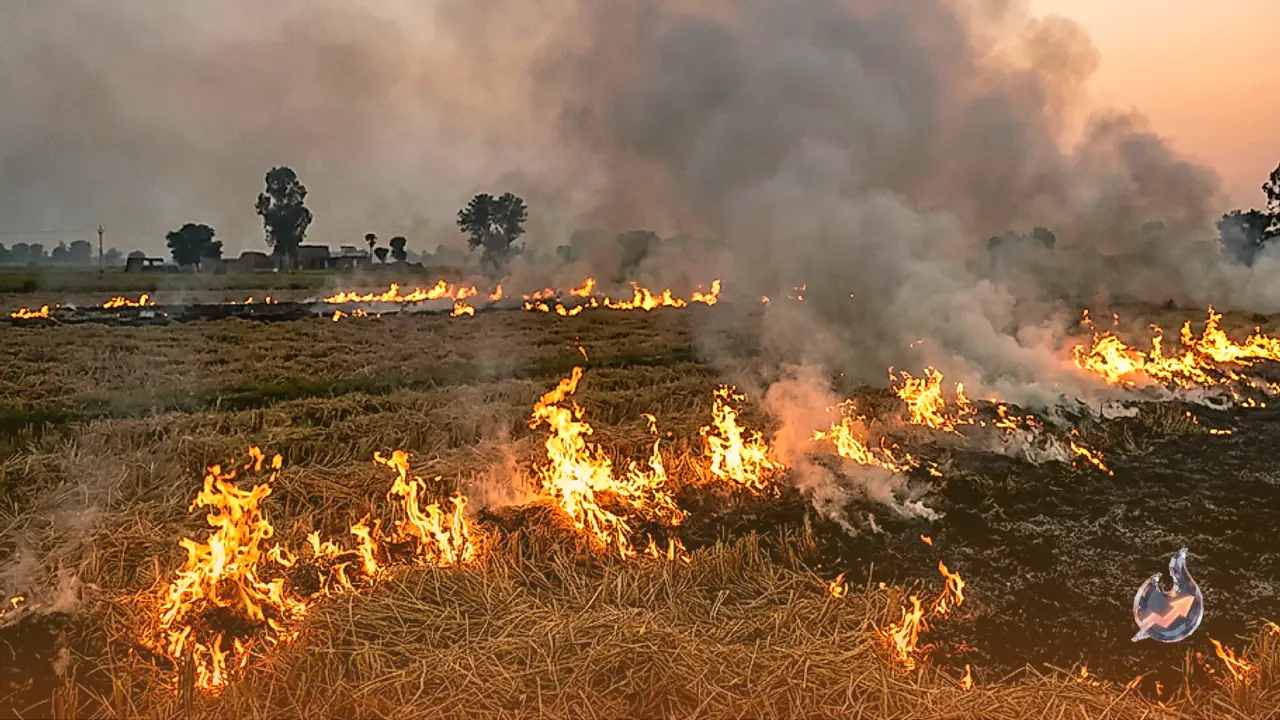
According to available details, stubble burning incidents witnessed a sharp and sudden spike on Sunday, coinciding with Diwali during the ongoing paddy harvesting season. Official data from the Punjab Remote Sensing Center (PRSC) indicates that satellites tracked and recorded a total of 1,152 active farm fires across the state on November 8, 2026. This number represents a massive jump compared to previous days, particularly because just a day before Diwali on November 7, the state had recorded only 163 such stubble-burning instances.
Sangrur district recorded the highest number of stubble-burning cases in the state on Sunday, with 194 fire incidents documented in a single day. Experts and observers allege that farmers deliberately torched stubble amidst the noise and smoke of Diwali firecrackers to bypass scrutiny and hide behind the festive chaos, though these incidents were successfully tracked by satellites.
Cumulative Figures and Strict Administrative Actions
With this latest spike, the cumulative total of stubble-burning cases in Punjab for the current season has now climbed to 4,459. These regions continue to remain the biggest pollution hotspots this season, accounting for more than half of the total recorded cases. To curb these violations, administrative authorities have imposed an environmental compensation fine totaling around ₹6,255,000 on defaulting farmers, out of which ₹3,260,000 has already been successfully recovered.
In addition to financial penalties, stringent legal actions have been initiated under the Bharatiya Nyaya Sanhita, resulting in 884 FIRs registered against violators and 1,017 'red entries' marked in the official government revenue records of their agricultural lands.