























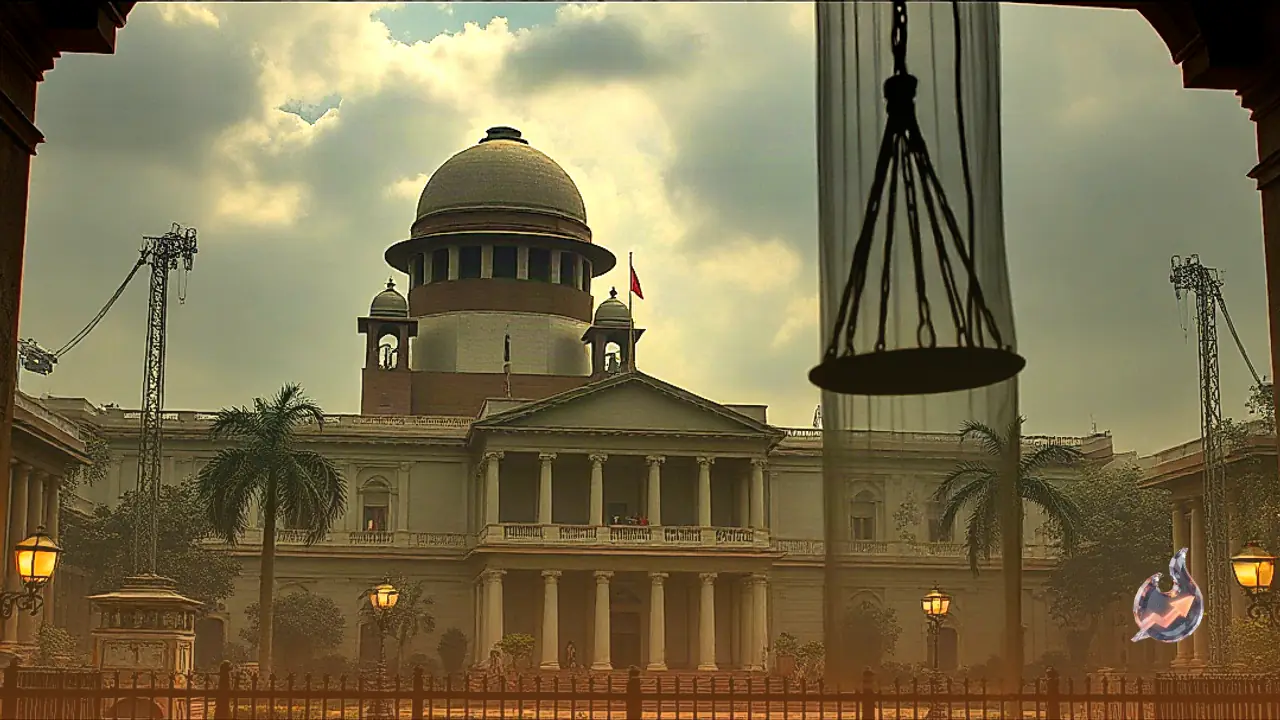

The Supreme Court has rejected a Public Interest Litigation seeking to declare execution by hanging unconstitutional, affirming that the traditional method remains legally valid under current statutory provisions. While dismissing the plea, the top court observed that the Union Government remains free to examine alternative execution methods if it chooses to do so on scientific and medical grounds.
Dignity in Execution and the Petitioner's Demands
The PIL was moved by advocate Rishi Malhotra, who raised fundamental questions regarding the humaneness and dignity of hanging death row convicts until death. The petitioner argued that hanging involves prolonged agony and physical suffering that violates individual dignity during the execution process. Malhotra suggested that the legal framework governing capital punishment should adopt less painful alternatives, citing options such as lethal injection, shooting, or electrocution to minimize physical distress.
Arguments on Alternative Methods and Global Practices
During the proceedings before a bench of Justice Vikram Nath and Justice Sandeep Mehta, legal representatives from Project 39A also placed detailed submissions concerning execution protocols used across various international jurisdictions. The bench was briefed on the global experiences associated with alternative execution procedures. However, the discussions underscored that alternative methods are not without their own sets of complex legal, medical, practical, and ethical challenges.
Government Position and Mental Impact on Executioners
Appearing on behalf of the Union Government, Attorney General R. Venkataramani informed the court that expert-level evaluations could be undertaken to assess alternative execution mechanisms. This opens the door for the central government to consider scientific and medical evaluations regarding execution methods in the future. Additionally, the Supreme Court reflected on broader humanitarian dimensions involved in capital punishment, including the psychological toll exacted on executioners tasked with carrying out death warrants.