

















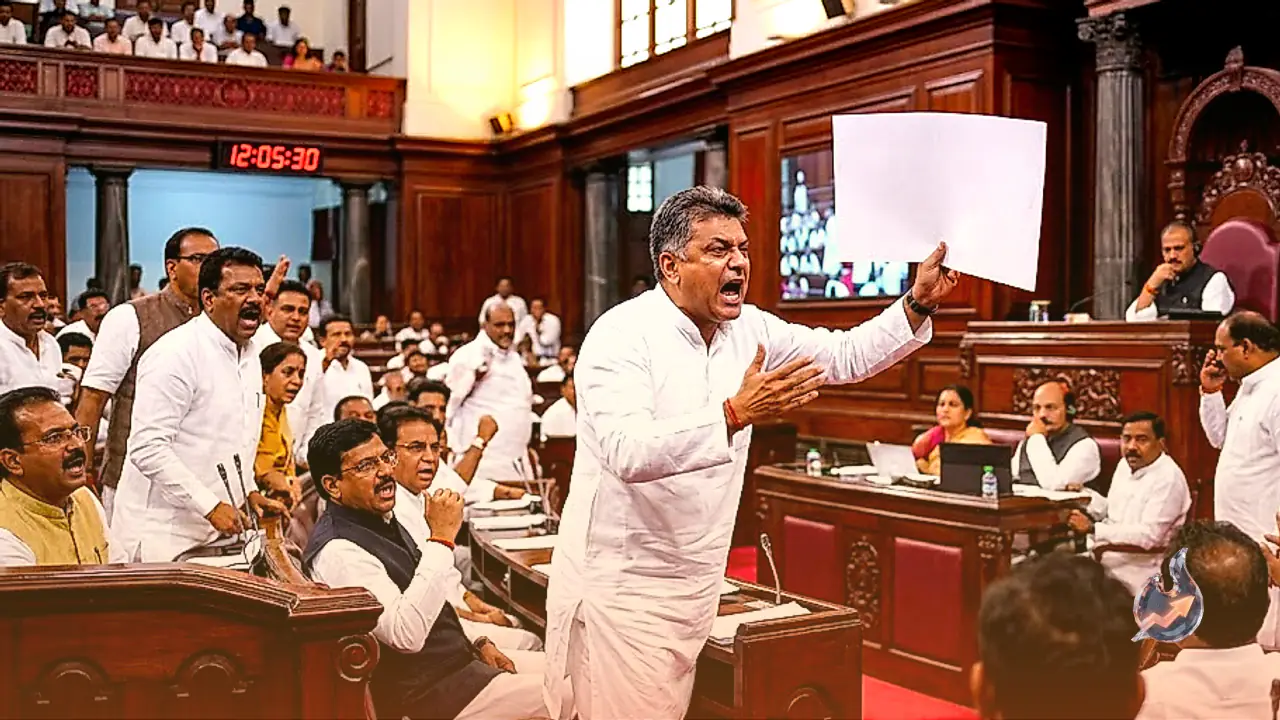

The highly anticipated Monsoon Session of Parliament, scheduled to run for a comprehensive span of 25 days, has commenced on a significantly turbulent note. With a total of 19 vital legislative sittings on the official calendar, political observers and citizens alike expected robust debates and the passage of crucial reforms. However, the very first day served as a chaotic trailer for what might be a deeply fractured parliamentary schedule. Instead of constructive dialogue, both Houses of Parliament—the Lok Sabha and the Rajya Sabha—were instantly engulfed in relentless uproar and intense sloganeering by opposition lawmakers. This uncompromising stance from the opposition benches set a confrontational tone, signaling a rocky path ahead for the ruling government's legislative agenda.
The precise timeline of the day's events paints a stark picture of the procedural breakdown. Proceedings officially commenced at 11:00 AM, adhering to standard parliamentary protocol. Yet, the Lower House, the Lok Sabha, could barely function for a mere 13 minutes before the deafening protests made it impossible to continue. The situation in the Upper House, the Rajya Sabha, was only marginally better, sustaining operations for just about half an hour before the presiding officer was forced to halt the session. This pattern of brief resumptions followed by immediate disruptions became the theme of the day. In subsequent attempts to restart the legislative machinery, the sessions lasted for staggeringly brief intervals of just three minutes, and at one point, a mere two minutes. Every single effort to restore order was immediately thwarted by the unabated commotion.
Appeals for Order Fall on Deaf Ears
The presiding officers of both chambers found themselves grappling with an unyielding opposition. In the Lok Sabha, the Speaker continuously urged the protesting Members of Parliament to return to their designated seats and allow the democratic process to function. Similar scenes unfolded in the Rajya Sabha, where the Chairman repeatedly appealed for calm and decorum. Unfortunately, these repeated requests from the highest parliamentary chairs yielded absolutely no result. As the day progressed into the afternoon, the situation escalated further when opposition members entered the well of the House carrying visible placards. Despite numerous diplomatic attempts to reason with the protesting lawmakers and bring them back to the discussion table, the impasse remained unbroken. Consequently, the presiding officers were left with no alternative but to completely adjourn the Lok Sabha proceedings for the entirety of the day.
Clashing Agendas and Legislative Priorities
This immediate stalling of the democratic engine raises critical questions regarding the core objectives of this specific Monsoon Session. The ruling government had entered the parliament building with a meticulously planned legislative roadmap. Prior to the commencement of the session, Prime Minister Narendra Modi addressed the media, setting the stage for the government's priorities. At the very forefront of the government's action plan are two highly significant pieces of legislation: the newly structured Delimitation Bill and the crucial amendment bill related to Women's Reservation. These bills represent major policy shifts and require extensive, uninterrupted parliamentary debate for successful passage.
Conversely, the opposition bloc arrived fully armed with its own aggressive agenda, determined to corner the government on pressing national controversies. Their primary demand is the immediate prioritization of several contentious issues that have dominated recent public discourse. Leading their list of grievances is the widespread outrage surrounding the NEET examination paper leaks, a scandal that has affected millions of aspiring students across the nation. Additionally, the opposition is vehemently demanding answers regarding alleged thefts of donations at the Ram Mandir. Furthermore, they are pressing for comprehensive debates on the implementation of E-20 petrol, the crushing burden of retail inflation, and the persistent crisis of youth unemployment.
The Procedural Deadlock
The current paralysis stems from a fundamental disagreement over parliamentary procedure and the sequencing of debates. The government maintains a firm stance that it is completely open and willing to discuss every single issue raised by the opposition, provided that these discussions adhere strictly to established parliamentary rules and scheduled timelines. On the other side of the aisle, the opposition is unyielding in its demand that its specific roster of grievances must take absolute precedence over any government business or pre-planned legislation. This clash over the timing and priority of discussions is the direct catalyst for the relentless uproar and the subsequent failure to conduct any meaningful business on the opening day.
The Staggering Financial Toll
Beyond the political grandstanding, the stalling of Parliament carries a massive and direct financial burden that falls squarely on the shoulders of the Indian taxpayer. Operating the apex legislative body of the world's largest democracy is an enormously expensive endeavor. A detailed look at the financial estimates reveals the shocking scale of the wastage caused by these continuous disruptions. According to comprehensive internal assessments, merely running the Parliament costs the public exchequer approximately ₹2.5 lakh for every single minute of active proceedings. When extrapolated to an hourly rate, this figure balloons to a staggering ₹1.5 crore per hour. Considering that an average parliamentary workday consists of about six hours of scheduled business, the total daily expenditure reaches an astronomical ₹9 crore. Therefore, every day that Parliament is washed out by protests and adjournments, ₹9 crore of hard-earned public money is effectively sent up in smoke.
Crushed Public Expectations
The consequences of this legislative paralysis extend far beyond financial losses; they strike at the very heart of democratic representation. The Parliament is fundamentally designed as a forum for the resolution of public grievances, not merely a stage for political theatrics. Millions of citizens, residing in remote rural villages and bustling urban centers alike, place their trust in their elected representatives to voice their everyday struggles on the national stage. Whether it is a dilapidated road network in a remote district, severe drinking water shortages in a town, a complete lack of healthcare facilities, or other pressing local issues, the public expects their MPs to utilize the parliamentary platform to seek tangible solutions from the government. When the House fails to run, these vital local issues remain entirely unheard, and the democratic promise of problem-solving is severely compromised.
The Loss of Crucial Accountability Tools
The daily disruptions effectively neutralize the most powerful tools available to lawmakers for holding the executive branch accountable. One such critical mechanism is the Zero Hour. This specific parliamentary window is exclusively dedicated to raising urgent matters of immediate public importance. Unlike other procedural motions, raising a matter during Zero Hour does not require extensive prior notice; members simply need to inform the Speaker by 10:00 AM on the day of the sitting. This allows for rapid response to developing crises and immediate local emergencies. However, with the House engulfed in chaos, the Zero Hour is frequently the first casualty, silencing urgent public concerns.
Equally devastating is the loss of the Question Hour, universally regarded as the most crucial sixty minutes of the parliamentary day. Typically scheduled as the first item of business, the Question Hour is the primary avenue for Members of Parliament to directly interrogate cabinet ministers regarding the functioning of their respective ministries. The questions posed during this hour are categorized meticulously. Starred Questions demand an oral answer from the minister on the floor of the House, allowing the questioning member to follow up with supplementary questions for deeper scrutiny. Unstarred Questions require comprehensive written replies, providing detailed data and official records. Additionally, Short Notice Questions can be deployed for matters of urgent public importance with a condensed notice period. When Parliament is continually disrupted and adjourned, the Question Hour is entirely obliterated. Consequently, ministers are not forced to provide answers, vital information is withheld from the public record, and the fundamental democratic principle of executive accountability is deeply undermined.