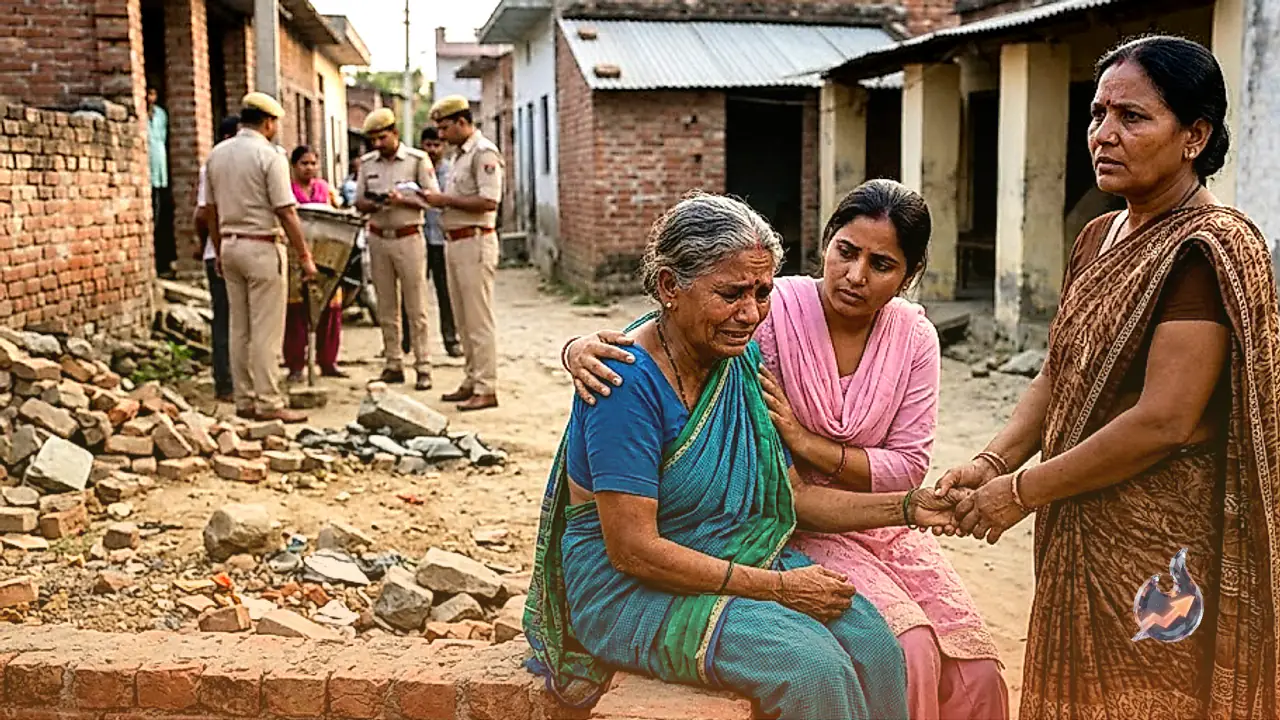

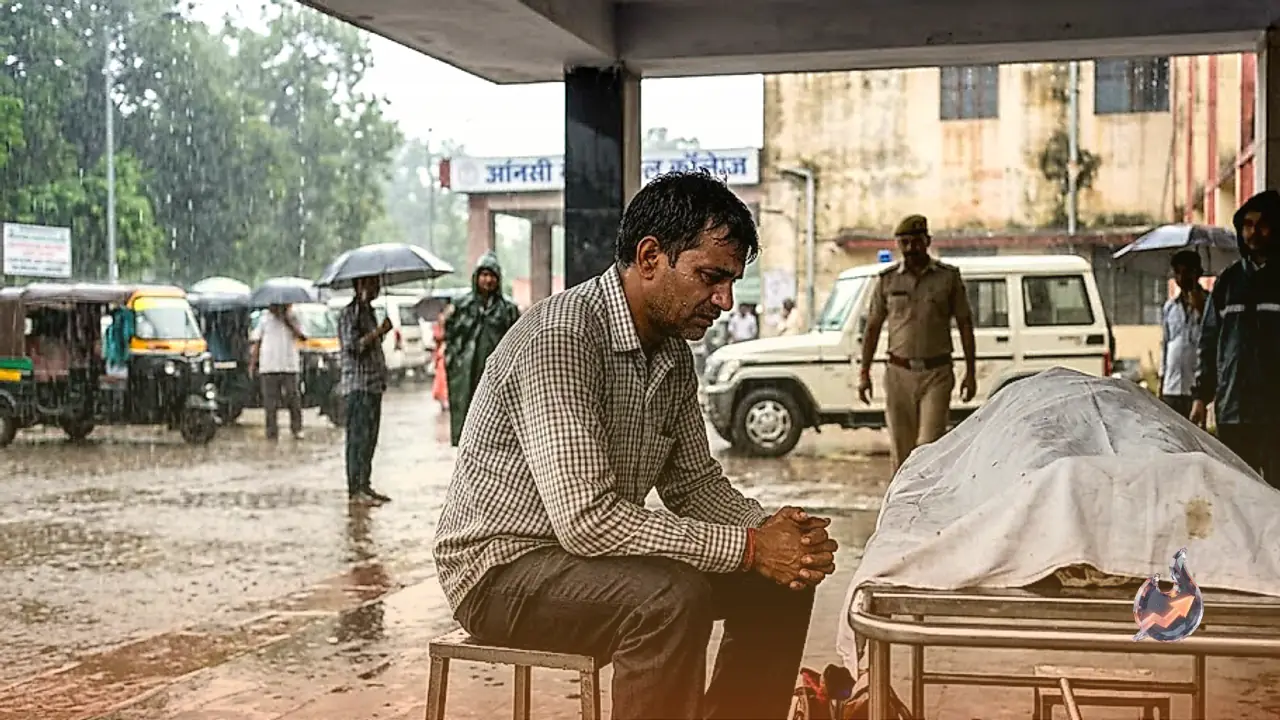



















A deeply distressing incident has surfaced from Uttar Pradesh, exposing severe gaps in public healthcare logistics as a grieving husband found himself entirely stranded outside a government medical facility without any means to transport his wife's remains back home. Battered by heavy downpours, the helpless man sat for hours next to a stretcher holding his deceased spouse while his young daughter wept inconsolably over her mother's body. Despite their visible plight, the family initially received no assistance from hospital staff until a local police constable stepped in, assessed the grim situation, and personally arranged an ambulance to take the grieving father and child home.
Patient Referred From Orchha To Jhansi
The distressing event unfolded at the Maharani Laxmi Bai Medical College premises located in Jhansi. Rahul Adivasi, a resident of Nakta village situated in Madhya Pradesh's Niwari district, had been nursing his wife Ramvati through a prolonged and severe illness. When her condition took a sharp turn for the worse, Rahul initially rushed her to a hospital in Orchha for urgent medical attention. Observing the gravity of her declining health, the attending physicians promptly referred Ramvati to the larger medical facility in Jhansi for advanced care.
Tragic Loss Upon Arrival
According to Rahul, he lacked adequate financial resources but managed to scrape together enough money to hire a taxi to bring his wife to the Jhansi medical college, accompanied by their roughly 8-year-old daughter, Nandani. Upon their arrival at the hospital gates, the doctors examined Ramvati and formally pronounced her dead. Following the pronouncement, the hospital administration placed the body on a stretcher and handed it over to the mourning relatives. However, the family was immediately confronted with a crushing financial wall as they possessed neither a private vehicle nor sufficient funds to hire transport for the long journey back to their native village.
Hours Of Waiting Amidst The Rain
Weighed down by the shock of losing his life partner, Rahul faced an agonizing predicament with nowhere to turn. He pulled the stretcher carrying his wife's body underneath the tin roof of a vehicle parking stand inside the medical complex. Heavy rain poured outside while his young daughter Nandani sat close by, crying endlessly as she stared at her motionless mother. The father and daughter duo remained stranded there for nearly an hour, desperately scanning the surroundings in the hope that someone would notice their misery and offer a helping hand.
A Police Constable Steps In
As the family waited in despair without drawing any official attention, a Uttar Pradesh police constable happened to pass by and noticed the distraught father and crying child seated beside the stretcher. The officer walked over to them, inquired about their situation, and listened to the harrowing details. Upon discovering that the impoverished family did not have a single penny to transport the body home, the constable decided to take matters into his own hands. He arranged for an ambulance and successfully facilitated the journey of the mortal remains back to their village.
Hospital Response And Prior Incidents
Following public outrage and media attention surrounding the incident, the medical college's Chief Medical Superintendent, Dr. Sachin Mahur, stated that the institution routinely provides free hearse vehicles to families who lack the means to transport a deceased relative. He suggested that the grieving family might not have communicated their predicament directly to the active medical staff on duty.
This episode is far from an isolated occurrence within the broader public health infrastructure. A strikingly similar tragedy occurred recently in Jharkhand's Gumla district, where a ninth-grade student named Shivani Kumari passed away in her parents' arms after failing to receive timely oxygen and an ambulance. In another separate incident reported from Umaria in Madhya Pradesh, relatives were forced to carry a pregnant woman to the hospital using a makeshift cloth swing because poor road infrastructure prevented an ambulance from reaching their village, sparking viral outrage.