


















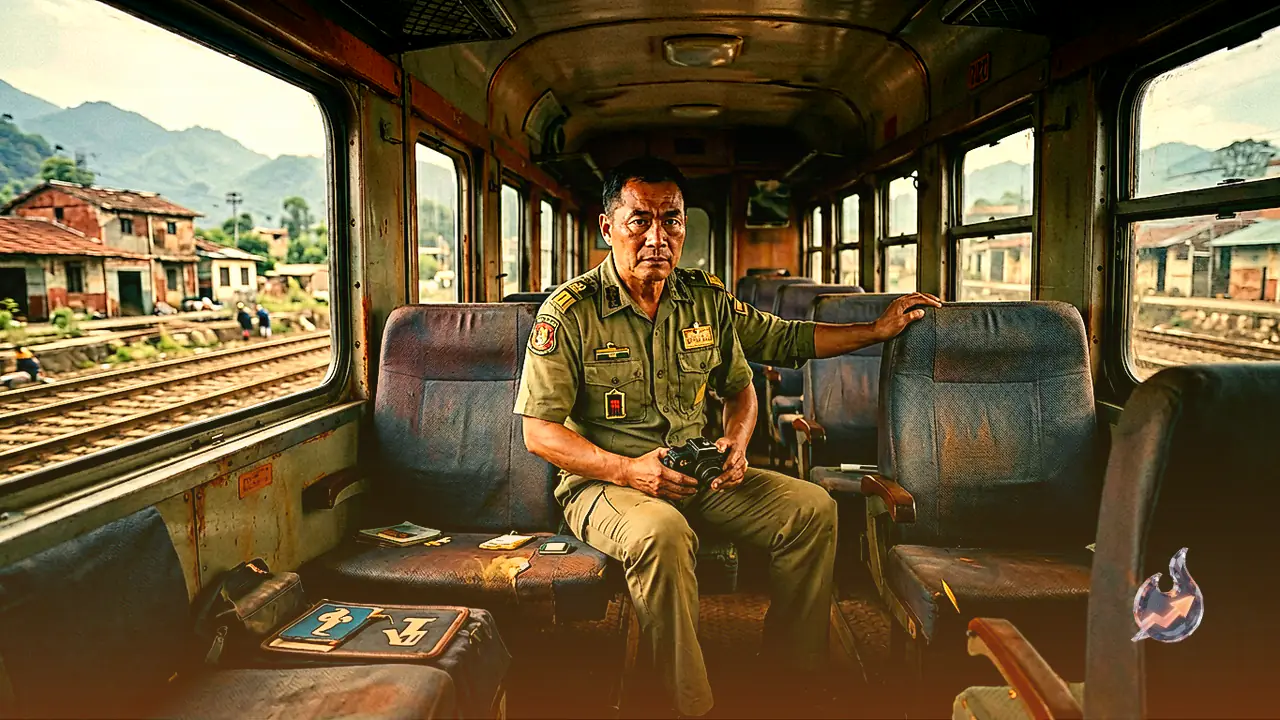

Do passengers and railway staff now have to wage a battle for something as basic as a chair on Indian Railways? When the Vaishali Express chugged into Gorakhpur Junction on a Monday morning from New Delhi, nobody could have anticipated that a delay stretching past an hour would be caused neither by foggy weather nor by technical signal failures, but entirely by a missing seat. As the train's wheels ground to a halt and confused commuters began pacing the platform, 59-year-old train manager Ramashish Das flatly refused to bow down to systemic apathy. Operating a train hurtling at over 100 kilometers per hour through grueling shifts exceeding eight hours without a fixed seat prompted Das to draw a firm line. When local officials suggested he simply make do with the arrangements, his response was unequivocal that safety comes first. What followed on Platform Number 2 was a high-voltage administrative standoff that sent ripples all the way from Varanasi to the Sonepur rail division.
The New Delhi-Lalitgram Vaishali Express was already running 31 minutes behind schedule when it pulled into Gorakhpur at 9:48 AM. Upon taking charge of the guard coach, Das immediately noticed the conspicuous absence of any dedicated seating arrangement. He promptly alerted station authorities and brought the train to a standstill right there on Platform Number 2.
Elaborating on the context, Das noted that the previous train manager had somehow managed to squeeze into the power car and depart, but Das himself was unwilling to take any such risks. He photographed the empty coach, flashed messages across the Varanasi and Sonepur divisions, and formally handed over a memo to the station superintendent.
When matters could not be resolved locally at Gorakhpur, railway personnel assured him that alternative arrangements would be made further down the line at Deoria. Upon reaching Deoria, he was handed a standard plastic chair to manage the remainder of his journey.
This entire seating fiasco resulted in the Vaishali Express departing from Gorakhpur with a cumulative delay of one hour and nine minutes. From that point onward, a cascading sequence of delays plagued the run.
A Plastic Chair At 59 Years Of Age
Nearing retirement at 59, Das raised a poignant question regarding whether a makeshift plastic chair is an acceptable provision for a long-distance, high-speed rail journey. He recalled a previous incident years ago when he similarly halted a train in Gorakhpur after noticing missing fire extinguishers. His rationale remained straightforward: if anything untoward had occurred en route, the entire blame would have fallen squarely on his shoulders, making accountability non-negotiable.
Meanwhile, North Eastern Railway CPRO Sumit Kumar stated that the matter has been officially taken up with Eer. Railway officials maintained that the upkeep and allocation of coach seats fall under the purview of the carriage and wagon department. Although passengers lost precious minutes during the standoff, train manager Das underscored that when safety and professional rights are on the line, compromise is not an option.