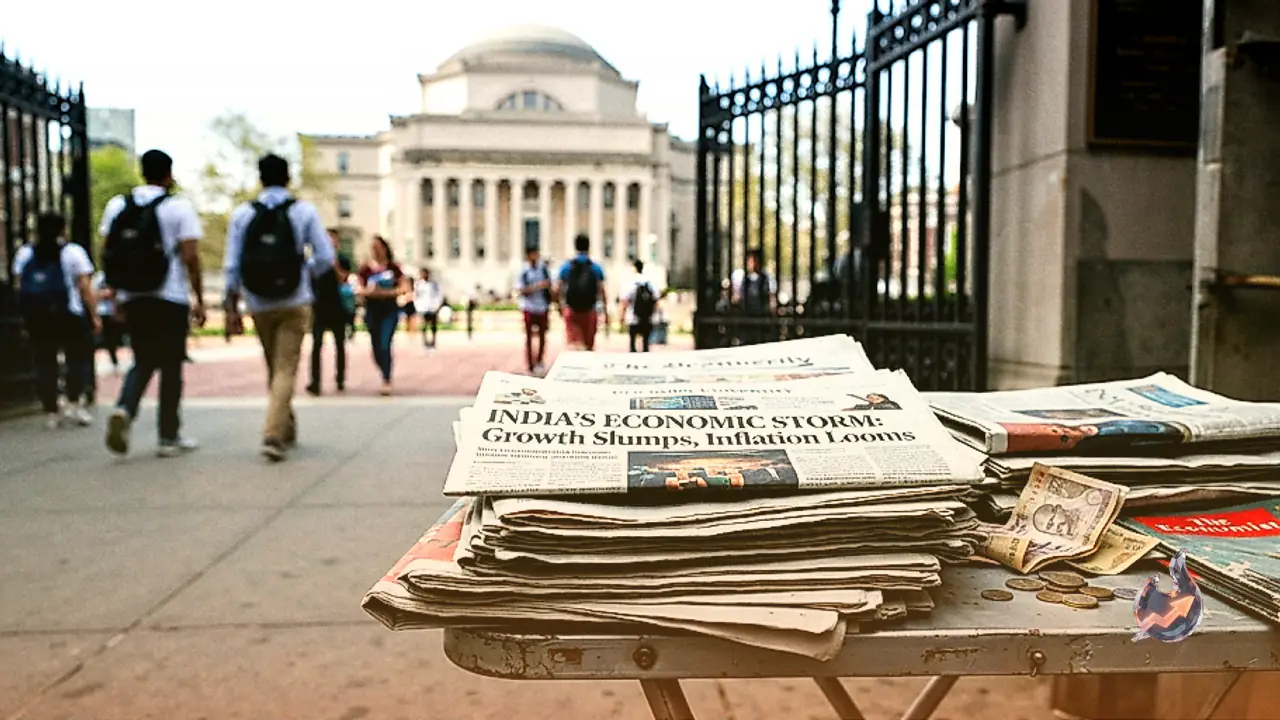

The Indian economy is currently navigating through a sensitive and challenging phase, prompting intense debates across academic and public platforms. Addressing students at Columbia University, critical points were raised regarding the current economic trajectory and the hurdles facing the common citizens. This discourse has once again brought to the forefront the pressing issues surrounding financial stability, job creation, and the overall growth model of the country.
Standing on the Edge of an Economic Disaster
Discussions held at prominent international academic venues have highlighted that the nation is standing at the doorstep of a severe economic crisis. A stark contrast is frequently drawn between official growth numbers and the lived realities on the ground, fueling widespread apprehension about the future. Observers and leaders point out that structural imbalances, if left unaddressed, could push the economy toward deeper vulnerabilities.
Unemployment and the Plight of Students
The youth of the country are facing an unprecedented employment crisis, where possessing a university degree no longer guarantees a stable career. Compounding this distress is the persistent menace of paper leaks, which repeatedly shatters the aspirations and hard work of millions of students. This constant anxiety over career destruction has left a deep psychological and economic scar on the younger demographic, who struggle to find reliable avenues for upward mobility.
Struggles of Small Businesses and Monopolies
Beyond the job market, the small business sector is grappling with immense pressures from regulatory complications and the rising dominance of corporate giants. Micro, small, and medium enterprises often find themselves navigating complex bureaucratic hurdles while trying to survive against the overwhelming market share held by a few billionaires. This lack of a level playing field threatens the survival of traditional trade and grassroots entrepreneurship.
About अरब
In discussions involving massive financial scales and corporate economics, numerical terms like अरब hold significant weight. A natural number with a value of one hundred crore is termed as अरब, which translates to billion in English and can be abbreviated as b or bn. In scientific notation, it is represented as 1 × 10⁹, indicating a scale that is one billion times greater than the base unit in the metric prefix system.
Public reaction to these economic assessments has been mixed, with supporters echoing concerns over job scarcity and wealth disparity, while critics debate the broader economic growth indicators. The ongoing discourse underscores the complexity of balancing rapid macroeconomic expansion with equitable grassroots development.