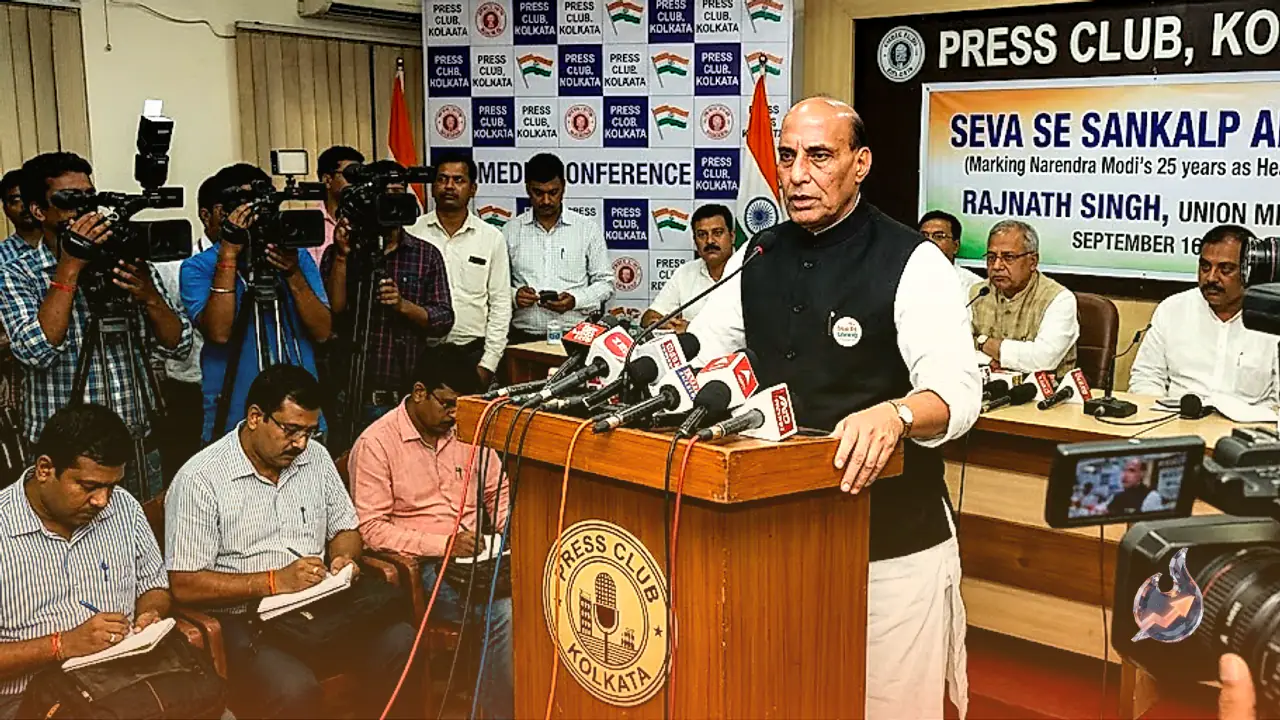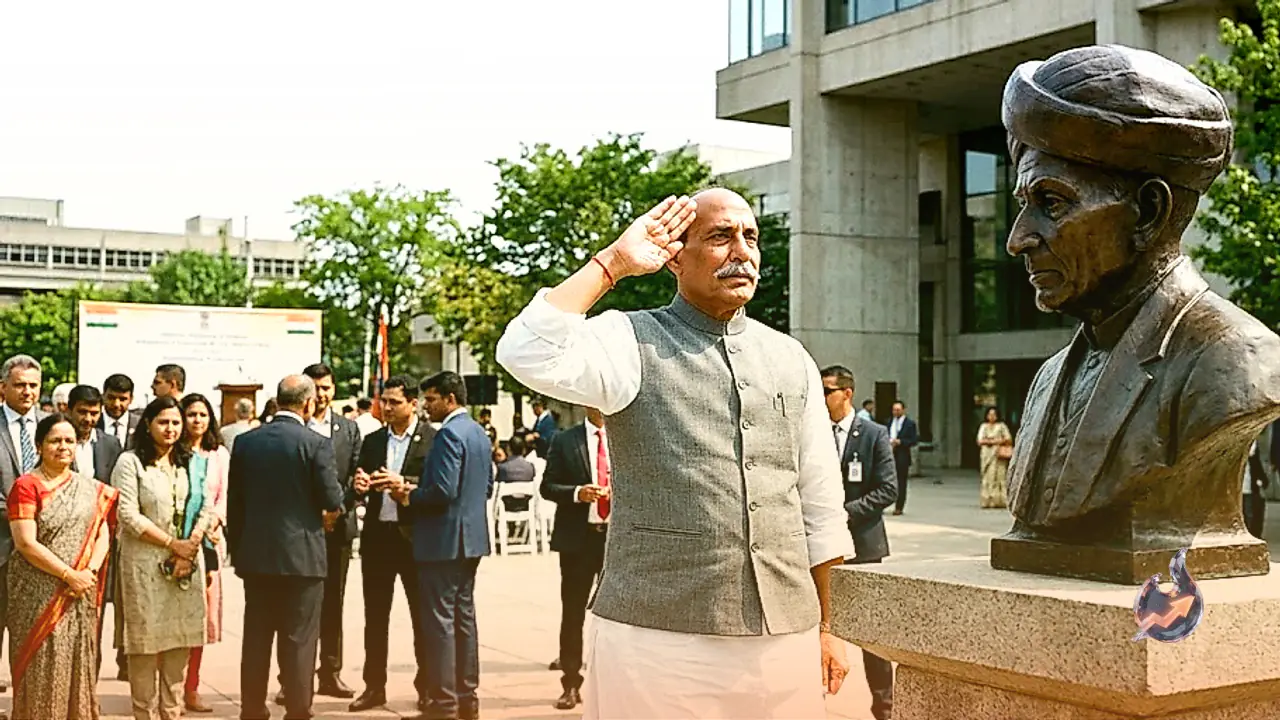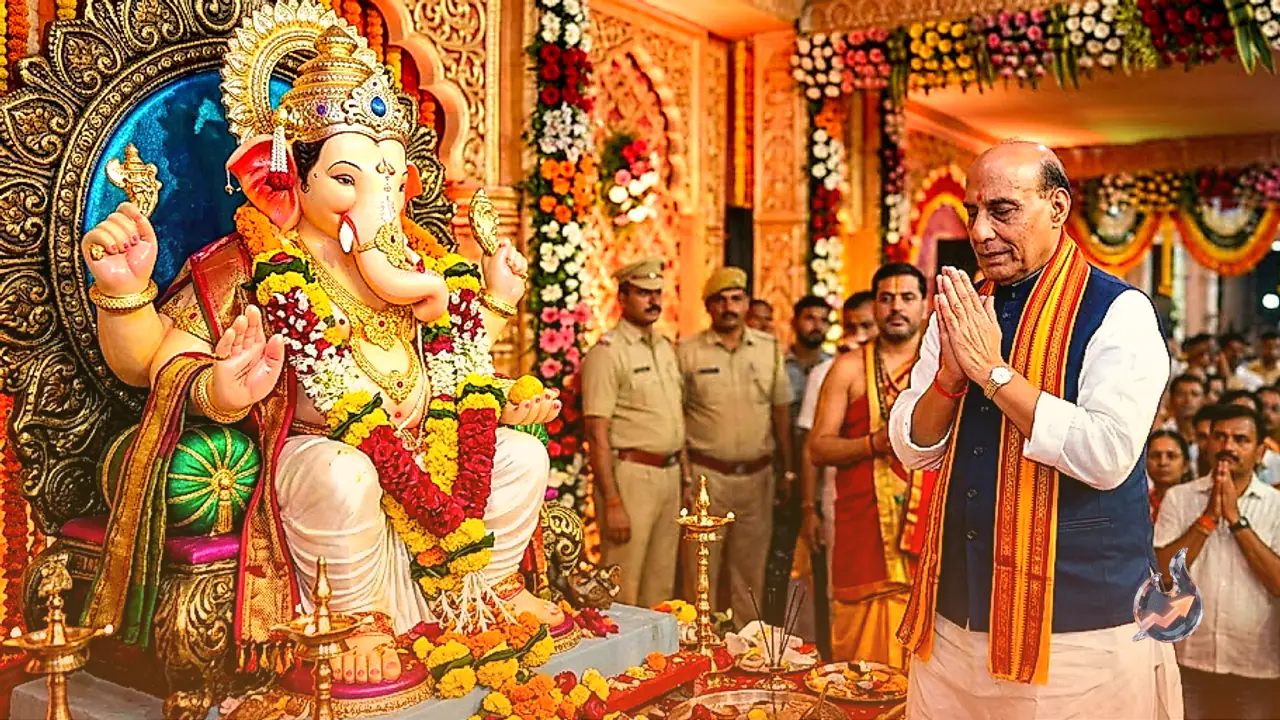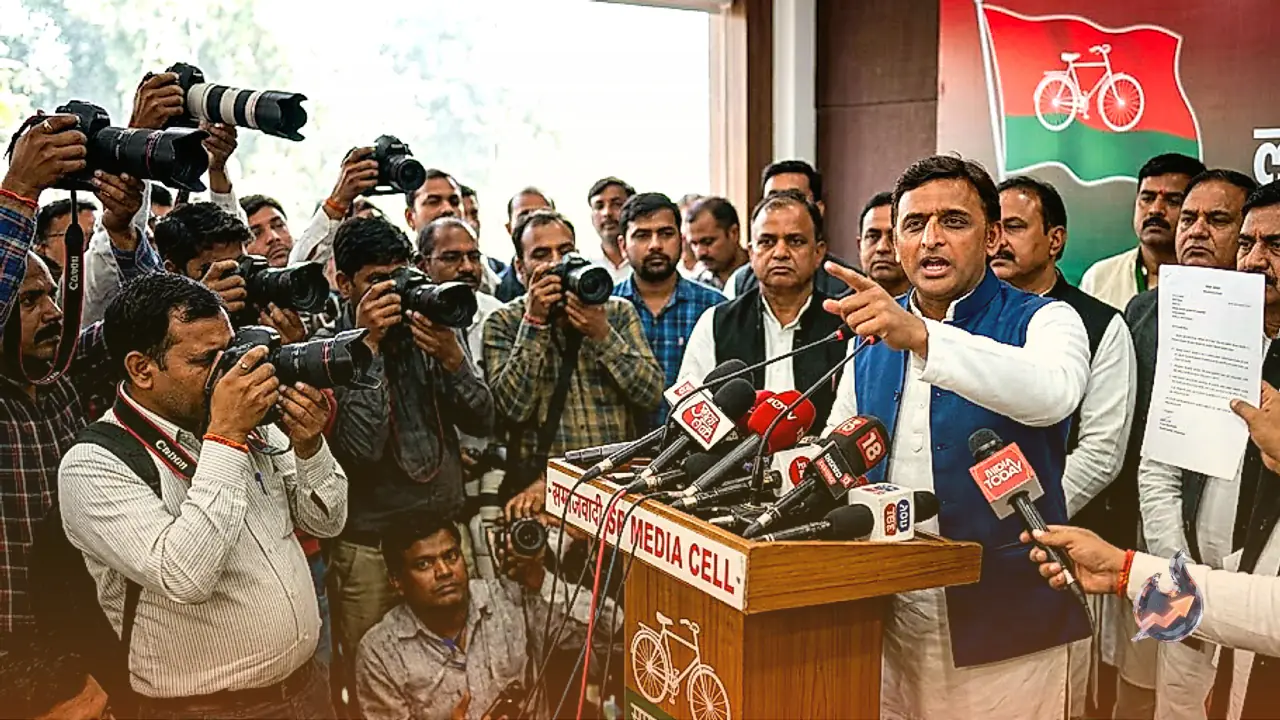





















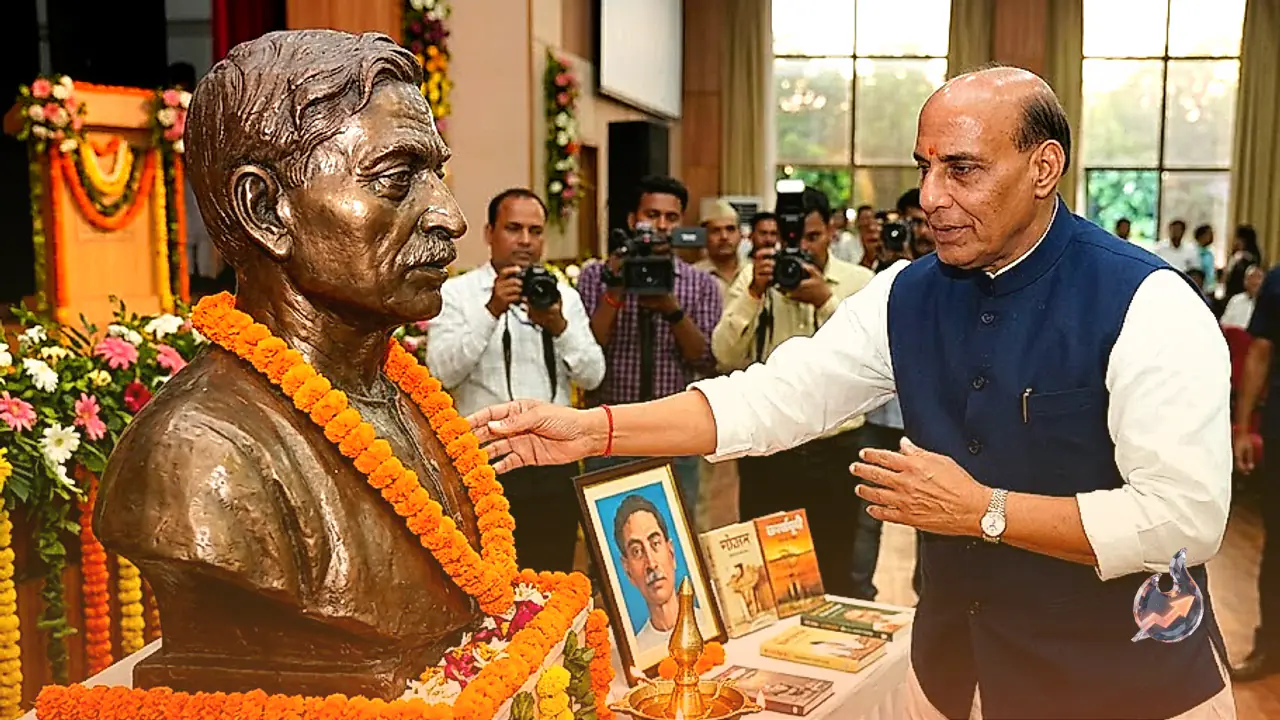

Through a special message shared on the social media platform X, Rajnath Singh paid rich tributes to legendary Hindi author Munshi Premchand on his birth anniversary. Remembering Premchand's iconic literary works, the message highlighted the author's vivid depiction of Indian societal realities, the struggles of common people, and the aspirations for social transformation.
Rajnath Singh's Tribute to Literary Vision and Social Courage
Describing Munshi Premchand as the Emperor of Stories and a master architect of Hindi literature, Rajnath Singh honored his enduring legacy. He noted that Premchand utilized literature as a medium to give a vivid expression to the inner pain, hardship, and daily struggles of ordinary citizens. According to Rajnath Singh, Premchand's writings were not merely fictional storytelling; rather, they served as an authentic mirror to the social conditions, challenges, and evolving mindsets of his era. His timeless works continue to inspire readers today and provide profound insights into various facets of human society.
Who Was Munshi Premchand: Life, Identity, and Early Works
Munshi Premchand's original name was Dhanpat Rai Srivastava. Born into modest surroundings, his early life was marked by a deep devotion to reading and writing. He later adopted the pen name Premchand and emerged as one of the most celebrated novelists, short story writers, and thinkers in Hindi and Urdu literature. Throughout his literary career, Premchand focused heavily on rural life, the plight of marginalized communities, agrarian distress, and core human values. Most of his creations were published in both Hindi and Urdu, establishing a wide readership across linguistic boundaries.
Masterpiece Novels and World-Renowned Short Stories
Over his prolific career, Munshi Premchand authored around eighteen novels and more than 300 short stories. Among his most famous novels are Sevasadan, Premashram, Rangbhoomi, Nirmala, Gaban, Karmabhoomi, and Godan. In particular, Godan is regarded as an epic of Indian peasant life, illustrating the devastating cycles of debt and poverty faced by rural farmers. His short stories, including Kafan, Poos Ki Raat, Panch Parmeshwar, Bade Ghar Ki Beti, Budhi Kaki, and Do Bailon Ki Katha, remain hugely popular. These tales reflect sharp critiques of social dogmas while emphasizing justice, empathy, and human dignity.
Journalism, Publishing Ventures, and Cinematic Contributions
Beyond fiction, Premchand contributed extensively to the leading Hindi and Urdu periodicals of his day, such as Zamana, Saraswati, Madhuri, Maryada, Chand, and Sudha. He took on editorial and publishing responsibilities for the news publication Jagran and the renowned literary magazine Hans. To support his publishing endeavors, he acquired the Saraswati Press, though the enterprise ultimately faced severe financial losses and had to be closed. Premchand also ventured into the film industry in Mumbai, working as a screenplay writer for roughly three years to explore cinema as a storytelling medium.
Final Years and the Unfading Legacy of Literature
Even during his final days, Premchand remained deeply dedicated to literary creation and intellectual dialogue. Despite declining health, his writing journey never faltered. His final essay, Mahajani Sabhyata, presented a critical critique of capitalist structures and commercial exploitation. His last public lecture, titled Sahitya Ka Uddeshya (The Purpose of Literature), articulated that true literature must awaken beauty, justice, and social consciousness. His final completed story, Kafan, is widely considered one of the most powerful and realistic narratives in Indian literature.
Balancing Realism with Idealism in Social Narrative
A defining hallmark of Premchand's writing is his ability to maintain a compelling balance between stark realism and moral idealism. His literature delved deeply into feudal exploitation, caste inequities, money-lending traps, and the struggles of women in family and society. By placing marginalized voices at the heart of mainstream literature, Premchand elevated their lived experiences to national prominence. Decades after his passing, his works remain profoundly relevant and continue to be studied across academic and cultural platforms worldwide.
Public Reaction
Members of the public and social media users reacted warmly to the tribute post, offering their own respect for Premchand's literary contributions. Commenters praised his messaging of equality, truth, and compassion, with many reflecting on how his portrayal of rural life and social ethics remains relevant in contemporary times.