
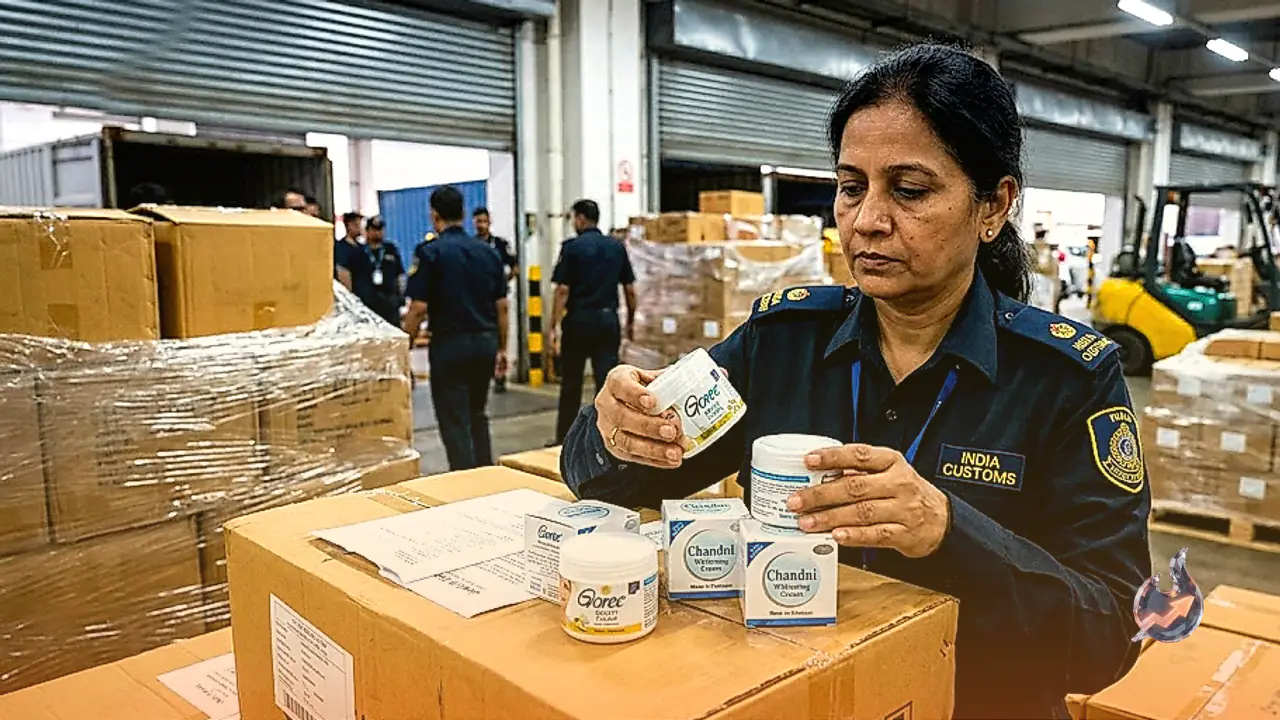






















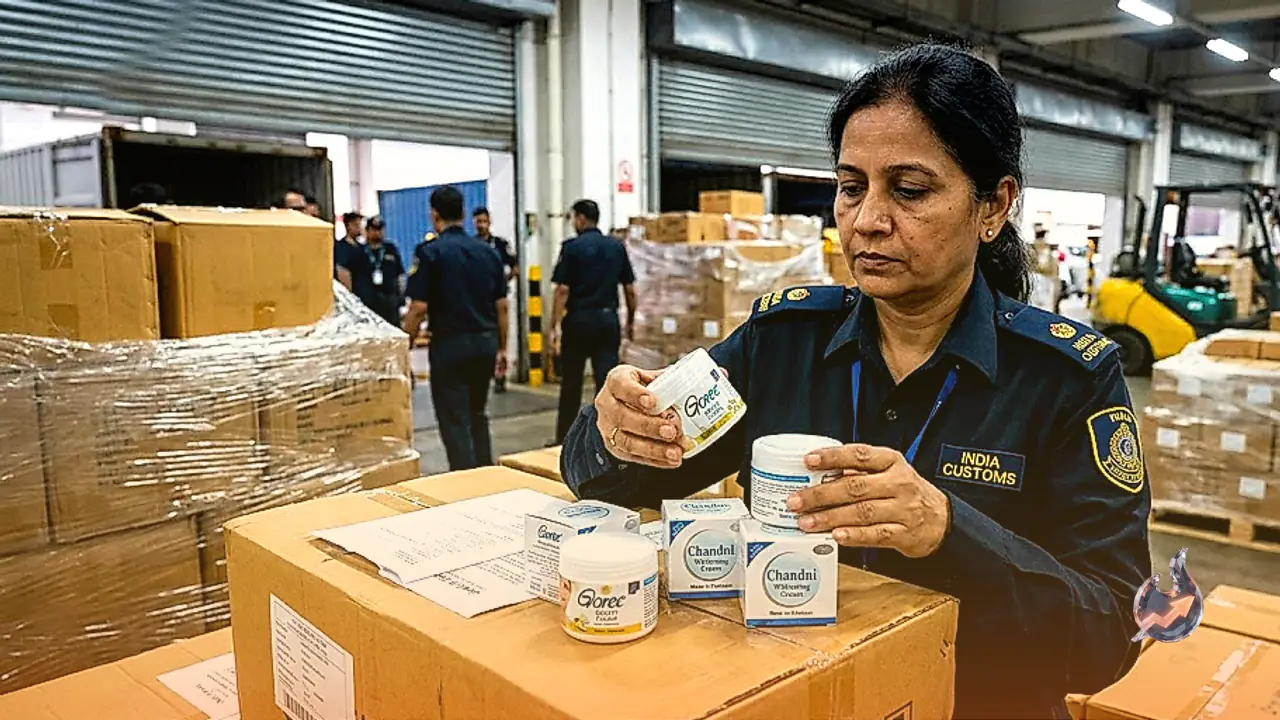

Two cosmetics marked as made in Pakistan have brought India's import controls and cosmetic safety rules into the same spotlight. In a public health alert dated 8 September, 2026, the Central Drugs Standard Control Organisation (CDSCO) named Goree Beauty Cream along with Chandni Whitening Cream and told shoppers to avoid both. The regulator said neither cream had the registration certificate needed for import, and both contained heavy metals above specified limits, creating health risks that could include toxic effects.
The alert therefore puts two separate issues on the table: the origin of the goods and the paperwork required for an imported cosmetic. It confirms the products' regulatory status and the health warning, but it does not name the channel that brought them into the country.
How the trade restrictions developed
India's controls on Pakistani goods became stricter in several steps rather than through one sudden move. In February 2019, following the Pulwama terror attack, the customs duty on imports from Pakistan was raised to 200%. Later that year, in August 2019, Pakistan stopped two-way commerce with India after New Delhi altered Jammu and Kashmir's special constitutional position.
The broadest restriction arrived on 2 May 2025. DGFT at once banned direct imports, indirect imports and transit involving every product made in Pakistan or exported from there. The order remains in force until further orders. Sending a shipment through another country first does not turn a Pakistani product into a permissible import.
The key test is origin, not merely the last port of dispatch. A product made in Pakistan remains Pakistani in origin even if it passes through Dubai, the UAE or another country before reaching India. On paper, such a cosmetic should not reach an Indian shop through an ordinary lawful import channel. The fact that Goree and Chandni were found in India raises a serious question, but it does not reveal the route used.
This sequence matters because a third-country label cannot erase the original place of manufacture. The ban is written around origin and the movement of goods, so a change in route is not the same as a change in legal status.
Third-country routing has appeared in other seizures
DRI has recorded separate instances in which goods made in Pakistan were sent through another country before reaching India. Under Operation Deep Manifest, the agency documented cases involving Dubai in which the origin was allegedly misdeclared. These examples show that third-country routing is a known enforcement concern, not that either of the two creams followed that path.
During June 2025, the agency reported seizing 39 containers with 1,115 metric tonnes of Pakistan-origin goods routed via Dubai. In September 2025, the previous year, it seized 28 containers carrying 800 tonnes of Pakistan-origin cosmetics and dry dates valued at ₹12 crore. The shipments passed via Jebel Ali in Dubai, while the cosmetics were allegedly shown as originating in the UAE. A customs broker was arrested in that case.
Another seizure came in August 2026, when DRI found 364 tonnes of Pakistan-origin dry dates. The goods had been moved from Pakistan to Dubai and then sent to India after being declared UAE-origin. The next recorded seizure, dated 14 September, 2026, involved more than 362 tonnes of Pakistan-origin dry dates arriving from Jebel Ali, UAE. Paperwork listed the UAE as the origin, but an initial inquiry traced the shipment's starting point to Karachi, Pakistan.
DRI has separately examined Bangladesh-linked instances in which routing through another country and false origin declarations were alleged. Those cases establish only that such channels were used in other shipments. There is no public evidence that Goree or Chandni came through Dubai or Bangladesh, and officials have not publicly identified the path by which the two creams reached India.
The repeated seizures show why origin declarations matter in enforcement. A third-country label can alter the paperwork, but it does not change the place where the goods were produced. That distinction is central to the present uncertainty.
Why the creams were outside the legal sales channel
The concern is not limited to the country shown on the label. Under the Cosmetics Rules, 2020, an imported cosmetic must be registered before it can be legally brought into India and sold here. Registration helps officials identify the product and manufacturer and examine whether it satisfies the required safety and quality standards.
For a buyer, this means that a familiar product name or a busy marketplace page cannot replace the registration check. The paperwork is part of the safety system, not a formality that can be ignored after a listing goes live.
Once an unapproved cosmetic enters the market, the standard regulatory review does not occur. CDSCO said neither Goree nor Chandni possessed the import registration certificate. The 8 September, 2026 alert added that both creams contained heavy metals above specified limits and warned of health risks, including toxic effects.
The alert told shoppers to avoid buying and using both creams. Sellers and other concerned establishments were also told to stop sale and distribution. It did not name individual heavy metals such as mercury, and it did not say that corticosteroids were present. Those claims should not be added without confirmation from a separate laboratory report.
What the marketplace pages showed
Major e-commerce platforms also carried listings for both products. A later-removed Amazon page for Goree described India as the country of origin and listed Neha Organic as manufacturer and packer. Amazon said third-party sellers must comply with Indian law and its policies, and that non-compliant listings are removed when regulators flag them.
Flipkart said it had marked the relevant company for review and was checking for a possible rules breach. A Meesho executive said the page may have survived an earlier removal drive because the origin field showed India. The page was subsequently taken down.
The wrong country-of-origin information matters because it can make a Pakistan-origin product harder to identify during marketplace checks. Still, the listing history does not establish that the platforms knowingly permitted banned products to be sold. The evidence currently shows an incorrect listing and a later removal, not deliberate knowledge by the platforms.
Because the creams were listed on major platforms, the issue is not confined to one small seller page. An incorrect origin field can mislead a marketplace check, which is why the physical pack must be compared with the online claim.
How buyers can verify an imported cosmetic
For an imported cosmetic, especially one ordered online, the website image and seller text are not enough. Buyers should inspect the physical product and its pack after delivery. The printed details are more useful than the listing alone.
These checks do not require a laboratory test before every purchase. They require the buyer to treat missing, unclear or conflicting details as a warning and to stop before using the product.
- Manufacturer details: Check the manufacturer's name and full address, including where the product was made. Clear details help identify the responsible party and the place of manufacture.
- Country of origin: Confirm where the product was made and compare that information with the online listing. A mismatch should be treated as a reason to pause before use.
- Indian importer or distributor: Look for the company responsible for bringing the cosmetic into India. If that information is absent, the product's accountability chain is incomplete.
- Import registration: Check whether the required registration information for the imported cosmetic appears on the pack. A product being sold online does not prove that this registration exists.
- Batch or lot number: Find the number that identifies the particular batch. Missing or unclear batch information can make later checks and complaints harder.
- Manufacturing and expiry dates: Do not use the product if these dates are missing, unclear or appear tampered with. The dates help establish whether the pack is fit for use.
- Product name and packaging: Make sure the item delivered matches the product shown and described online. Differences in the name, design or packaging should be checked before use.
For an online order, put the website claim beside the physical pack once it arrives. If the listing says “Made in India” but the cream received says “Made in Pakistan,” the two statements conflict. That discrepancy should be examined before the product is used.
If the pack lacks a clear manufacturer, importer or registration detail, platform presence should not be treated as approval. A marketplace page alone cannot establish authorisation for an imported cosmetic in India.