



















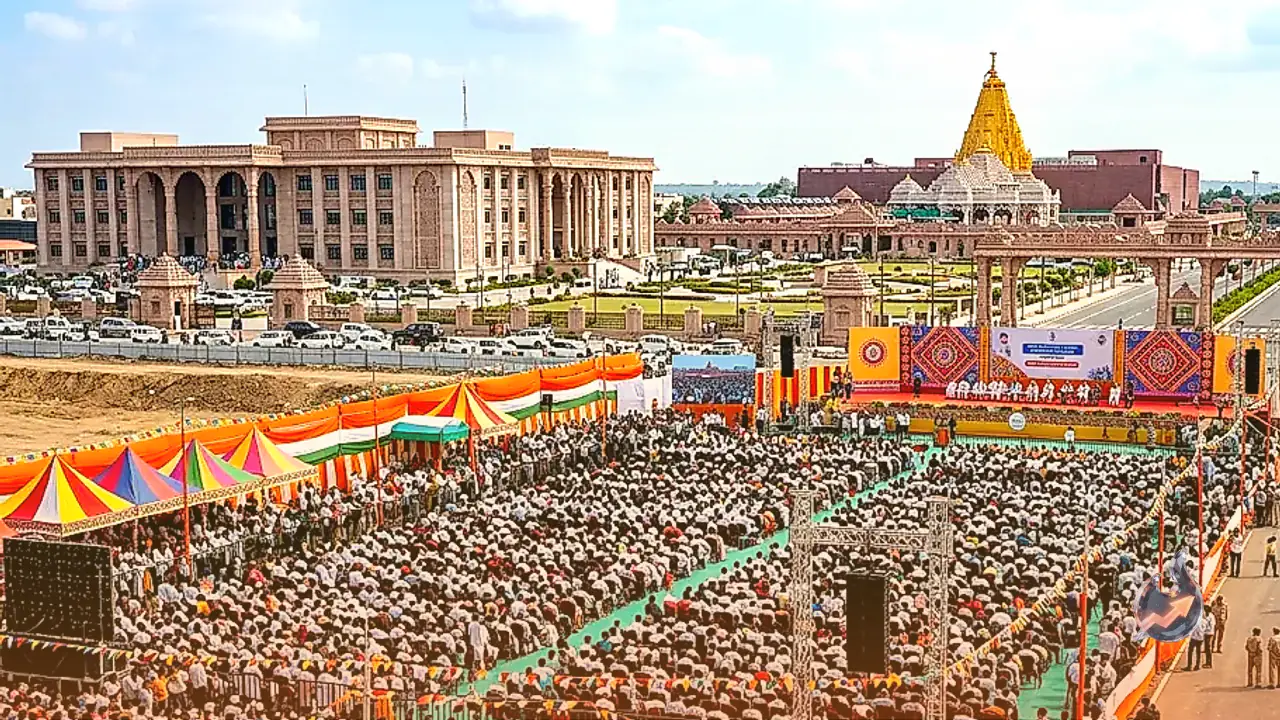

Prime Minister Narendra Modi's recurring visits to Banaskantha have emerged as a major focal point in regional politics. With the Gujarat assembly elections scheduled for 2027, the ruling leadership's sustained attention toward this northern district is widely viewed as a calculated political strategy. Starting from March, the Prime Minister has already toured the locality twice, and he is scheduled to arrive in Banaskantha once again on Saturday, November 14.
During this upcoming visit, Narendra Modi is scheduled to visit the revered Ambaji Temple to offer prayers and seek blessings from Maa Amba. This religious engagement coincides with the auspicious occasion of Labh Pancham. However, these frequent presidential trips extend far beyond mere spiritual itinerary, carrying profound social and political significance for the entire region.
Earlier this year, on October 30, the Prime Minister visited Banaskantha to inaugurate and lay the foundation stones for development projects worth over Rs 14,000 crore. On that occasion, he dedicated the India Bovine Breeding and Research Center to the nation, released the 24th installment of the PM-Kisan Samman Nidhi scheme, and flagged off two train services.
Prior to that visit, on March 31, 2026, Narendra Modi had traveled to Banaskantha to launch development initiatives valued at approximately Rs 20,000 crore. Those earlier projects primarily encompassed critical infrastructure developments spanning roads, railways, power generation, and housing sectors designed to boost regional connectivity and growth.
Against the backdrop of these massive administrative investments, the upcoming November 14 visit is being closely analyzed through a political lens. Observers are evaluating its implications for Gujarat politics as the countdown to the 2027 assembly elections begins to accelerate across the state.
The underlying political urgency stems directly from the 2024 general elections. Out of all 26 Lok Sabha seats in Gujarat, the Bharatiya Janata Party secured 25 constituencies, but Banaskantha stood out as the sole exception where the party suffered defeat, as Congress candidate Geniben Thakor defeated BJP nominee Rekha Chaudhary.
This solitary setback made Banaskantha a high-priority constituency for the party leadership. Consequently, preparations to revitalize the party apparatus across Gujarat ahead of the 2027 assembly polls are already well underway at multiple organizational levels.
According to party sources, a coordinated statewide event named Navvarsh Snehamilan is scheduled for November 22 across all 182 assembly segments in the state. Lawmakers have received strict directives from the leadership to remain present within their respective constituencies on that day.
To amplify the outreach, senior leaders including Chief Minister Bhupendra Patel, Deputy Minister Harsh Sanghavi, and the state party president will address these concurrent gatherings through virtual mediums. The combined push of high-profile visits, large-scale financial projects, and synchronized grassroots mobilization points to a concerted effort by the party to consolidate its political foothold in North Gujarat.