





















The Tamil Nadu state government has secured significant relief from the Supreme Court regarding the legal controversy surrounding animal slaughter. The apex court has issued an interim stay on the Madras High Court's recent order, which had imposed a complete, state-wide ban on the slaughter of cows and calves. Senior Advocate Abhishek Manu Singhvi, representing the state government, effectively argued the case before the Supreme Court, leading the top court to conclude that the High Court's directive requires modification.
Background and Supreme Court Intervention
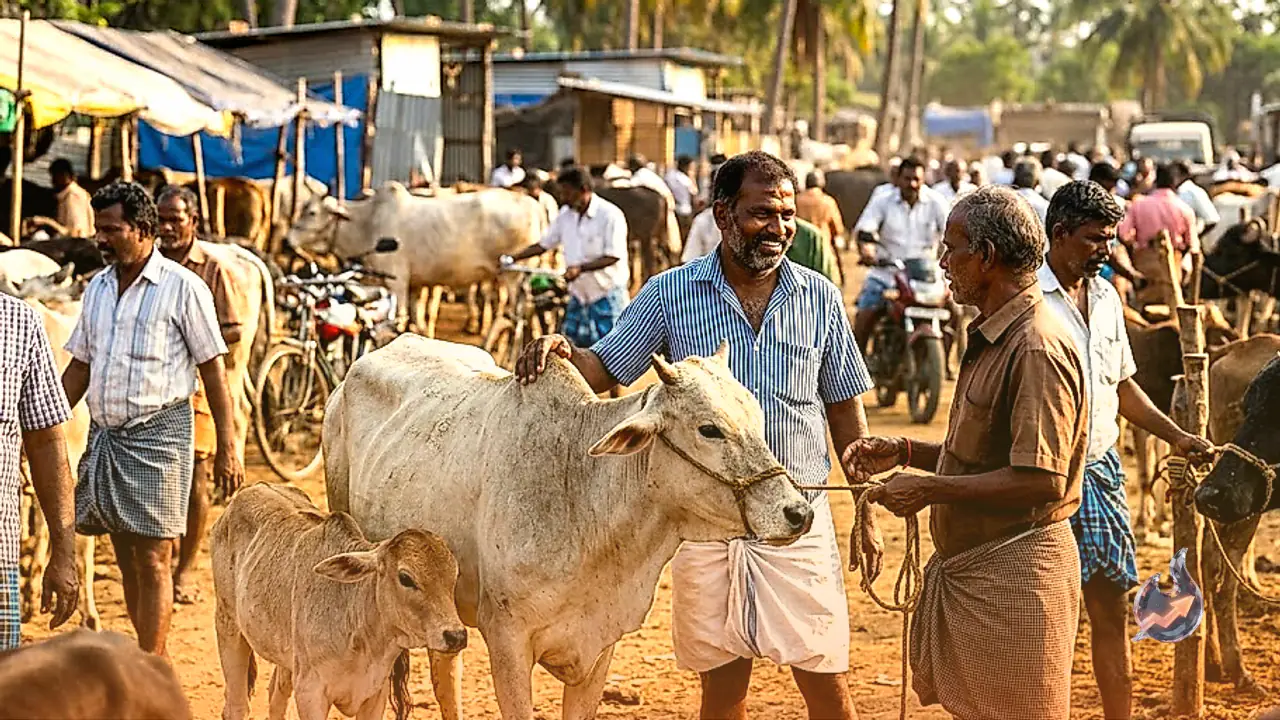
On Monday, July 13, 2026, a bench consisting of Justice Vikram Nath and Justice Sandeep Mehta heard the matter. The court issued a notice on the Special Leave Petition (SLP) filed by the Tamil Nadu government. The bench observed that the High Court's order, in its existing form, was excessively broad and required substantial revision. During the proceedings, Abhishek Manu Singhvi argued that the High Court’s ruling contradicted the established provisions of the Tamil Nadu Animal Preservation Act, 1958. This statute specifically permits the slaughter of cattle that are over 10 years of age or are no longer useful for agricultural or breeding purposes, provided that necessary authorization from competent authorities is obtained.
The State Government's Legal Argument
The state government highlighted that the process of animal slaughter is already strictly governed by various central and state laws, including the Prevention of Cruelty to Animals Act, 1960, the Slaughter House Rules, 2001, the Tamil Nadu Urban Local Bodies Act, 1998, and the Tamil Nadu Urban Local Bodies Rules, 2023. The government contended that none of these existing statutes contain provisions for an absolute, blanket ban. The state argued that by issuing such an order, the High Court attempted to create law through a judicial mandate, which stands in direct opposition to existing legislative and statutory frameworks.
The Madras High Court Order and Controversy
The dispute originated from a ruling delivered by the Madras High Court on May 27, 2026, just ahead of the festival of Bakrid. A division bench comprising Justice GR Swaminathan and Justice V Lakshminarayanan had passed the decision while hearing a Public Interest Litigation (PIL) filed by K. Surya Prashanth, the General Secretary of the Hindu Makkal Katchi. While the petitioner’s original request was restricted to ensuring that animal slaughter during the festival was carried out only in designated and authorized locations, the High Court went further by enforcing a blanket ban across the entire state.
In its petition to the Supreme Court, the Tamil Nadu government asserted that the High Court had granted relief far beyond what was actually sought in the original petition. The state maintained that when statutory laws allow for the slaughter of specific categories of cattle in authorized slaughterhouses, a judicial directive imposing a total ban creates a conflict with the statutory order. Consequently, the government argued, the High Court’s decision was legally unsustainable, leading the Supreme Court to grant the requested interim stay.