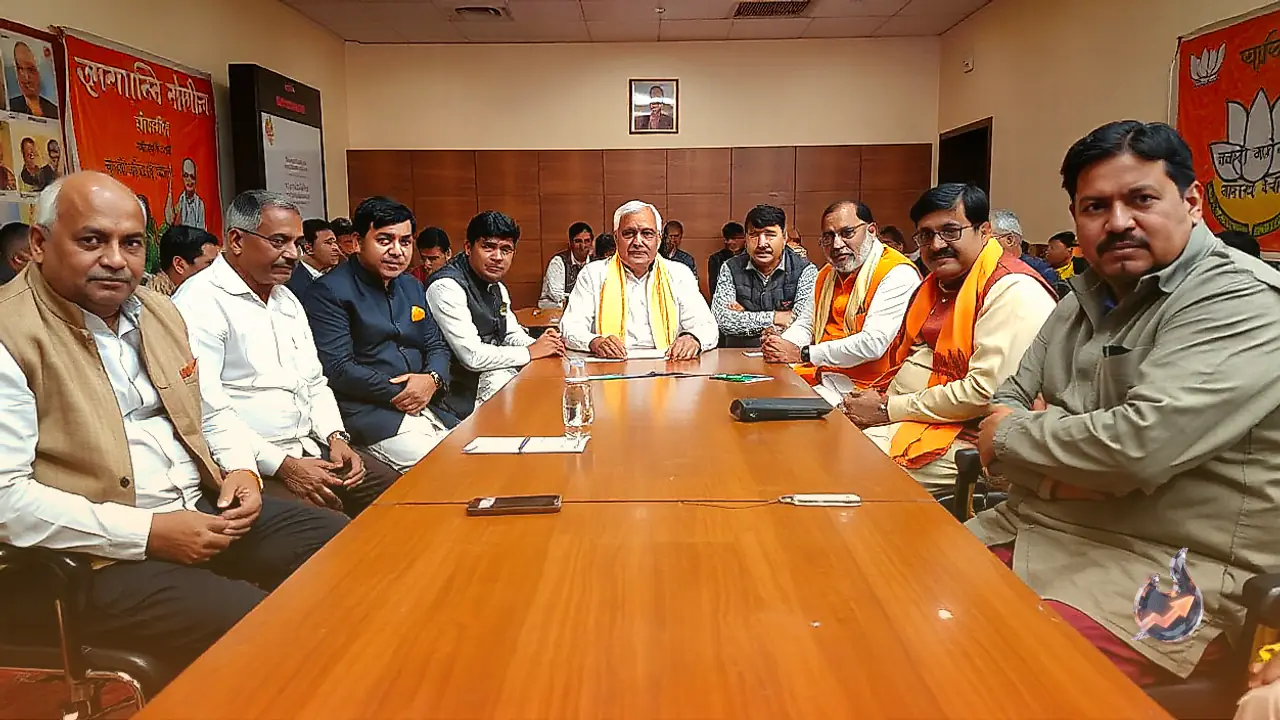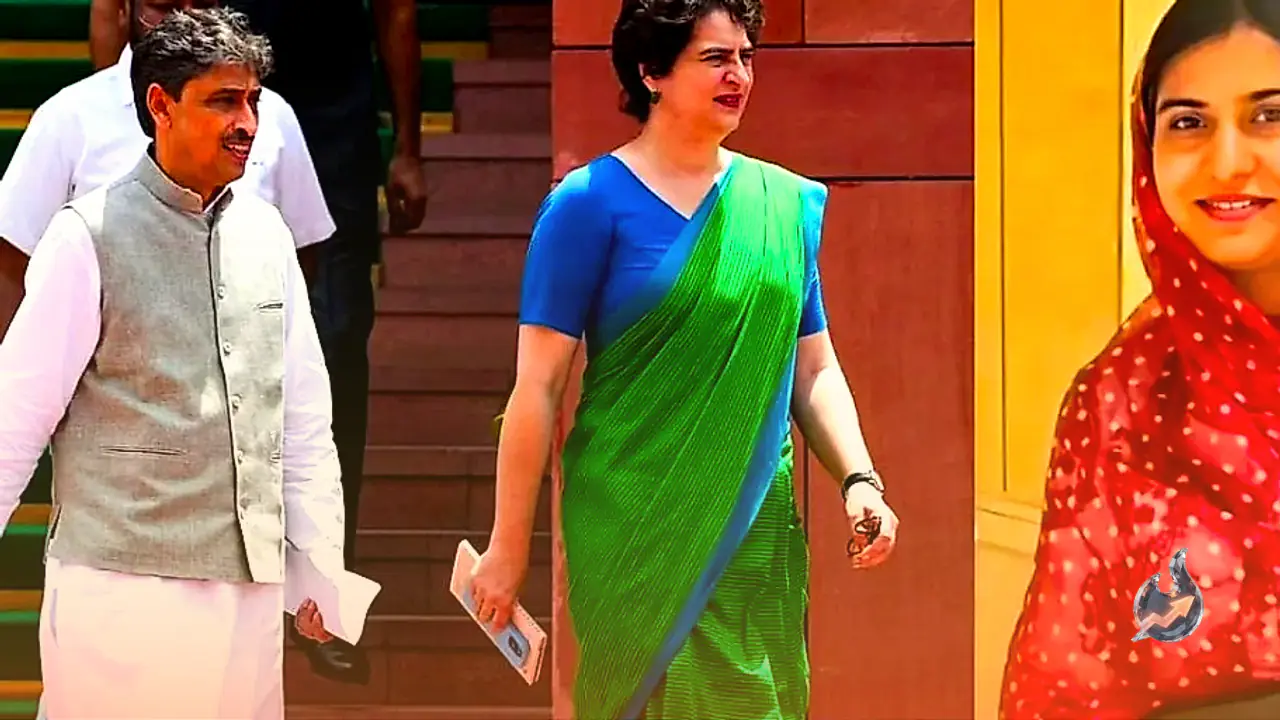

The political chessboard for the 2027 Uttar Pradesh assembly elections is heating up as the Samajwadi Party and Congress prepare for their first major showdown regarding seat-sharing. The initial significant dialogue between these two prominent INDIA bloc allies is scheduled to take place in Delhi on November 23. A total of nine leaders from both political parties will participate in this crucial meeting to steer the alliance framework. A four-member committee from the Samajwadi Party and a five-member delegation from the Congress party will take charge of the negotiations. However, the significance of this gathering extends far beyond merely finalising seat numbers; the core question remains how many seats Akhilesh Yadav will be willing to leave for Congress in 2027 and how many seats Congress will actively claim for itself.
The Core Dilemma of Seat Demands and Initial Expectations
The most intriguing aspect of these negotiations is the vast gap in seat expectations between the two partners. Akhilesh Yadav has publicly mentioned Congress making a demand for 181 seats. However, the Congress party itself has not officially made its specific seat demand public. On the other hand, internal discussions within the Samajwadi Party initially floated the idea of allocating roughly 40 to 50 seats to Congress. This reveals a massive divergence between the starting expectations of both political entities. Whether Congress will lean on its political gains from the 2024 general elections to demand a larger share, or whether it will have to compromise in the face of the Samajwadi Party's robust grassroots organisation and historical assembly performance, remains to be seen.
Evaluating the Arguments and Electoral Grounds of Both Parties
During these discussions, both parties bring distinct arguments and performance metrics to the table. The Congress party is likely to argue based on the grand alliance's stellar performance in Uttar Pradesh during the 2024 Lok Sabha elections. Having contested 17 seats and won 6, Congress believes its vote bank and organisational strength have grown significantly compared to previous years. Consequently, the party feels it deserves a respectable share of seats in the assembly elections aligned with its current political standing. In contrast, the Samajwadi Party captured 111 seats in the 2022 assembly elections, whereas Congress was restricted to just 2 seats. The Samajwadi Party maintains that its extensive grassroots network and broad voter base formed the backbone of the alliance's success in 2024, implying that seat distribution must factor in assembly election realities alongside parliamentary outcomes, while prioritizing the winnability of individual candidates across every constituency.
Key Leaders and Strategists Heading to the Table
Several prominent and influential faces from both parties will participate in this high-stakes meeting to shape the course of negotiations. On the Congress side, senior heavyweights such as Priyanka Gandhi Vadra, AICC General Secretary K.C. Venugopal, and UP in-charge Rajendra Pal Gautam will lead the charge. Meanwhile, the Samajwadi Party will be spearheaded by seasoned strategist and senior leader Ram Gopal Yadav. Notably, the presence of leaders like Ikra Hasan and Imran Masood will thrust the complex political equations of western Uttar Pradesh directly into the centre of the discussions.
Navigating Western Uttar Pradesh and Social Dynamics
Ikra Hasan is a Member of Parliament from Kairana, while Imran Masood is widely regarded as an influential political figure in the Saharanpur region. Both leaders possess a deep understanding of western Uttar Pradesh politics. During the negotiations, they will face the intricate challenge of balancing Muslim electorates alongside Dalits, Jats, Gurjars, and other Other Backward Classes in the western region. Ikra Hasan is expected to advocate for strengthening the Samajwadi Party's claims in constituencies where the party's local organisation and prospective candidates hold strong ground. Concurrently, Imran Masood is positioned to represent Congress constituencies where the party maintains its dedicated voter base and regional influence. Their deliberations will be critical because seat allocation in western Uttar Pradesh will depend as much on social and caste equations as on hard electoral data.
The Battle of Data and Analytical Preparation
This upcoming meeting will not rely solely on rhetorical political claims; rather, hard seat mathematics will be put on the table. The Samajwadi Party has indicated that the results of both the 2022 and 2024 elections should serve as the primary benchmark, whereas Congress prefers to place greater emphasis on the 2024 results. The biggest challenge for both parties will be presenting verifiable data to support their respective demands. Reports suggest that the Samajwadi Party is enlisting the help of data analysts to conduct thorough seat-by-seat evaluations. With election data specialists backing the SP negotiating team, Congress faces the task of bolstering its stance not just with political assertions, but with rigorous constituency-wise statistical evidence.