




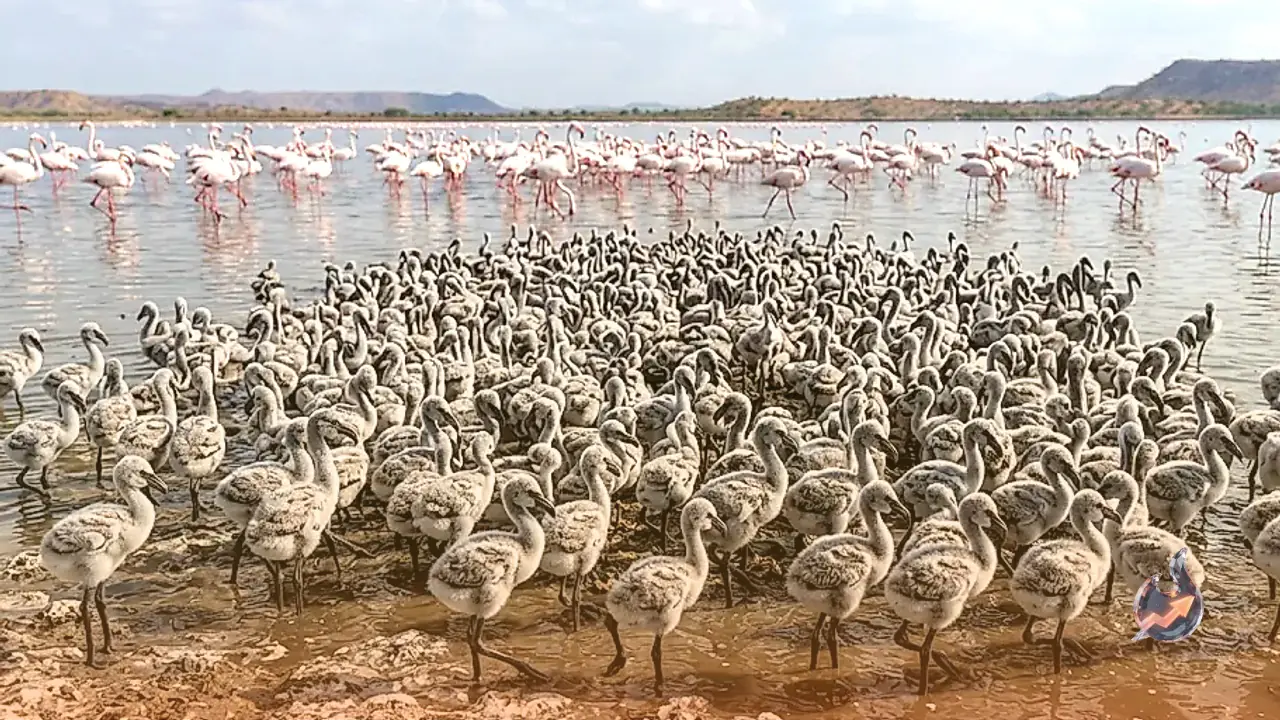















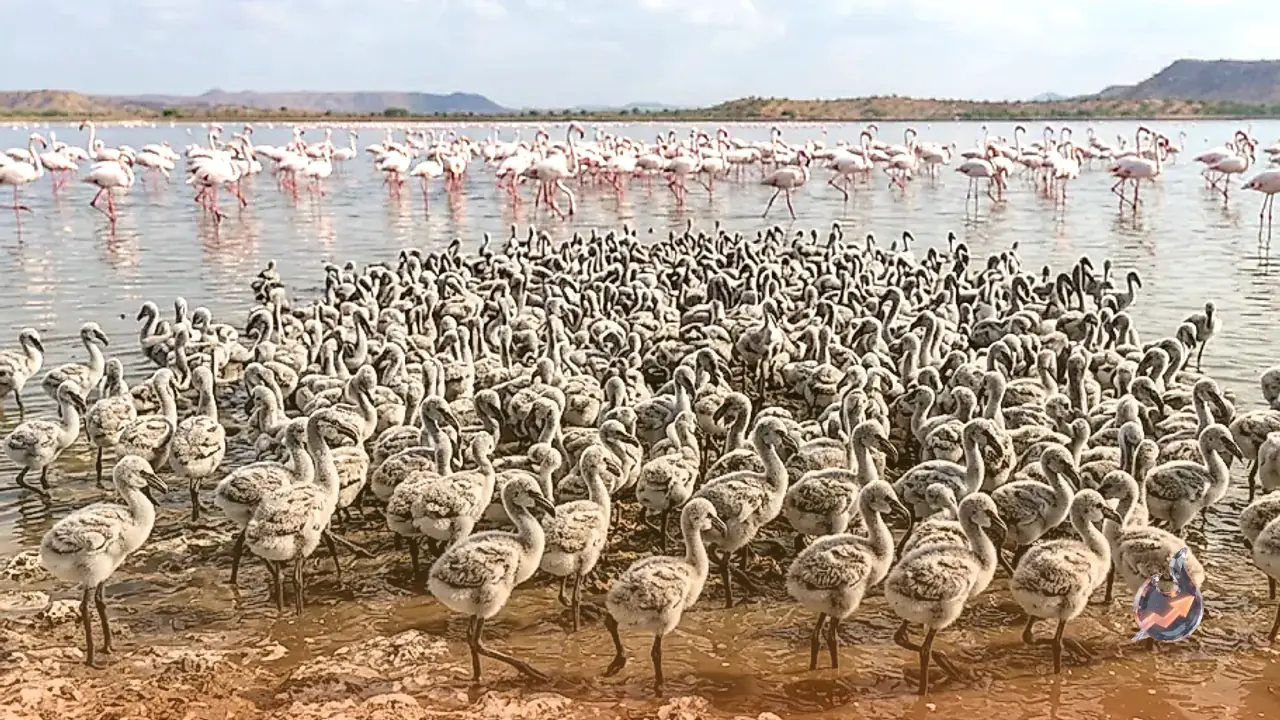

Rajasthan's renowned saltwater wetland, Sambhar Lake, has transformed from a seasonal stopover for migratory birds into a thriving nursery for flamingos. Every winter, thousands of these magnificent pink-plumaged birds travel vast distances from cooler northern regions to feed in the mineral-rich waters of the lake. However, recent ecological monitoring revealed that the birds have done far more than just roost; they have successfully nested and produced offspring. Wildlife specialists confirmed concrete evidence of successful flamingo breeding in the lake, where approximately 300 young chicks were documented walking and learning to fly, marking a historic achievement for avian conservation in the state.
Architectural Wonders Built From Lake Mud
Unlike most avian species that construct nests among tree branches or dense foliage, flamingos in the vegetation-scarce Sambhar Lake rely on specialized mud engineering. Using their specialized curved beaks, the birds scrape together wet, sticky mud from the lake bed to build conical nest mounds standing between 10 and 12 inches high. These raised structures are surrounded by shallow water, which shields the eggs from rising fluid levels and terrestrial predators. Female flamingos lay a single egg per season, after which both parents take turns incubating it beneath their bodies to provide constant warmth and protection.
31 Days of Incubation and the 'Creche Colony' Protection
According to Sambhar-based bird expert Gaurav Dadhich, the incubation period lasts approximately 31 days before the chick hatches. Within two to three days of emerging, the newborn chick begins walking around the nest mound. It takes roughly 70 days for the chick to develop full flight feathers and take to the air. During this crucial growing phase, adult flamingos guide the fledglings, teaching them flock behavior and feeding techniques. To safeguard the vulnerable young from raptors and other threats, the flock establishes a dedicated 'creche colony' away from the main nesting site, where a select group of adult flamingos acts as sentinels to watch over the gathered chicks.
Over 4,000 Nest Mounds Across Two Flamingo Species
The successful breeding event was enabled by favorable hydrologic conditions. Heavy monsoon rains in 2025 ensured that Sambhar Lake retained optimal water levels throughout 2026. This abundance of water allowed the birds to set up colonies in isolated sections of the wetland far removed from human settlements. Field surveys documented over 4,000 mud nest mounds across the lake bed, comprising approximately 3,500 nests built by Lesser Flamingos and over 500 built by Greater Flamingos. As water levels recede after the rainy season, these striking cone-shaped mud sculptures emerge across the vast mudflats.
First Verified Success After Traces Seen Since 2017
Although remnants of flamingo mud nests had been observed in Sambhar Lake since 2017, this marks the very first time that successful hatching and chick survival have been officially verified. Historically, the Army-protected reserve within the Rann of Kutch in Gujarat was regarded as India's primary confirmed breeding ground for flamingos. The survival of 300 chicks in Sambhar demonstrates that the inland saline lake possesses the ecological conditions necessary to become another vital breeding sanctuary for the species if given adequate protection.
Human Interference and Urgent Conservation Demands
Despite the construction of thousands of nests, the survival of only about 300 chicks highlights severe environmental challenges. Gaurav Dadhich pointed out that illegal human activities remain the greatest threat to nesting colonies. Unauthorized borewells drilled for salt extraction, along with sprawling pipelines and overhead power lines, severely degrade the natural habitat. Flamingos are exceptionally sensitive birds that cannot tolerate human disturbance during their nesting period, frequently abandoning their eggs and mounds if disturbed.
Environmental campaigners are urging authorities to declare a dedicated section of Sambhar Lake as a protected wildlife sanctuary free from salt production and human intrusion. Rahul Jhajharia, Deputy Conservator of Forests (DFO) for Jaipur, stated that the forest department has intensified patrolling and surveillance across the lake during the migratory season. Conservationists emphasize that long-term protective measures are essential to safeguard this natural heritage and support larger breeding populations in the coming years.