




















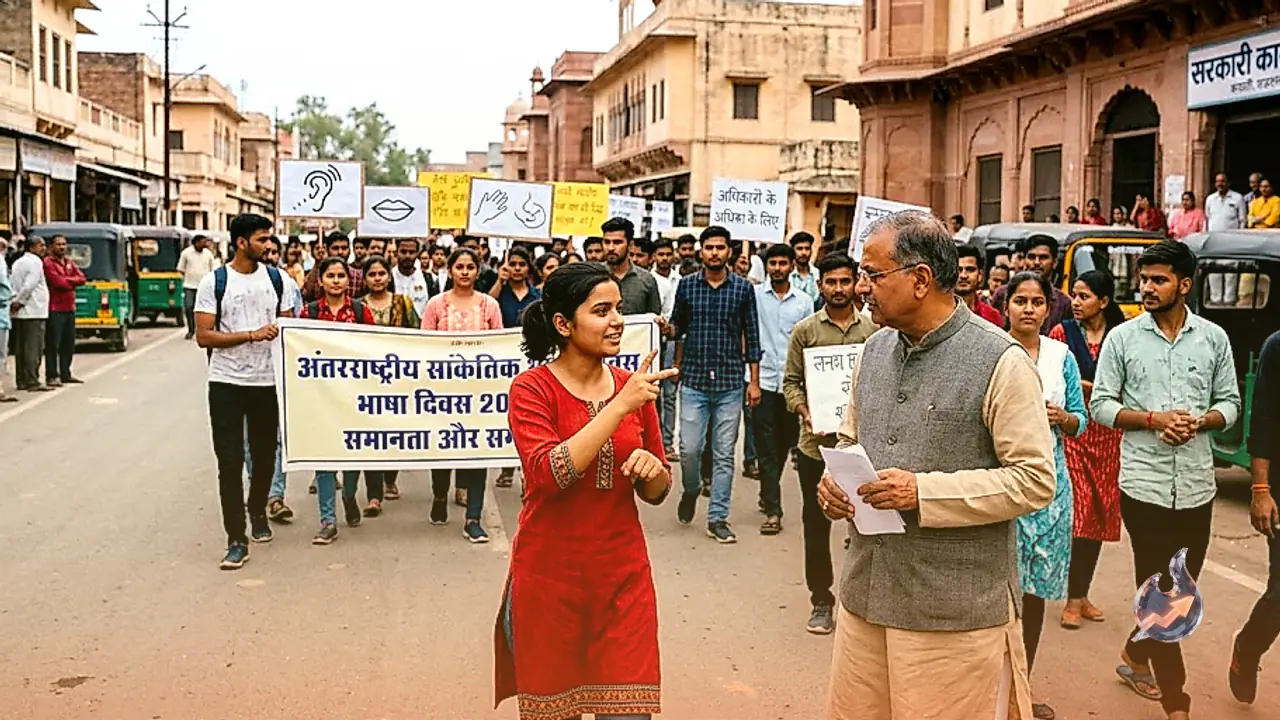

Using expressive hand gestures and facial expressions to voice their long-standing concerns, approximately 40 hearing and speech impaired youths gathered in Karauli to demand systemic inclusion and equal opportunities. Assembling on the occasion of the International Day of Sign Languages 2026, these young citizens emphasized that having no spoken voice does not diminish their legitimate rights or dreams. They asserted that meaningful societal progress is only possible when public systems and regular citizens learn to comprehend their signs and treat them as equal members of the community.
Peaceful Demonstration on the Streets of Karauli
Young participants from different parts of the district organized a quiet and well-coordinated procession across town. Along the route, they actively encouraged everyday onlookers to familiarize themselves with Indian Sign Language (ISL) so that the barrier of isolation between the hearing and deaf communities can be reduced. Many pedestrians paused in their tracks upon watching the demonstrators communicate silently through precise gestures. While most onlookers could not decipher the signs directly, the earnest expressions on the faces of the marchers drew immediate attention and empathy from the public.
Administrative Engagement Through Sign Language Interpreters
Following the street demonstration, the participants proceeded to the district collectorate to deliver a formal memorandum detailing their everyday obstacles. Demonstrators including Ravi Gupta, Rahul Gurjar, and Kalu Meena represented the group. Because spoken communication was impossible without assistance, ISL expert Sarita Meena and professional interpreter Bhawna Sonwal facilitated the entire dialogue with the local authorities. Karauli SDM Rakesh Kumar Rawat listened attentively as the interpreters translated each concern raised by the youth, subsequently assuring them that administrative action would be taken within available parameters.
Eight Core Demands Covering Healthcare, Education, and Justice
The charter presented to the sub-divisional magistrate outlined eight vital measures needed across civic systems to ensure accessibility and fair treatment
- Provision of ISL-trained educators alongside accessible learning resources for deaf students across educational institutions.
- Imparting sign language training to mainstream school teachers or placing certified ISL interpreters in educational centers.
- Stationing dedicated sign language interpreters in government hospitals so patients can accurately explain symptoms and comprehend treatment plans.
- Mandatory availability of accredited interpreters across police stations and judicial courts to safeguard legal rights.
- Publishing essential public service updates and official department notifications in sign language formats.
- Equal treatment in job recruitment, vocational skill training, workplace retention, and promotional opportunities.
- Making all emergency broadcasts and disaster safety alerts readily accessible in ISL.
- Urging families and wider society to stop treating deafness as ignorance and instead learn sign language to communicate directly.
A Call for Dignity and Equal Citizenship
The overarching appeal from the youth centered on social dignity and accessibility rather than sympathy. They stressed that lacking auditory or speech faculties should never be an excuse for institutional exclusion. By urging the administration and the public to bridge the communication divide through official interpreters and inclusive infrastructure, the demonstrators reaffirmed their right to participate fully in education, healthcare, the justice system, and the workforce.