
















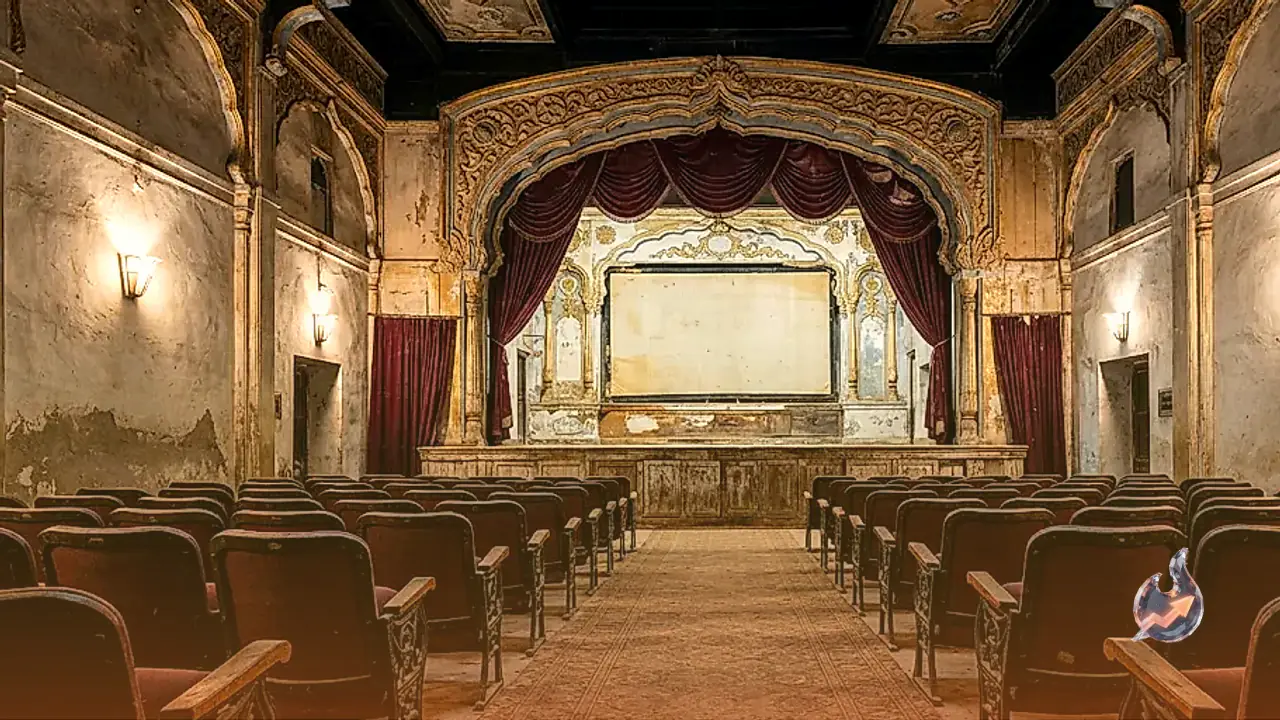

There was a time in the city of Dholpur, Rajasthan, when watching a movie on a big screen was treated with the same excitement and splendour as a major festival or fair. Back in those days, ordinary citizens could immerse themselves in the magic of cinema by purchasing a ticket for as little as 65 paise. Set amidst Dholpur's historic landmarks, Jagan Talkies was not only the primary entertainment hub of the region but also stood out for its distinctive architectural design. Constructed with red and white sandstone, the grand structure featured an auditorium with a seating capacity of 842, which was considered a remarkable achievement for its time.
Architectural Grandeur and the 1969 Dussehra Launch
Dholpur has long been celebrated for its treasure of heritage architecture, including the famous Ghantaghar clock tower, the Heritage Library, and the Municipal Corporation building. Amidst these classic monuments, Jagan Talkies lent a fresh and imposing modern identity to the city. The ambitious project was initiated by Bohre Pandit Jagannath Sharma. Construction was completed in 1969, and the cinema hall officially opened its doors on October 19, 1969, coinciding with the auspicious festival of Vijayadashami (Dussehra). The inaugural ceremony was led by Jaykishan Sharma, who was serving as a minister in the Rajasthan state government at the time.
The very first feature film screened on its massive screen was the classic 'Neel Kamal', starring legendary actors Waheeda Rehman and Raaj Kumar. Awestruck by the sheer elegance and sandstone craftsmanship of the building, local residents affectionately dubbed the venue "Ghoore Par Heera" (a diamond on a dunghill), highlighting how the opulent theater shone brilliantly in its small-town surroundings.
Affordable Pricing and Crowds of Over 1,100 Spectators
During that golden era, moviegoing was made highly accessible to the public through modest ticket pricing. Admission charges ranged from 65 paise to a maximum of 2 rupees, allowing people from all socio-economic backgrounds to enjoy popular cinema. Public passion for films was so intense that despite the hall having 842 designated seats, major blockbuster screenings regularly drew crowds exceeding 1,100 people, many of whom happily stood in the aisles throughout the entire duration of the movie.
Management by Alwar Resident, Machkund Fair Extras, and Rickshaw Announcements
The operational management of Jagan Talkies was handled by Narayan N. Punjabi, who hailed from Alwar. Under normal circumstances, the theater ran four daily shows. However, during the annual Machkund Mela, when vast crowds of rural and urban visitors poured into Dholpur, the management organized a special schedule of five shows per day to cater to the overwhelming demand.
Promotional tactics for new film releases were equally unique and engaging. Before a movie premiered, rickshaws mounted with oversized posters and loud horns traversed village paths and city neighborhoods, making public announcements (munadi) to inform residents about upcoming shows and star casts.
A Cultural Hub for Community Life and Timeless Classics
Reflecting on those bygone days, historian Arvind Sharma shared that visiting Jagan Talkies went far beyond merely watching a picture; it functioned as a vital social and cultural gathering point for the people of Dholpur. He recalled attending screenings of timeless classics such as 'Jeevan Mrityu', 'Yaadon Ki Baaraat', 'Guide', and 'Sholay'. Families and friends considered an evening at the talkies a festive outing.
Although the advent of digital media and streaming services has permanently transformed entertainment habits, the historic sandstone structure of Jagan Talkies remains standing today as an enduring testament to Dholpur's rich cinematic heritage and cultural history.