



















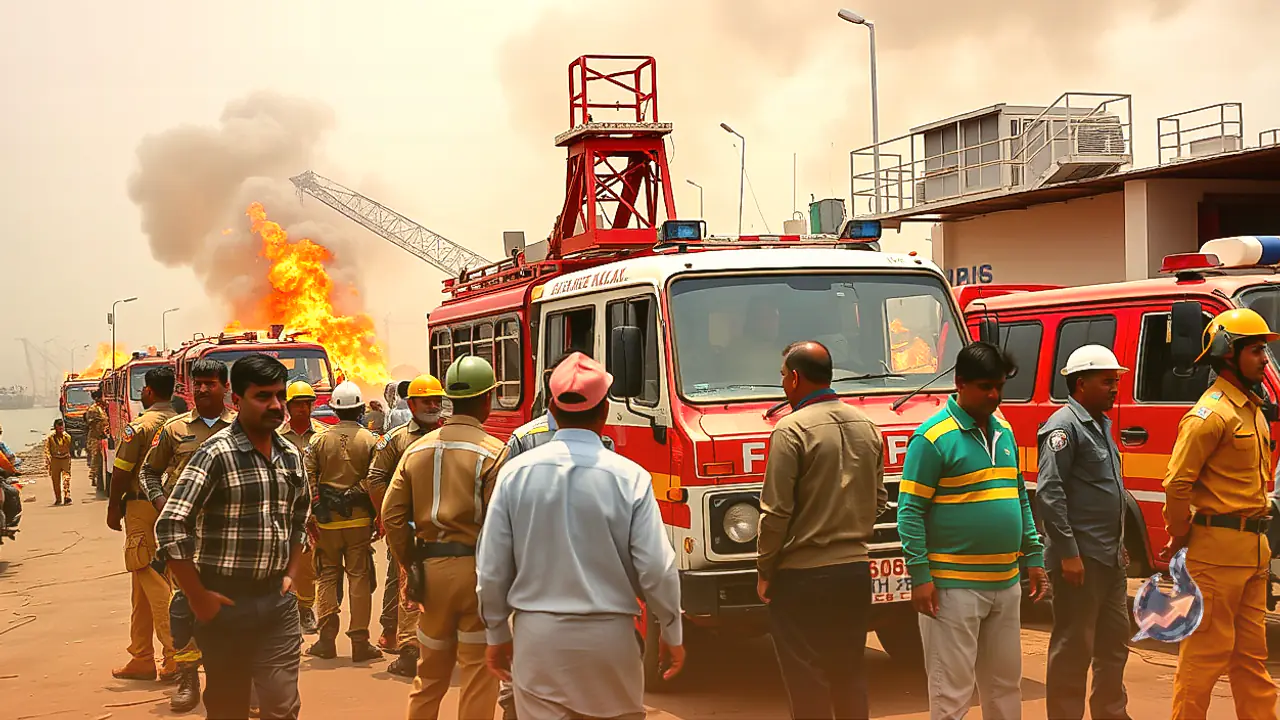

To bolster fire safety capabilities across urban high-rises, the fire department in Jodhpur, Rajasthan, has deployed an advanced articulating water tower van valued at approximately 9.5 crore rupees. The introduction of this high-capacity machinery directly addresses the growing operational hurdles encountered while handling emergencies in towering structures. Following multiple fire outbreaks that underscored the challenges of urban firefighting, this specialized vehicle substantially strengthens the local rescue framework across rapidly expanding residential and commercial hubs.
Reaching High Elevations With a 36-Meter Hydraulic Boom
The centerpiece of this newly deployed fire vehicle is its articulated hydraulic boom, capable of ascending up to 36 meters, or roughly 120 feet, directly from ground level. In conventional operations, delivering powerful streams of water to upper floors often consumes precious minutes and demands arduous manual effort from the crew. With this platform, crews can blast high-volume streams precisely into upper levels while operating safely from below. Furthermore, the unit features a remote-controlled robotic monitor that enables operators to aim water and suppressant foam accurately into burning structures from a secure perimeter.
Thermal Imaging Penetrates Heavy Smoke to Locate Trapped Occupants
During severe structural blazes, dense and toxic smoke typically engulfs hallways and stairwells, leaving trapped individuals invisible to standard search parties. To counter this life-threatening condition, the articulating water tower is outfitted with an onboard thermal imaging camera. This device detects infrared heat signatures rather than visible light, enabling emergency personnel to pinpoint the exact positions of individuals stranded inside completely obscured rooms. By providing real-time positional data, the camera drastically accelerates targeted evacuation operations when every single second counts.
Automated Safeguards Shield Firefighters During Dangerous Operations
Safeguarding the rescue workers themselves during volatile emergency deployments remains a critical design priority of this modern machinery. In dense urban layouts, overhead utility cables and live high-tension electrical wires present catastrophic electrocution hazards during boom elevation. The vehicle addresses this danger through an automated safety override mechanism that halts boom movements whenever overhead electrical lines are sensed in close proximity. This proactive layer of mechanical defense shields first responders from inadvertent contact and hazardous structural snags.
One of Three Statewide Units Assigned to Protect Growing City Centers
Procured as part of a wider statewide upgrade initiative that acquired three identical heavy-rescue units across Rajasthan, this machine was earmarked specifically for Jodhpur. The city has experienced a sustained surge in multi-story residential towers, sprawling healthcare facilities, large commercial complexes, and hospitality venues. While high-tech equipment significantly amplifies response capabilities, official effectiveness still depends on physical access corridors, traffic navigation, and prompt logistical deployment at the actual scene. Nevertheless, this acquisition equips local crews with vital aerial firepower for combating complex high-altitude infernos.