



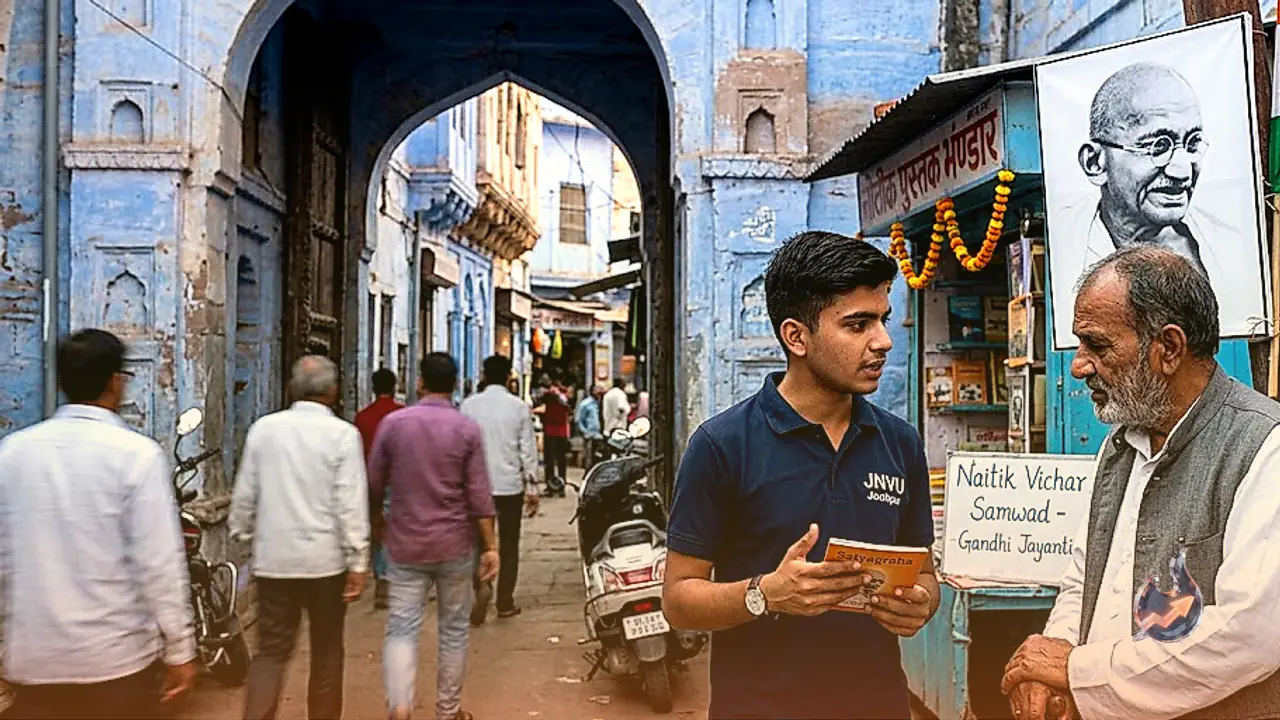
















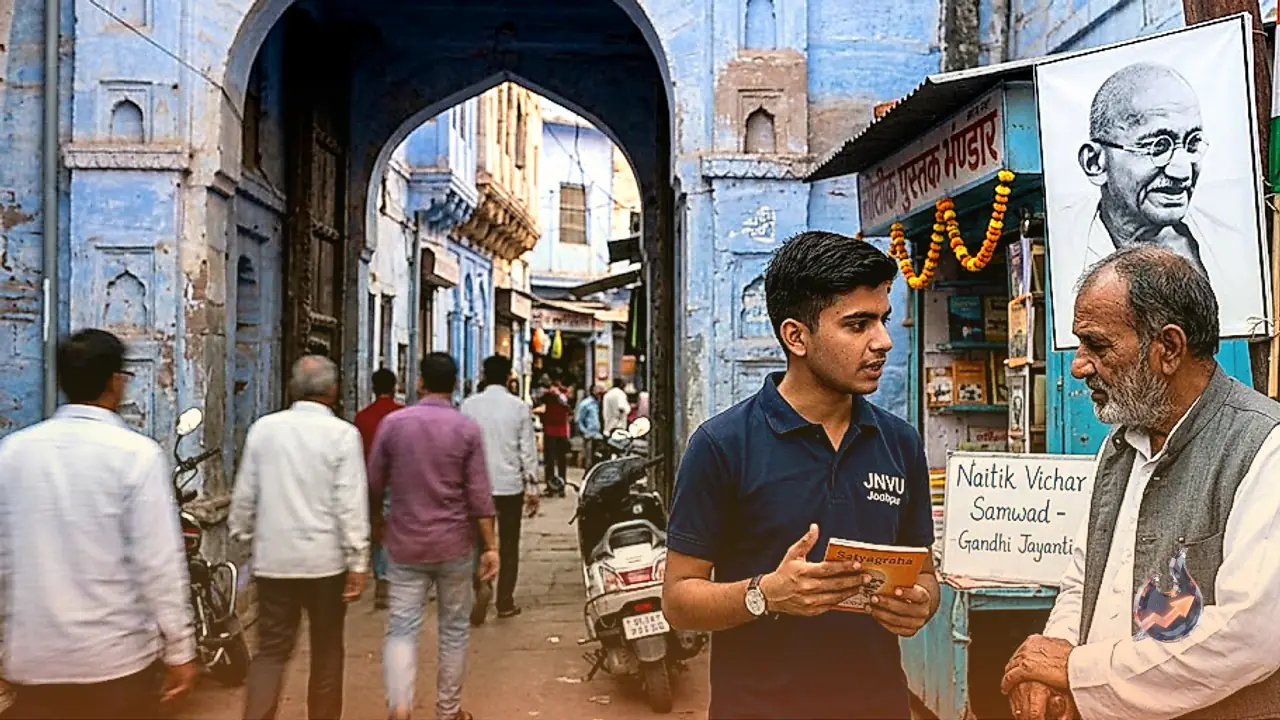

Mahatma Gandhi anchored his entire life on the foundational principles of truth, non-violence, cleanliness, and simplicity. To understand how effectively ordinary citizens navigate these moral benchmarks amidst the rush of modern life, people in Jodhpur, Rajasthan were asked about their everyday practices. Their perspectives revealed a generation constantly negotiating between strict ethical ideals and everyday practical necessities.
Balancing Truth with Empathy and Real-World Friction
When asked about adhering to truth, local resident Kartik Sharma offered an honest evaluation of daily realities. He explained that routine life occasionally forces individuals to tell lies. According to Sharma, falsehoods are sometimes employed to shield another person from trouble or discomfort. However, he maintained a strict distinction regarding harmful intent, asserting that one must never utter a lie that inflicts genuine damage or loss on someone else. For him, both the underlying motivation and the eventual outcome dictate whether bending the truth is justifiable.
Komal echoed a similar sentiment regarding interpersonal honesty. She acknowledged that she occasionally resorts to falsehoods, but she consciously ensures that her statements never harm anyone. Diya, a BTech student, approached the subject from an emotional standpoint. Diya admitted to telling lies on occasion, primarily to avoid hurting the feelings of others. Across these responses, truth is viewed not as a rigid, abstract doctrine, but as a principle tempered by compassion and contextual awareness.
Systemic Delays and the Reality of Bribery
On the question of bribery, Kartik Sharma recounted firsthand encounters with administrative hurdles. He noted that official administrative systems have not evolved to a level where every routine task can be completed smoothly and transparently. When urgent work arises, circumstances frequently compel individuals to pay bribes simply to get things done, and he acknowledged having faced such dilemmas himself. His observations brought into sharp focus the gap between civic morality and the compulsions faced by the common citizen.
In stark contrast, Komal took an uncompromising stance on financial corruption. She stated clearly that she has never offered a bribe and continues to view the practice as entirely unacceptable under any circumstance. Meanwhile, BTech student Diya observed a divided reality, noting that in certain government departments, the necessity of paying a bribe still surfaces from time to time.
Redefining Non-Violence Across Digital Spaces
Addressing the concept of non-violence in an online era, Kartik Sharma emphasized that aggression is not confined to physical altercations, because harsh and abusive language constitutes verbal violence. Because his entire business operations are tethered to social media platforms, he interacts with digital communities continuously and recognizes the medium's constructive and toxic elements alike. When confronted with abuse during online debates, Sharma avoids retaliating in kind. Instead, he prefers to block or report the offending account, stressing that while people are free to speak, maintaining personal restraint remains paramount.
Komal shared an equally straightforward mechanism for handling online hostility, confirming that she systematically reports anyone resorting to abuse. Diya took a situational view of digital friction, remarking that her response to verbal hostility depends on the specific context and the individual involved.
Consumer Priorities: Swadeshi versus Global Quality
Evaluating Gandhian concepts of self-reliance against contemporary commerce, BTech student Diya outlined how young consumers make purchasing choices. Rather than adhering strictly to domestic manufacturing out of sentiment, she makes decisions based primarily on overall product quality. She pointed out that while she favors Korean items for certain product categories, she consciously chooses Indian goods for other everyday needs. These perspectives demonstrate that for the younger demographic, historic ideals are continuously adapted through the lens of quality, utility, and contemporary reality.