


















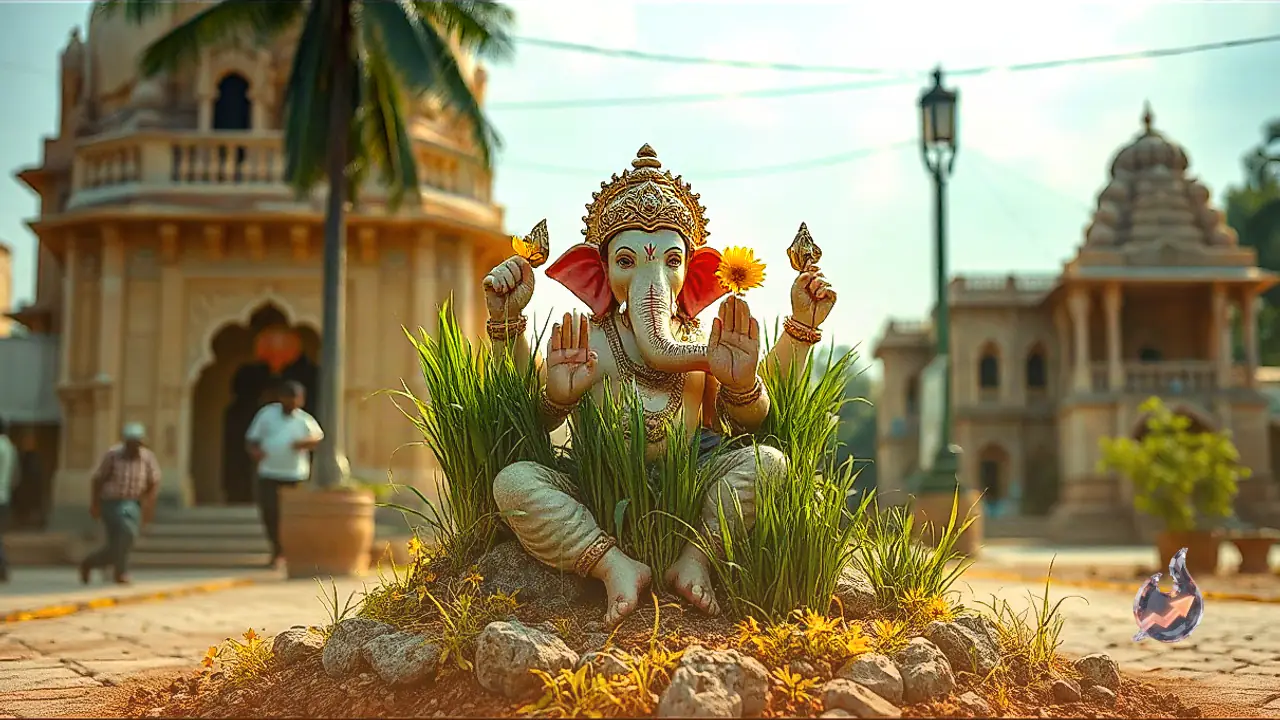

During Ganesha Chaturthi celebrations, devotees across the country commonly witness idols fashioned from natural clay, plaster of Paris, or various metals, but an extraordinary eco-friendly innovation has taken center stage in Jodhpur. In the city's Pratap Nagar locality, nature enthusiast Surajmal Panwar has created an approximately three-foot-tall idol of Lord Ganesha composed entirely of lush durva, or green grass. The vibrant, living idol not only draws crowds of intrigued devotees but also delivers a powerful demonstration of ecological responsibility and conservation.
Sculpted on Clay with 11 Kilograms of Grass over a Month
Bringing this distinctive spiritual art to life demanded nearly a month of meticulous effort from Surajmal Panwar. The crafting began with molding the structural shape and silhouette of Lord Ganesha out of natural clay. Following the base construction, roughly 11 kilograms of durva grass were carefully planted across the idol accompanied by ritual prayers and chanting of sacred mantras. The structure was subsequently nurtured with disciplined watering every day for about 15 to 20 days. As the shoots took root and sprouted across the surface, the form gradually turned into a completely lush, verdant divine figure.
Sustained Dedication to Eco-Conscious Worship and Past Creations
Surajmal Panwar has long made it a personal mission to introduce innovative ideas that harmonize devotional customs with environmental protection. In preceding years, his creative work has featured traditional pure clay figures, a dedicated depiction featuring 51 mice alongside Ganesha, and an idol prepared using alum. His driving desire this season was to advocate for persistent greenery across the nation and nature, prompting him to materialize the deity out of grass while seeking blessings for environmental preservation and flourishing foliage.
Post-Festival Replanting in a Park Rather Than Water Immersion
The distinctive character of this initiative extends well beyond its initial construction, preserving its ecological purpose even after the culmination of festivities. Rather than carrying out traditional immersion by submerging the idol into a water reservoir, Panwar plans to identify a well-kept public park for its culmination. The durva covering the sculpture will be carefully replanted into the park soil, ensuring the grass remains alive while contributing to public green cover. Through this method, the spiritual celebration leaves a permanent living legacy throughout the entire year.
Inspiring Youth Towards Eco-Friendly Artistry
This creative endeavor has sparked enthusiasm among younger generations within the family. Drawing inspiration directly from their grandfather's craftsmanship, the children began assembling their own miniature Ganesha figures at home. Some used natural earth from nearby surroundings while others shaped sculptures with modeling clay. This domestic engagement showcases how family role models can teach cultural heritage and environmental ethics simultaneously through enjoyable creative activities.
Lord Jagannath Themed Ganesha Sculpture in Lakhji Ki Pol
Jodhpur is also witnessing another rare artistic presentation of the deity during this festive run. In the Sadha Baas neighborhood located at Lakhji Ki Pol, a Ganesha idol measuring approximately two feet in height has been sculpted in the likeness of Lord Jagannath. Featuring the characteristic dark complexion associated with the deity, this alternative styling has emerged as another popular stop for visiting worshipers seeking novel artistic and devotional sights across the city.