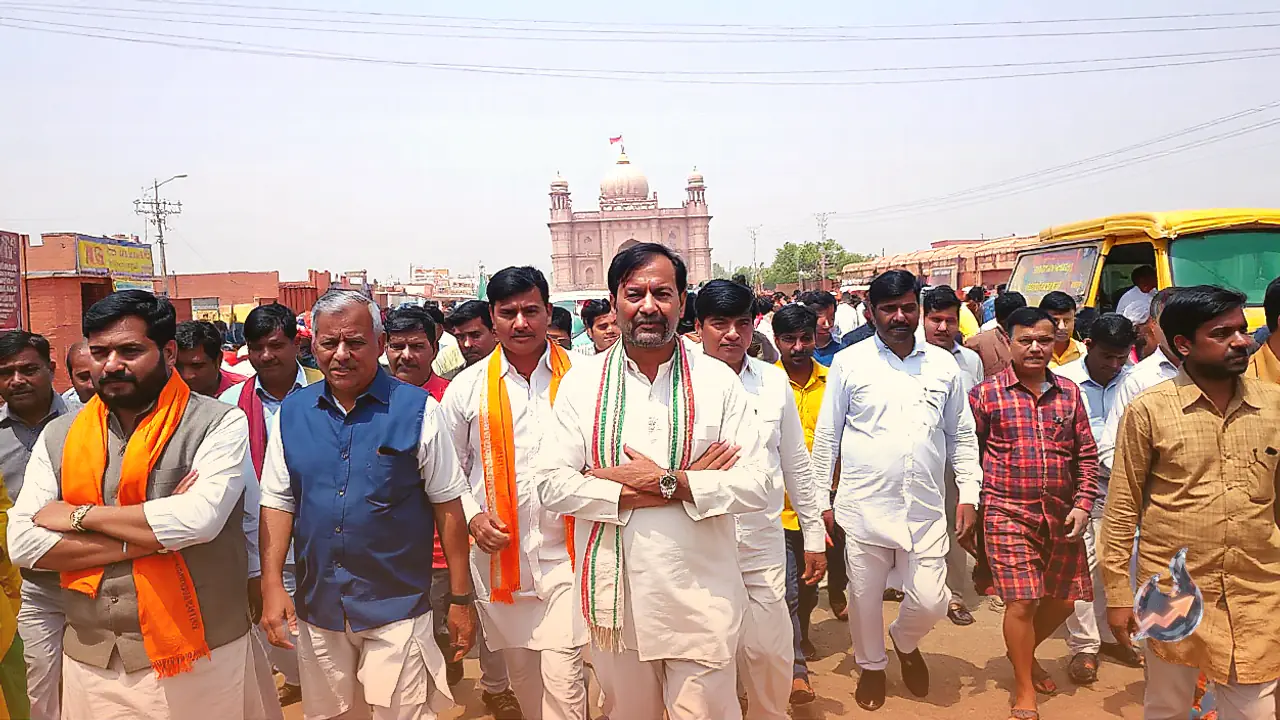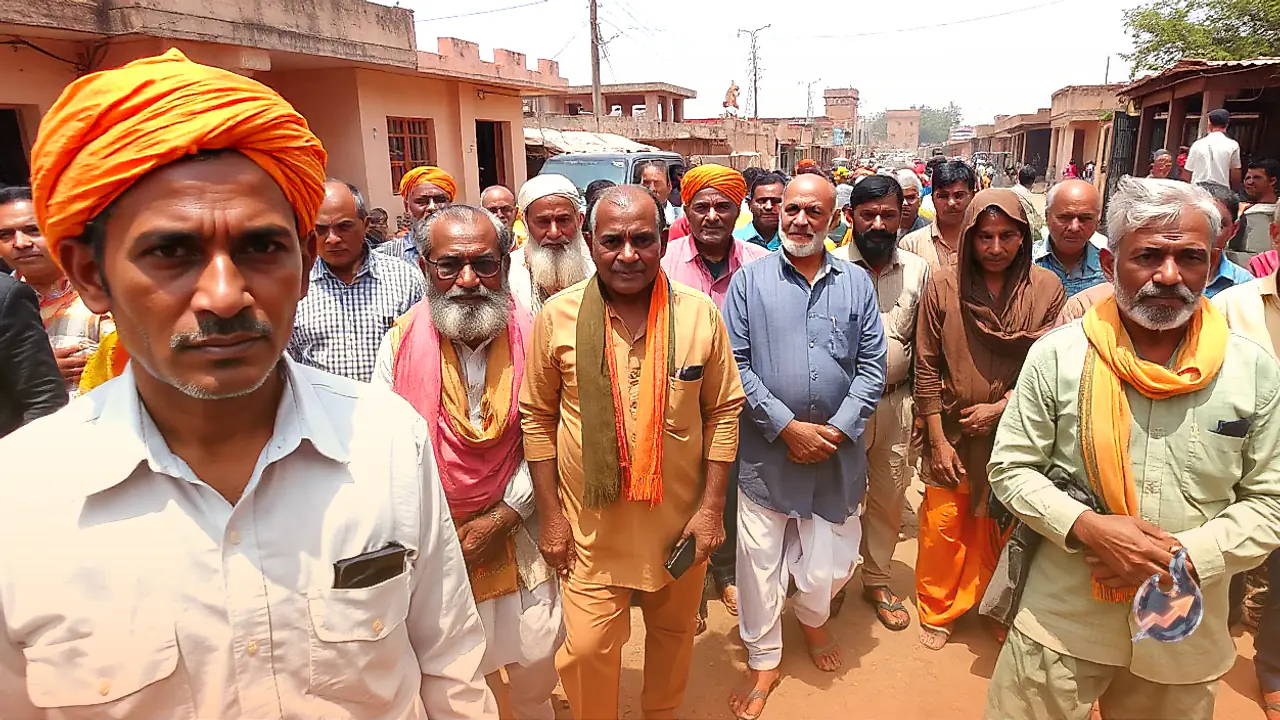

A momentous transformation has unfolded in the local political landscape of Rajasthan. The election outcomes for the position of Zila Pramukh in the tribal-dominated districts of Banswara and Dungarpur, situated within the Udaipur division, have delivered historic results. For the first time, the Bharat Adivasi Party (BAP) has secured the top district governance post in both regions. In Banswara, a tactical electoral coalition between the Bharatiya Janata Party and BAP edged past Congress by a single vote. Meanwhile, in Dungarpur, a tied vote led to a lottery draw that ultimately favored the BAP candidate. The dual victory has triggered widespread celebrations among BAP workers across the southern tribal belt.
Tight Margin in Banswara: How a One-Vote Advantage Turned the Tide
The contest inside the 43-member Banswara Zila Parishad was tightly fought. The political composition of the council stood at 21 seats for Congress, 17 for BAP, and 5 for BJP. While Congress appeared close to holding a workable majority, a strategic alliance between the BJP and BAP rearranged the arithmetic completely. Combined votes pushed BAP nominee Reena Rawat to 22 votes, leaving Congress candidate Vikas Bamaniya stranded at 21 votes. By falling short by just a single vote, Congress missed out on the Zila Pramukh position, allowing Reena Rawat to take charge as the new head of the district council.
Dungarpur Drama: Equality, Absentee Members, and a Lottery Draw
The selection process in Dungarpur proved equally dramatic. BAP candidate Antosh Roat faced off against BJP candidate Kantilal Damor for the Zila Pramukh post. When the votes were tabulated, both contenders ended up tied with 14 votes each. Following statutory election procedures for tie-breakers, election authorities conducted a random lottery draw. The slip bearing Antosh Roat's name was drawn, officially declaring him the winner.
A critical factor in the Dungarpur race was the complete absence of 9 Congress Zila Parishad members, who refrained from voting. This boycott severely damaged Congress's standing and paved the way for BAP's rise. Winning in both Banswara and Dungarpur highlights the expanding political influence of regional tribal representation over established political machinery in southern Rajasthan.
Statewide Breakdown Across 37 Districts: Congress Leads in 24
Data compiled by the State Election Commission across 37 districts demonstrates that Congress maintained a strong broader presence across Rajasthan. Congress captured the Zila Pramukh post in 24 districts, whereas the ruling Bharatiya Janata Party won in 10 districts. Hanuman Beniwal's Rashtriya Loktantrik Party (RLP) held onto its stronghold in Nagaur, while BAP picked up two districts.
A major surprise emerged from Bharatpur, the home district of Chief Minister Bhajan Lal Sharma, where the BJP suffered a setback. Congress candidate Renu Bala defeated BJP's Puja Jatav to win the post. The local body election outcomes underlined that numerical strength alone does not guarantee a win without cohesive voting management. For instance, in Churu, despite numerical advantages held by Congress in many pockets, BJP candidate Kanika Singh emerged victorious.
Complete List of 22 Newly Elected Congress Zila Pramukhs
Out of 23 districts where Congress held a clear numerical majority, the party successfully installed its Zila Pramukh in 22 of them. In three of these districts—Dausa, Jaiselmer, and Sawai Madhopur—Congress candidates were elected unopposed.
The roster of newly elected Congress Zila Pramukhs includes Anita Meena (Alwar), Gafoor Ahmad (Barmer), Renu Bala (Bharatpur), Kailash Meena (Bhilwara), Nikita Doodi (Bikaner), Hansa Gurjar (Bundi), Ratni Devi (Chittorgarh), Beena Bairwa (Dausa), Anisha Singh (Dholpur), Renu Jangu (Hanumangarh), Yashveer Sura (Jaipur), Santosh Kumari (Jaiselmer), Aasu Ram (Jalor), Komal Bhanwariya (Jhunjhunu), Pramila Choudhary (Jodhpur), Ramniwas Yadav (Kotputli-Behror), Yashwant Kanwar (Phalodi), Sundar Devi (Rajsamand), Asha Devi (Sawai Madhopur), Sunita Gathala (Sikar), Guman Singh Deora (Sirohi), and Alka Bairwa (Tonk). These election results signal a revamped dynamic in local grassroots governance across rural Rajasthan.