


















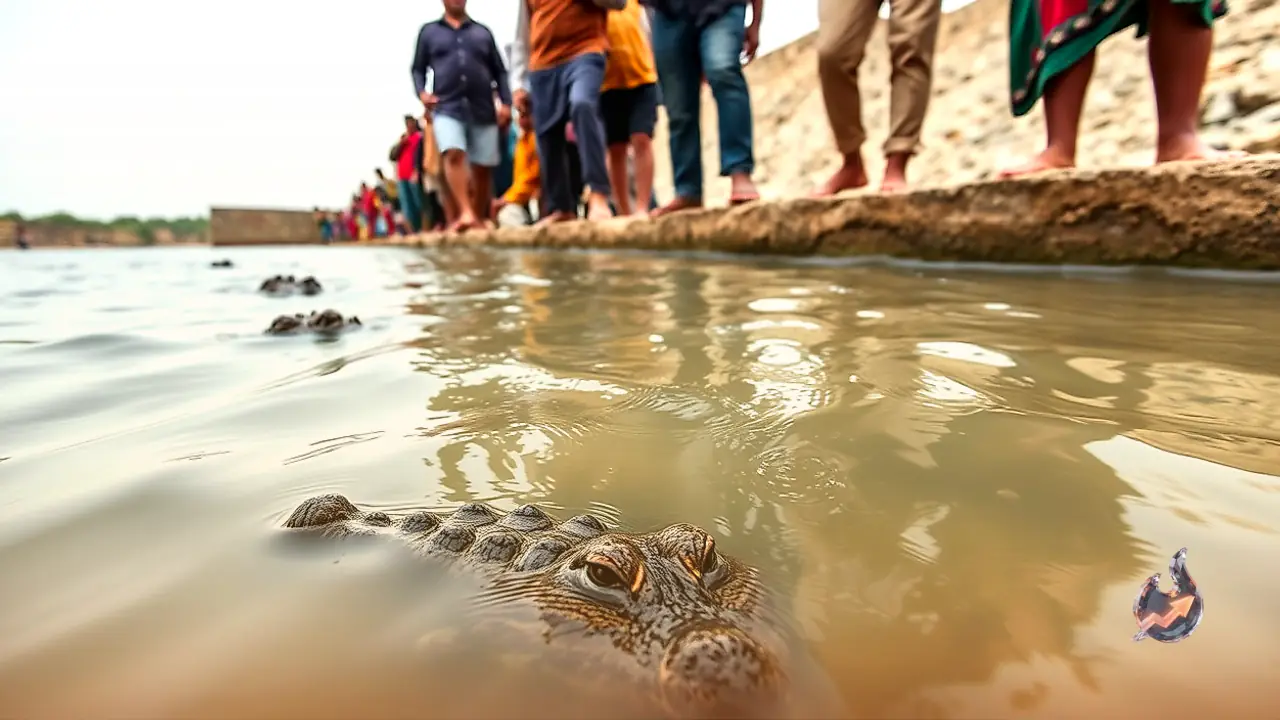

A severe water crisis has engulfed the prominent Jawai Dam located in the Pali district of Rajasthan. Following insufficient monsoon rainfall, the reservoir, which possesses a full storage capacity of 61.25 feet, has seen its water level plummet to below 24 feet. Widely regarded as the lifeline of western Rajasthan, the reservoir's dwindling volume has triggered an ecological emergency. While human communities face impending drinking water shortages, the immediate brunt of the depleting storage is falling on the reservoir's wildlife, specifically placing more than 500 giant crocodiles and vast populations of fish under severe distress.
Depleting Water Depth Shrinks Natural Wildlife Habitats
Historically celebrated as a secure sanctuary for mugger crocodiles, Jawai Dam is experiencing a rapid shrinking of its viable aquatic territory. As the waterline recedes, these apex reptiles are losing their natural zones for swimming, resting, and hunting. Simultaneously, the declining volume causes water temperatures to rise rapidly, establishing lethal conditions for the reservoir's extensive fish population. A significant die-off of fish would not only compromise the purity of the remaining drinking water reserves but also deprive the 500-plus crocodiles of their primary food supply, compounding food scarcity with habitat loss.
Dead Storage Looming Within Three Months
Environmental experts indicate that Jawai Dam currently holds barely three months of usable water. Unless water inflow improves within this three-month window, the entire reservoir is projected to slip into dead storage levels. While public authorities can arrange emergency water transport trains to supply drinking water to urban populations during acute droughts, no automated relief exists for the aquatic wildlife. Despite routine political commitments regarding conservation during election periods, political figures have maintained silence over this unfolding crisis, and wildlife authorities have yet to roll out an emergency intervention plan to protect the fauna.
Threat to Regional Eco-Tourism and Local Economy
The natural landscape surrounding Jawai holds global renown due to its singular biodiversity. While the rocky granite hills are famous for wild leopards, the second crowning attraction of the region is the sight of massive crocodiles basking on the shores and rocks of Jawai Dam. This rare coexistence of leopards and wetland crocodiles draws thousands of domestic and international tourists along with wildlife photographers every year. Activities centered around safari tours and crocodile sightings serve as the financial bedrock for local businesses and hospitality operations, making the dam's ecological collapse a direct threat to the regional economy.