
For decades, researchers have debated whether dark matter comprises a solitary particle type or a diverse mix of particles with varying properties and interactions. Earlier this year, scientists uncovered compelling evidence pointing toward a dark matter particle, and if multiple variants exist, the hidden universe could prove vastly more intricate than initially assumed.
Interactions Among Dark Particles
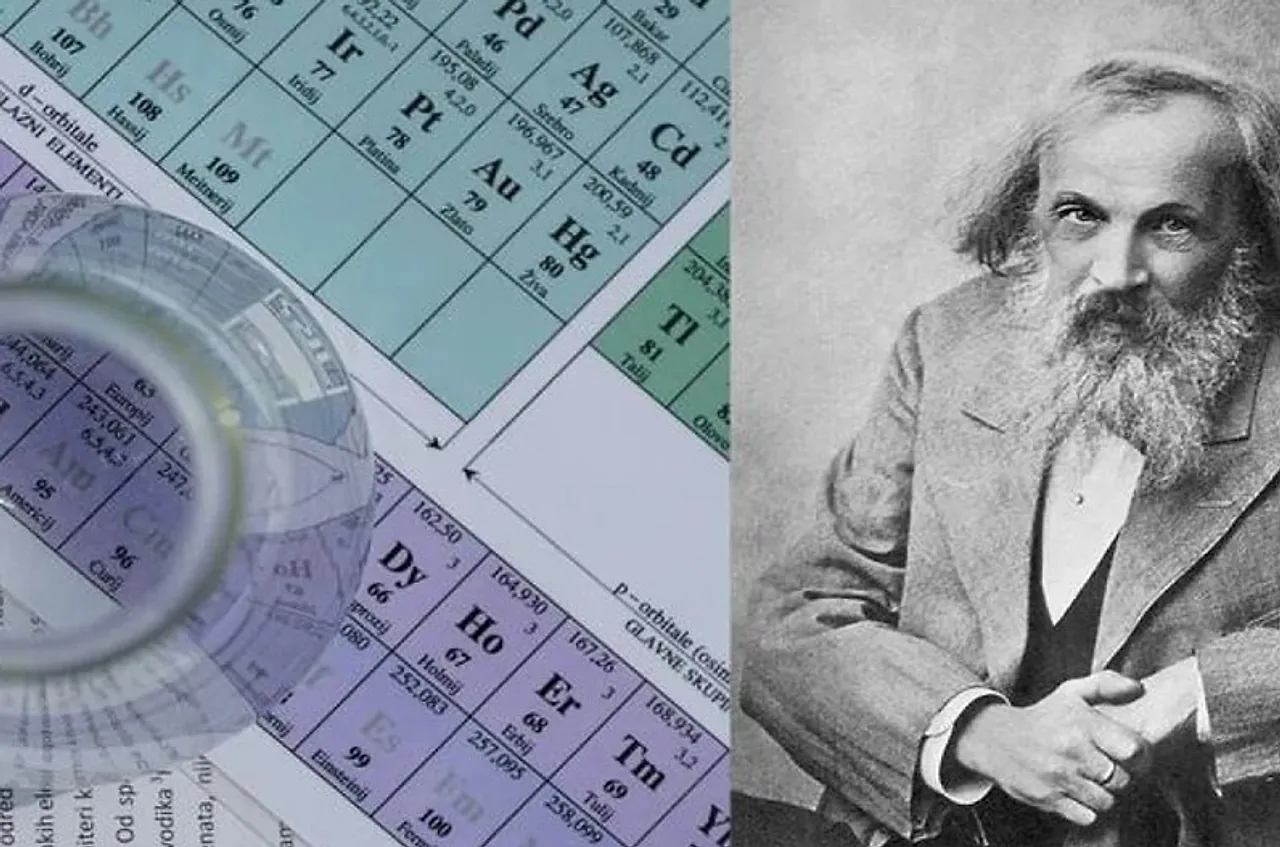
This second scenario introduces a fascinating possibility: if a multitude of dark particles exist, could they interact and combine just like ordinary matter to form dark atoms and molecules? Humanity previously faced a comparable puzzle while mapping out ordinary matter. Just as the periodic table became an ingenious tool to organize elements and predict undiscovered ones, a parallel classification system might be necessary for the invisible realm.
A team of five physicists is currently investigating whether dark matter could establish distinct classes of nuclei and atoms governed by their own unique rules. Their research proposes that the universe might house a mirror sector, containing particles that barely register with visible matter yet possess their own internal forces and mutual interactions.
The Mirror Twin Higgs Background
This concept builds upon the Mirror Twin Higgs theory proposed two decades ago to resolve questions surrounding the mass of the Higgs boson. According to that framework, mirror particles offset quantum effects that would otherwise inflate the mass beyond observed levels. While unproven, the theory offered a way to address mass discrepancies without requiring all new particles to be directly visible to detectors.
Zackaria Chacko, one of the original architects of the Mirror Twin Higgs theory, is part of the investigation extending this hypothesis into dark matter mechanics. Alongside collaborators, he analyzed what might happen if hypothetical mirror sector particles combined to form nuclei, atoms, and a spectrum of dark elements.
Variations in Dark Chemistry
Calculations indicate that under specific conditions, these particles could form dark counterparts to known elements, ranging from simple structures to configurations as complex as carbon. However, this domain would not mirror ordinary matter precisely. The dark particles would feature distinct masses and properties, altering the rules of bonding, structural stability, and molecular formation.
For instance, within the researchers model, dark hydrogen atoms would prove unstable and fail to survive in the manner seen in the observable universe. This represents a striking divergence given that hydrogen stands as the simplest and most abundant element in normal matter. If such dark elements were ever identified, a dark periodic table would be essential to classify their diversity.
Theoretical Boundaries
For now, these concepts remain strictly within theoretical physics. Researchers have not observed these atoms directly, and skepticism remains regarding whether such complex structures can genuinely form. Nevertheless, numerous mysteries regarding dark matter await future discovery.