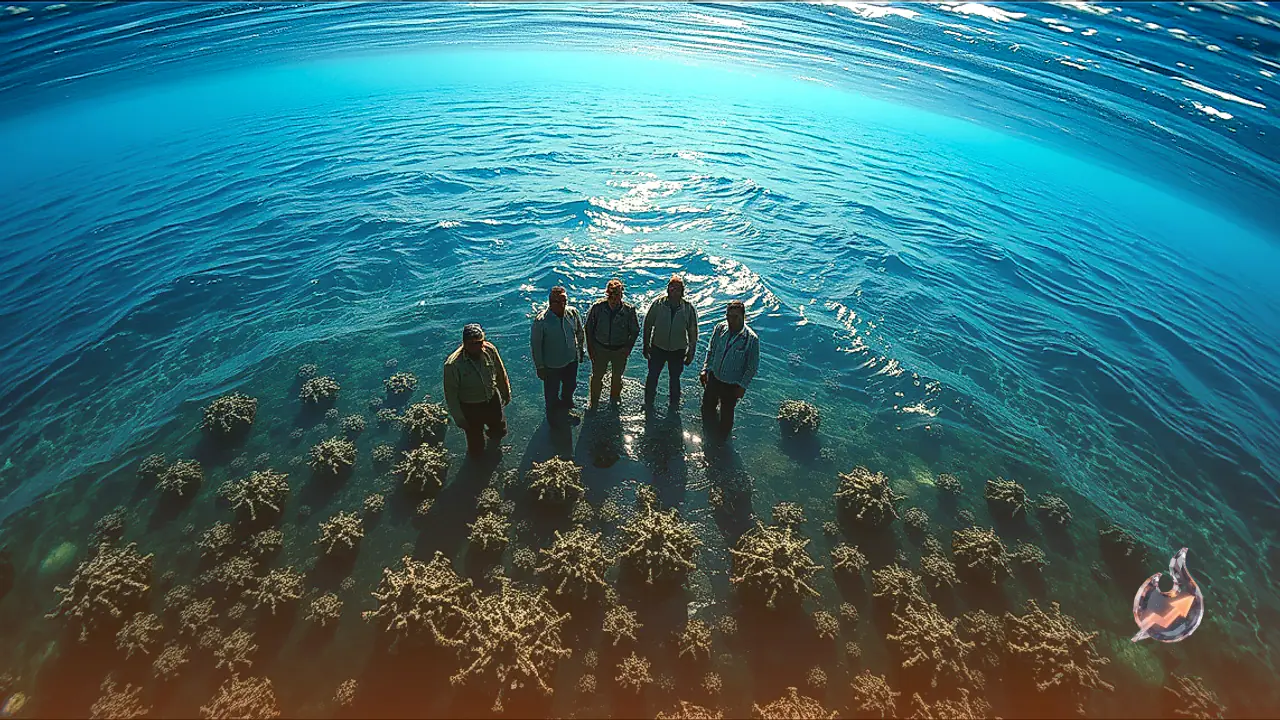























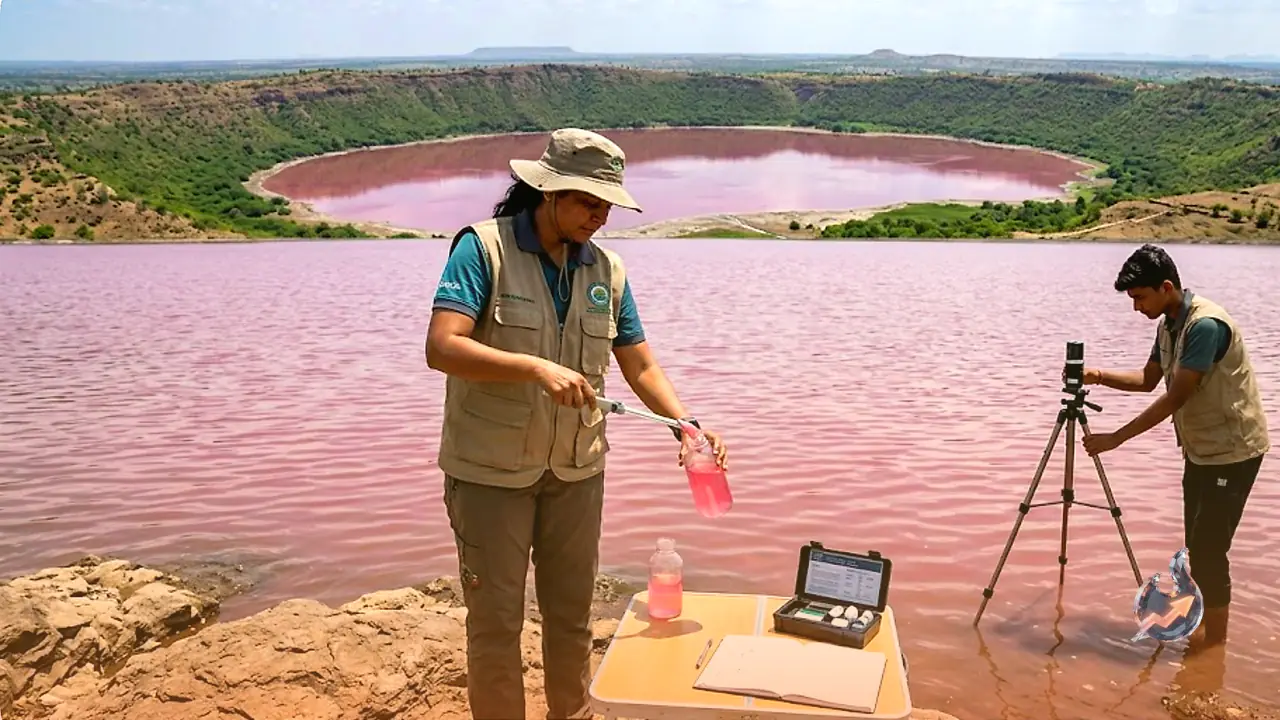

Located in the Buldhana district of Maharashtra, Lonar Lake is widely considered one of the most remarkable natural landmarks in India and the world. It is believed that approximately 50,000 to 52,000 years ago, a massive meteorite collided with the Earth, creating this circular impact crater that eventually filled with water. With a diameter of about 1.8 kilometers, the lake is one of the few impact craters in the world formed on basalt rock, making it a subject of significant interest for geologists. However, its most fascinating attribute remains the periodic shift in its water color.
The Scientific Drivers of Color Change
The water chemistry of Lonar Lake differs significantly from typical freshwater bodies. It is characterized by exceptionally high levels of salinity and alkalinity. As seasonal weather conditions, water temperatures, and internal chemical compositions fluctuate, the micro-organisms and algae thriving within the lake undergo rapid growth phases. These biological activities are the primary drivers behind the visual changes in the lake's appearance.
Why the Water Turns Pink
In 2020, the water of Lonar Lake suddenly turned pink, capturing global attention. According to scientists, during hot weather conditions when water levels decline and salinity concentrations rise, specific types of halophilic microorganisms and microscopic algae like Dunaliella become highly active. These organisms produce natural red and pink pigments, which permeate the water column and cause the visible color shift. This phenomenon is an entirely natural process, and the water typically reverts to its original state once weather patterns shift back.
Understanding the Green Phase
The lake typically appears green when the balance of algae and other aquatic organisms remains within a normal, stable range. During the monsoon season, the influx of freshwater dilutes the lake, causing a drop in salinity. In this modified environment, the population of pink-pigment-producing microorganisms declines, allowing green algae to become dominant, which effectively transitions the lake's appearance to a distinct shade of green.
Importance to the Scientific Community
Lonar Lake is a site of constant study by both domestic and international scientific institutions. Its unique chemical makeup, combined with its status as an impact crater, makes it critical for planetary geological research. Scientists note that the environmental conditions found here bear some resemblance to features on the Moon and the planet Mars, positioning the site as an invaluable asset for astrobiology and comparative geological studies. Ultimately, Lonar Lake stands as a perfect example of nature's complexity, bridging the gap between mystery and scientific exploration.