







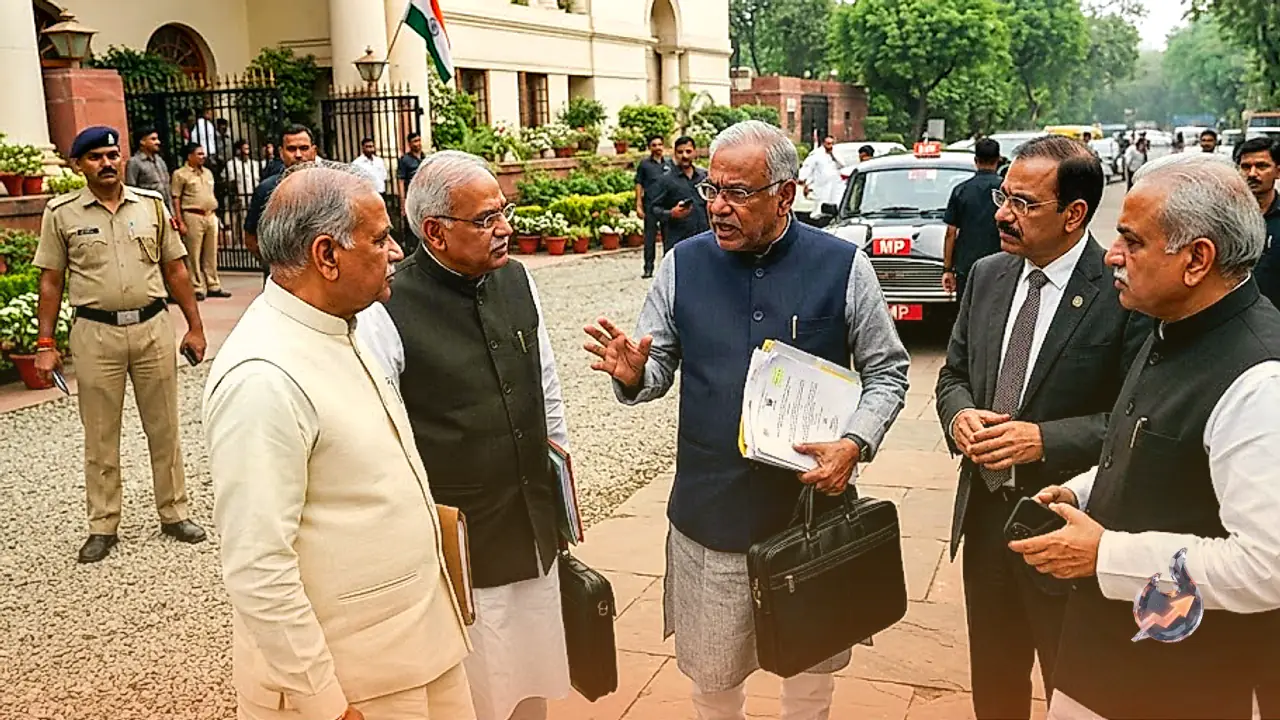
















In Europe, air conditioning has evolved from a matter of personal comfort into a charged political and social battlefield. Politicians across the continent are increasingly leveraging the topic as part of broader cultural disputes. For instance, far-right figure Marine Le Pen has pledged to facilitate the widespread rollout of air conditioning across France should her party secure power, whereas the British Conservatives have vowed to reverse net-zero regulations that currently restrict AC installation in new building projects. Conversely, voices on the left argue that such measures would disproportionately benefit the wealthy, further entrenching the cooling inequality gap, and risk locking Europe into the same high-energy consumption cycle that characterizes the US and Asia. Currently, only about 20 percent of European households possess air conditioning—with that figure dropping to a mere 4 percent in the UK—contrasting sharply with the roughly 90 percent adoption rate in the US, where electricity costs are significantly lower.
The Rising Threat of Extreme Heat
For Europeans, air conditioning is increasingly being viewed as a necessity rather than a luxury. It serves a dual purpose: enabling adults to maintain productivity during periods of extreme heat and assisting children in maintaining concentration within poorly ventilated school environments. It provides much-needed relief at night, allowing people to sleep when temperatures remain stiflingly high long after sunset. Beyond comfort, its potential to save lives is significant. Research groups have estimated that in 2019 alone, air conditioning was responsible for preventing nearly 200,000 premature deaths among the population aged 65 and over.
Europe is warming at a rate faster than any other continent, and nations that once enjoyed relatively mild summers are now facing increasingly frequent and intense heat waves. Research conducted by Nicole Miranda and her colleagues at the University of Oxford indicates that countries such as the UK, Switzerland, Norway, and Finland could face the most significant relative increases in heat exposure and subsequent cooling demand if global warming reaches 2 degrees C above preindustrial levels.
"We will need more cooling to protect people," says Nicole Miranda, a senior lecturer in engineering and carbon reduction manager at the university. "The question is how to provide it in a way that is efficient, equitable, and smart. Not by panic-buying inefficient, energy-intensive portable ACs."
The Paradox of Current Cooling Methods
The record-breaking heat wave experienced in June offered a stark preview of future challenges. In Northern Europe, homes and offices that were traditionally designed to retain heat through harsh winters have transformed into literal ovens. A report by the UK's Climate Change Committee warns that by the middle of the century, over 90 percent of existing homes could suffer from dangerous overheating during severe heat waves. Even in southern regions, centuries-old architectural adaptations—such as thick stone walls, white-painted façades, blinds, and small windows intended to deflect sunlight—are failing to cope with current extremes. The public in Europe is clearly reaching a breaking point with extreme heat.
However, simply mass-installing more air conditioning units is not a sustainable solution, at least not in their present form. Air conditioning is inherently built on a paradox: the very machines meant to keep us cool are contributing to the heating of the planet. The electricity required to run them already accounts for roughly 3 percent of global greenhouse gas emissions, a figure that surpasses that of the aviation industry. "We expect cooling to become one of the biggest drivers of electricity demand growth worldwide, along with data centers," explains Fabian Voswinkel, an energy-efficiency policy analyst at the IEA. With new units being installed across the globe every single minute, the electricity demand for space cooling is projected to more than triple by 2050.
The Search for Refrigerant-Free Technology
While solar power will play a vital role in reducing emissions, it cannot fully sanitize air conditioning's problematic reputation. Conventional AC units still rely on a century-old principle: refrigerants cycle between liquid and gas states to extract heat from indoors and expel it outside. Although manufacturers continue to refine this technology, many of the chemicals used remain highly problematic. Fluorinated gases, for example, have a global warming potential thousands of times greater than CO2 if they manage to leak into the atmosphere. Consequently, the EU introduced a regulation in 2024 to phase these gases out gradually. "In the next few years, air conditioners and heat pumps using these gases won't even be able to be sold here," says Voswinkel. Yet, the alternatives bring their own complications: Propane is highly flammable, while ammonia is notoriously toxic.
This environmental impasse has driven scientists and companies back to the drawing board with a pivotal question: Instead of trying to find a better refrigerant, what if air conditioning systems functioned without one entirely? Their answer is found in materials that change temperature when exposed to external forces—a field known as solid-state cooling, which has the potential to revolutionize how we manage thermal environments.
European Innovation in Solid-State Cooling
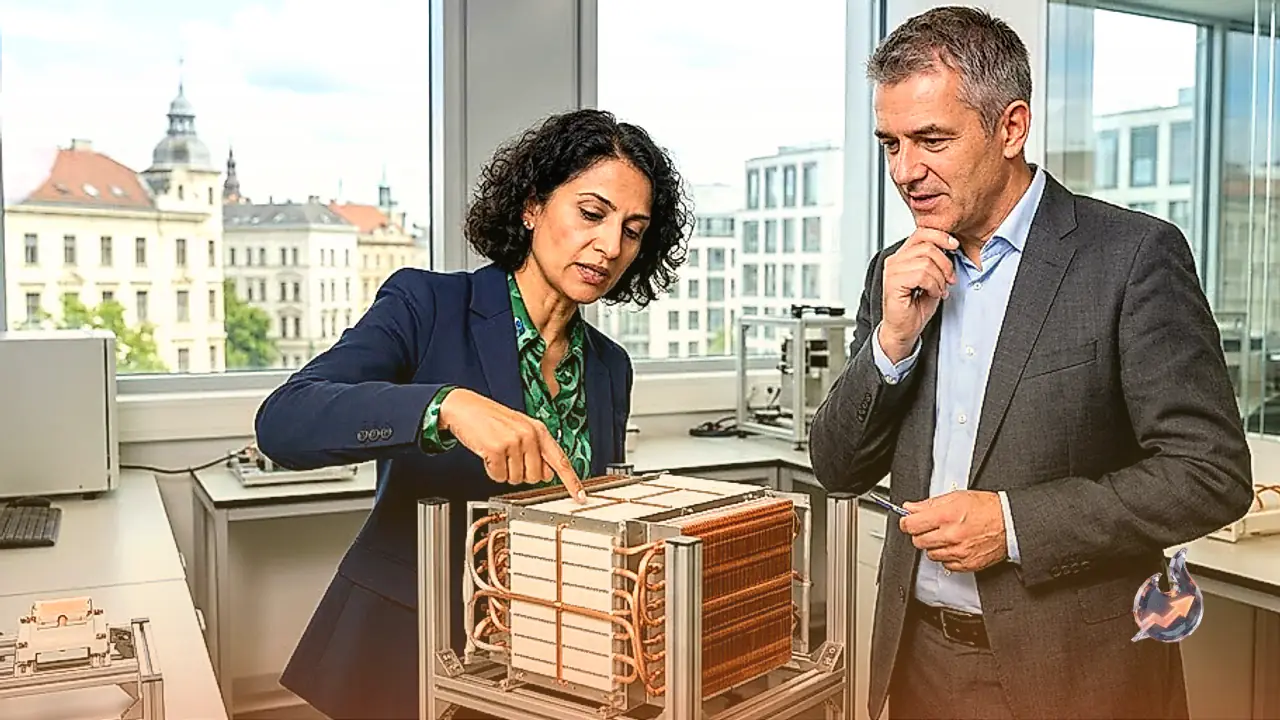
Paul Motzki, professor of smart material systems at Saarland University in Germany, leads an EU-funded scientific consortium dedicated to researching nickel-titanium. When this specific metal is stretched and then released, it snaps back to its original shape, absorbing heat from its surroundings in a process known as the elastocaloric cooling effect. In a practical setting, this technology could cool rooms by 5 to 10 degrees C and, according to Motzki, do so with greater efficiency than current conventional AC systems. While the team is currently testing prototypes in the laboratory, they expect to deploy the technology in new building projects within the next few years. If successful, Motzki suggests it "could lead to disruption, even a paradigm shift, because the technology is so different from established cooling systems." The group is also collaborating with the Irish firm Exergyn, which is similarly developing a refrigerant-free heat pump.
Brooklyn-based Mimic Systems has developed a heat pump utilizing semiconductive materials that are capable of moving heat in and out of rooms when an electric current is applied. A prototype is currently undergoing testing in a Vancouver apartment. Meanwhile, Magnotherm, a spinoff from the Technical University of Darmstadt, is utilizing magnetic fields in refrigeration systems and intends to test a prototype in a German supermarket chain later this year before expanding into air conditioning. In the UK, the University of Cambridge spinoff Barocal is experimenting with flexible plastic crystals that release heat when squashed and released in a pressurized chamber. The startup recently secured USD 10 million in seed funding.
The Path to Market Maturity
Paul Motzki asserts that Europe is clearly positioned at the forefront of solid-state cooling and efforts to commercialize the technology. "I see a major opportunity for Europe to achieve technological leadership all the way through to market maturity," he adds. "Of course, this will all depend heavily on private capital and public funding."
Lindsay Rasmussen shares this perspective. At Third Derivative, a climate-tech accelerator founded by the US nonprofit Rocky Mountain Institute, she collaborates with startups like Mimic Systems and Magnotherm on next-generation cooling solutions. She emphasizes that while solid-state cooling technologies are promising, they remain in the early stages and are currently unproven at scale. Nevertheless, she notes that "the space can move quickly if the right capital and partnerships are in place."
The ultimate challenge lies not in whether these technologies function, but in who will scale them and how rapidly. History suggests that the path to widespread adoption is rarely linear, nor is it guaranteed to remain within Europe. Solar photovoltaics, for instance, began with research breakthroughs in Europe, transitioned to commercialization in the US, and ultimately achieved massive scale in Asia through vertically integrated supply chains. Solid-state cooling may follow a similar trajectory. As Rasmussen explains, innovations typically move out of labs and startups once they become commercially viable, at which point they are likely to be acquired or adopted by major manufacturers. The contemporary cooling market is already dominated by multinational conglomerates such as Daikin and Samsung, which are actively monitoring these emerging technologies and are prepared to act quickly.
As the world rushes to cool itself, one critical reality risks being overlooked: installing more air conditioners will not, by itself, solve Europe's overheating crisis. Many of its cities trap heat within densely packed buildings and concrete streets, and the central challenge is how to cool these environments without compromising the architectural aesthetics that make them so distinctive. Both Oxford researcher Nicole Miranda and IEA analyst Fabian Voswinkel advocate for a "cooling hierarchy." The first priority should be preventing buildings from overheating through passive means, such as the use of trees, shade, reflective materials, and natural ventilation. Active cooling should be the secondary approach, focused on the areas that need it most, such as schools, hospital wards, and care homes. From Paris, where he is based, Voswinkel points to an efficient model: ahead of the 2024 Summer Olympics, the city expanded its district heating network to distribute chilled river water through underground pipelines, successfully cooling public buildings. "I think that these heat waves are making more and more policymakers realize that we have to face this new reality and make good plans," he says.