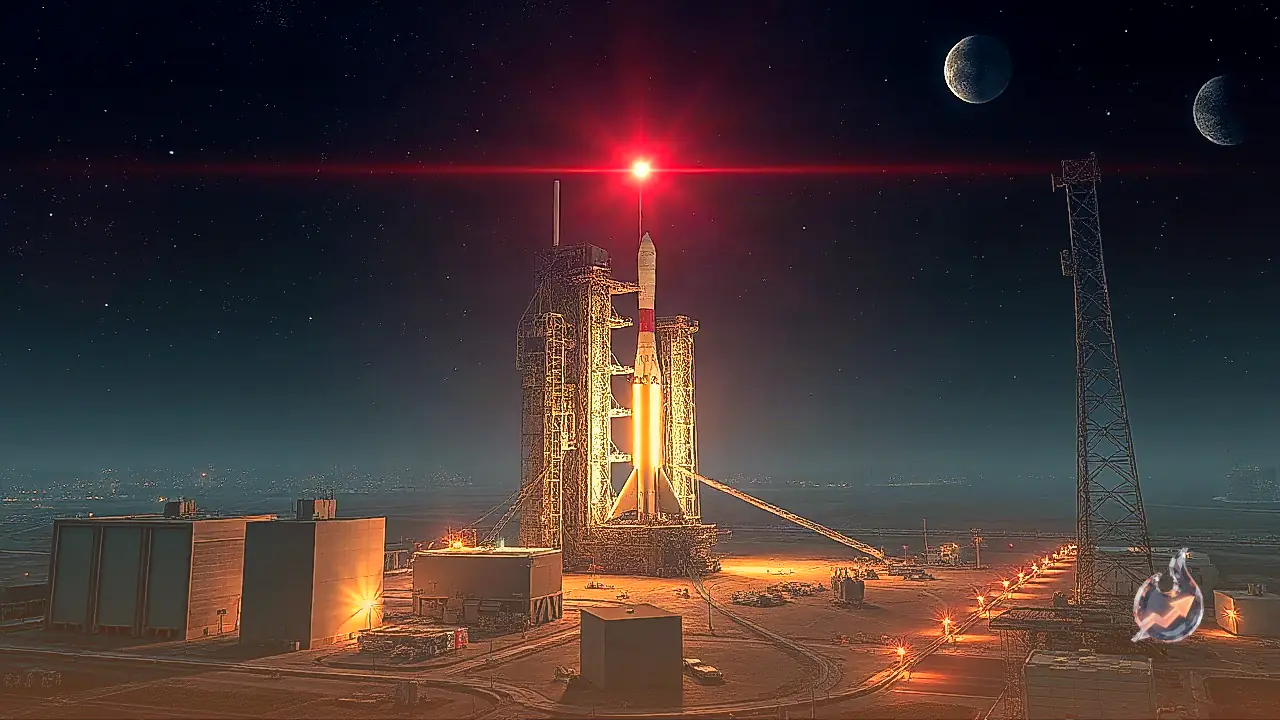























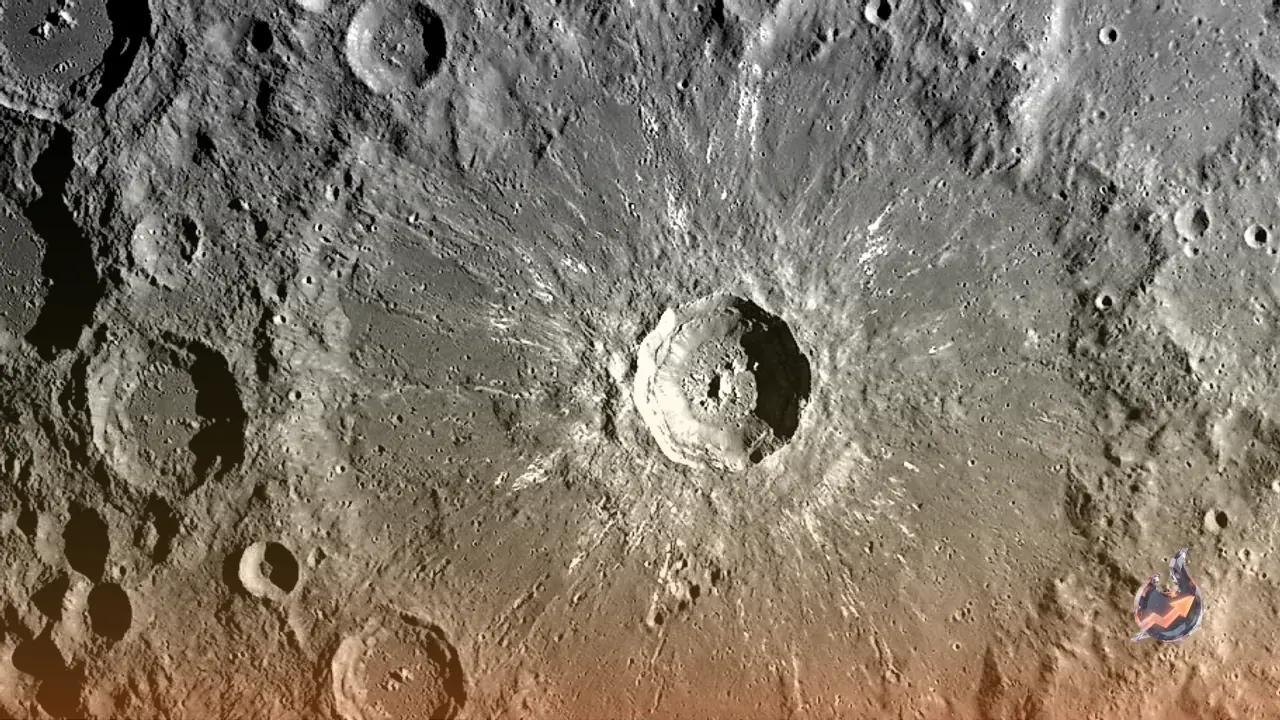

Visual evidence has confirmed that a SpaceX rocket stage has collided with the lunar surface, leaving behind a fresh impact mark. South Korea's dedicated lunar orbiter, operated by the Korea Aerospace Research Institute, captured before and after photographs of the crash site while flying approximately 62 miles, or 100 kilometers, above the moon. This orbiter, known as Danuri, is among a select group of spacecraft currently maintaining a low lunar altitude, allowing it to document the aftermath shortly after the collision took place.
Spectral Detection and Lunar Observations
The photographic evidence from the Danuri orbiter reinforces ground-based observations made prior to and during the event. Astronomers utilizing the Very Large Telescope registered distinct plumes of sodium and lithium vaporizing from the moon's surface. These spectral signatures provided immediate proof that the human-made object had indeed struck the celestial body. Ahead of the event, researchers calculated the precise timing and trajectory of the collision. However, space agencies including NASA had alerted the public that observing the exact instant of impact from Earth would prove exceptionally challenging due to atmospheric conditions and orbital positioning.
Scale of the Lunar Impact Crater
According to preliminary projections by astronomical teams, the collision created a crater measuring several dozens of feet across and reaching a depth of nearly 12 feet, which equals 3.6 meters. While NASA and other space organizations operate orbiters capable of conducting data checks and potentially returning higher-resolution imagery in the coming days, detailed close-up views of the feature remain difficult to capture. The newly released photographs illustrate the minute scale of the crater when contrasted with the vast expanse of the moon, which spans roughly 2,160 miles in diameter.
A Year-Long Orbital Decay Across Deep Space
The spent Falcon 9 upper stage spent over a year drifting through an unpredictable trajectory before finally crashing. Originally launched in January 2025 to deploy lunar landers, the rocket component fulfilled its primary objective before being left in a high-energy transfer orbit. Over the course of more than twelve months, the combined gravitational pulls of Earth, the moon, and the sun continuously altered its path. Solar radiation pressure further influenced the vehicle's trajectory, gradually drawing the hardware closer until gravitational forces pulled it into a direct collision course with the lunar terrain.
SpaceX Protocols and Space Debris Management
In response to questions regarding upper-stage hardware, SpaceX explained that routine missions targeting lower orbits are engineered for controlled atmospheric re-entry over open ocean waters. However, missions pushing payloads into deep space lunar transfer orbits consume nearly all available fuel, rendering controlled deorbit maneuvers impossible. The company noted that solar activity and complex gravitational forces gradually nudged the hardware toward the moon over time. SpaceX stated, "Impacts like this are rare, but they can occur with objects in these types of orbits," while emphasizing its ongoing coordination with NASA to develop optimized disposal strategies for future deep space hardware.