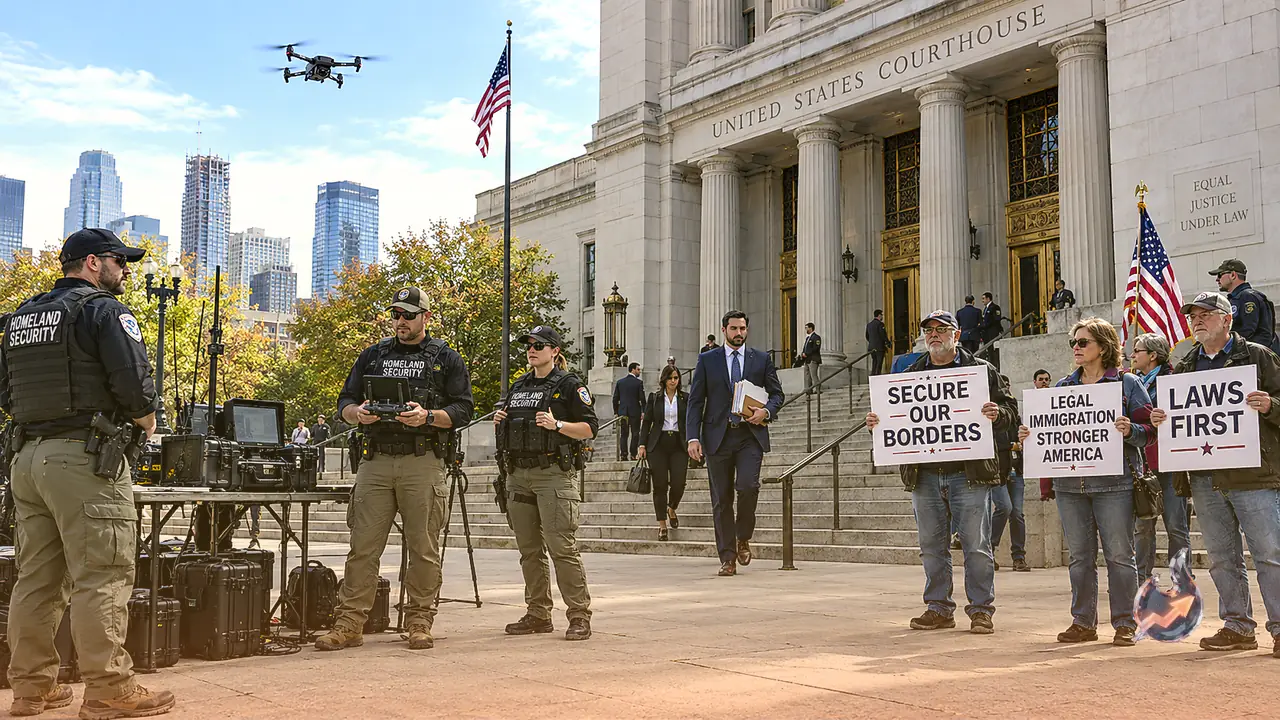
























Homeland Security Investigations, an arm of the Department of Homeland Security, has utilized a controversial administrative subpoena tool approximately 185,000 times since the beginning of the Trump administration. This staggering estimate was brought to light as part of a Freedom of Information Act lawsuit filed against the agency by the Electronic Frontier Foundation. To put this current figure into perspective, a previous analysis conducted by the nonprofit organization found that over a six-and-a-half-year period spanning from early 2016 to mid-August 2022, Immigration and Customs Enforcement agents only issued roughly 170,000 administrative subpoenas of a specific type known as a 1509 customs summons. The sharp increase in these numbers has raised alarms among civil liberties advocates regarding government transparency and oversight.
Lawsuit Uncovers Massive Subpoena Figures
The total count of administrative subpoenas was uncovered through ongoing litigation spearheaded by the Electronic Frontier Foundation against the Department of Homeland Security and ICE. Aaron Mackey, the deputy legal director at the nonprofit organization, stated that the EFF is actively seeking more granular details regarding the 185,000 estimate. The organization originally requested specific data concerning how many administrative subpoenas had been dispatched to technology companies, internet platforms, and digital service providers by ICE or DHS since January 20, 2025. However, it remains unclear whether the reported count is strictly confined to administrative subpoenas sent to those specific types of tech entities or if it encompasses a much broader set of inquiries.
Unchecked Investigative Power Without Court Oversight
Administrative subpoenas function as a remarkably powerful yet entirely unchecked investigative tool for federal authorities. Unlike a conventional grand jury subpoena or a formal court order, the government is not required to explain to a judicial court why it needs specific documents or what precise data it is requesting from a corporate entity. Since the inception of the Trump administration, federal officials have leveraged DHS's administrative subpoena authority to attempt to unmask anonymous online critics and pursue expansive customer records pertaining to protesters. Notable instances of this practice include acquiring a targeted list of individuals in the Minneapolis-St. Paul area who purchased a specific green beanie from the retailer REI.
Evolution and Expansion of Customs Summons
Congress originally authorized the use of 1509 customs summons nearly a century ago for the then-standalone US Customs Service, operating under the premise that it would allow customs officers to inspect business records related to imported merchandise to determine if customs duties were owed. In 2003, Congress transferred those legacy agency powers, including the authority to issue customs summons, directly to the newly formed Department of Homeland Security. In past years, DHS maintained that customs summons could be deployed strictly for specific, designated purposes. Notably, the DHS inspector general admonished Customs and Border Protection's Office of Professional Responsibility back in 2017 for attempting to use a customs summons to unmask an anonymous Twitter poster, emphasizing that official procedures manuals dictated such summons were restricted to information related strictly to customs or immigration laws.
That narrow interpretation has since shifted dramatically. The Trump administration recently argued in court proceedings that because the historical powers of the Customs Service were transferred to DHS following the enactment of the Homeland Security Act, the department is legally permitted to wield that authority to tackle its broad investigative portfolio. The administration contends this portfolio extends well beyond traditional customs and immigration enforcement.
Surveillance Concerns and Legislative Pushback
Commenting on the expansive use of these tools, Aaron Mackey remarked that granting law enforcement powerful investigative capabilities demands extreme caution, even when pursued with the best intentions to investigate crime. The newly revealed figures are tied directly to the ongoing Freedom of Information Act lawsuit pursued by the EFF against immigration and security agencies. US Senator Ron Wyden of Oregon sharply criticized the findings, stating that the numbers reported to the EFF amount to a comprehensive dragnet domestic surveillance program orchestrated by the administration's Homeland Security Department.
While ICE declined to answer specific inquiries regarding why such a massive surge in usage has occurred compared to prior years, Mackey theorized that the spike is largely driven by the virtual absence of any downside to issuing them. The worst potential outcome for ICE is that the recipient service provider refuses to comply, at which point the agency can take the company to court to force compliance, as recently occurred with Google, or simply withdraw the request and pursue the data via a grand jury subpoena, as reported by the Intercept regarding Reddit.
Senator Wyden emphasized an urgent legislative need, stating that Congress must pass his bipartisan Subpoena Abuse Prevention Act to drastically curb federal subpoenas and establish consequences for officials who abuse surveillance authorities. Wyden added that he plans to use his position on the Senate Finance Committee to investigate HSI's unprecedented utilization of customs law to target political opponents. Even absent precise details surrounding all 185,000 subpoenas, Mackey warned that their prolific deployment underscores significant fears of an agency operating without internal oversight that respects foundational First Amendment and privacy rights.