



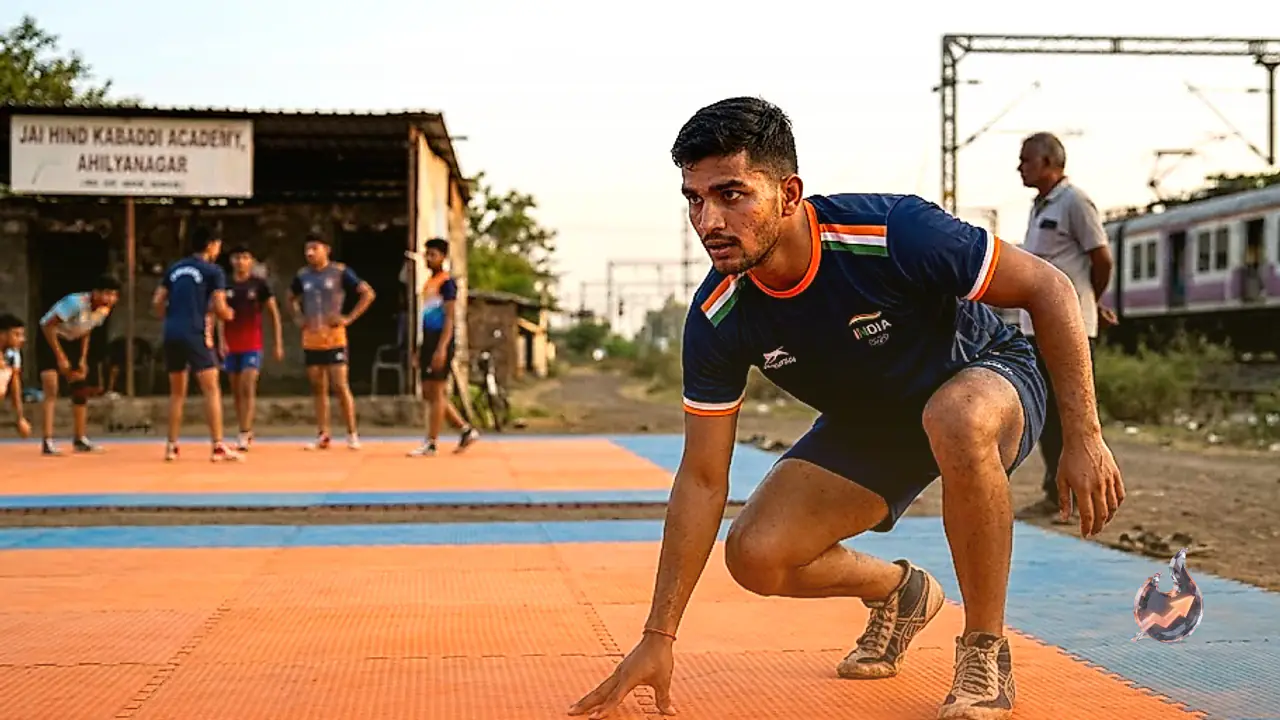














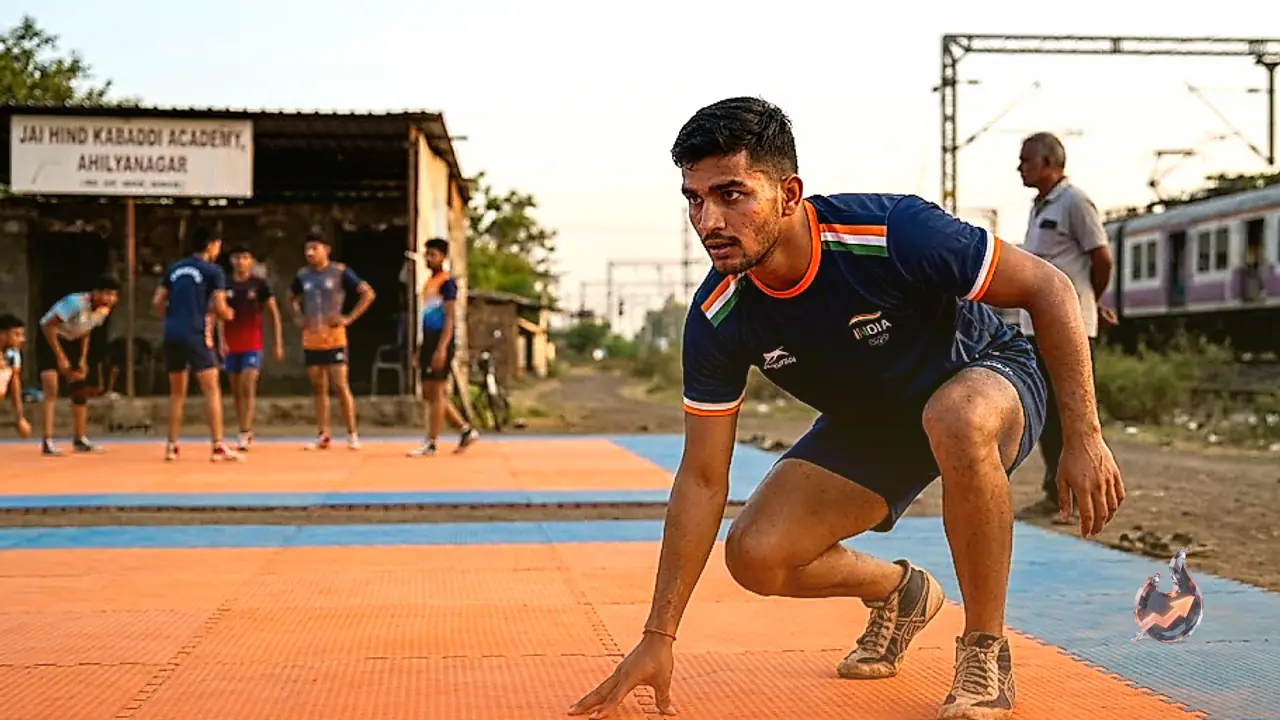

New Delhi. Stories of individuals rising from the ashes of extreme adversity to touch the pinnacle of success are rare and profound. There was a time when a young boy from Taklibhan village in Maharashtra's Ahilyanagar district used to roam near railway tracks to pick up discarded plastic bottles. Today, that same individual stands proudly wearing the Indian national jersey with a gold medal gleaming across his chest. This is not merely an athlete's personal triumph, but a fierce rebellion against the harsh lines of destiny. When the dust settled on the recent Asian Games, where both the Indian men's and women's kabaddi teams clinched the gold medals, newspapers and television channels echoed with celebrations. Amidst this golden brilliance, the oceans of sweat, tears, and immense hardships find their most inspiring icon in Aslam Inamdar.
Overcoming the Harsh Realities of Childhood Poverty
At just 26 years of age, Aslam Inamdar has secured two Asian Games gold medals, yet his early life reads like a cinematic tragedy. He lost his father at a very tender age, leaving the colossal burden of raising five children entirely on his mother's shoulders. To keep the hearth burning, his mother began doing domestic chores and washing utensils in other people's homes. Securing proper meals each day was the biggest challenge for the household, and survival itself was a daily battle. These difficult initial years shaped his resilience and taught him the value of hard work from the very beginning.
Enduring Hunger and Doing Odd Jobs
To keep the fires of his stomach burning, Inamdar undertook every imaginable odd job during his childhood. From washing dirty dishes at tea stalls and cleaning unhygienic washrooms to performing hard labor in scorching farm fields and collecting empty plastic bottles from the streets for resale, he did it all just to afford a single meal at night. Vada pav became his daily dietary staple during those trying times. Frequently, when food was provided at local tournaments, Aslam would carefully save the leftovers so he wouldn't have to suffer from hunger the next day. Every trial that poverty could inflict was a part of his formative years.
Kabaddi as a Ray of Hope and Nights on Train Floors
Amidst this deep darkness, kabaddi emerged as a beacon of hope for Inamdar. His elder brother, Wasim, was an accomplished regional kabaddi player and served as Aslam's first idol. When Wasim secured a position in the police force, the family gained some much-needed financial relief, but Aslam was already deeply consumed by his passion for the sport. By the age of 15, he had begun participating in local tournaments. In those days, having money for travel was out of the question, so Aslam traveled on trains without tickets. To evade ticket collectors and find a place to sleep, he would lie down on the floor underneath the seats of local trains. After sweating it out all day, he would earn merely 200 to 500 rupees per match, often playing simply on the condition that the organizers would feed him a proper meal.
The Pro Kabaddi League Turning Point
This grueling phase of struggle continued until the arrival of the Pro Kabaddi League, commonly known as PKL. The league brought a monumental revolution to Indian kabaddi and served as the biggest turning point in Inamdar's life. During the eighth season, the Puneri Paltan franchise offered Aslam his first official contract worth 800,000 rupees. For a boy who had spent sleepless nights chasing a 200-rupee payout, that amount felt larger than life. With this money, the very first thing he did was buy a gold necklace for his mother, honoring the woman who had spent her entire life laboring in others' homes to raise her children.
Ascending to Leadership and Capturing Glory
Once this trajectory of success began, Inamdar never looked back. His agility on the mat, aggressive raiding skills, and tactical tackling acumen established him as the absolute backbone of his team. Across 87 matches played in the PKL so far, he has left such an indelible mark in both attack and defense that he is no longer just a player, but a true leader. During the tenth season, taking over the captaincy of Puneri Paltan, he led the franchise to its maiden championship title and was crowned the Most Valuable Player of the season. Acknowledging his stellar performances, the franchise retained him for the twelfth season as well.