




















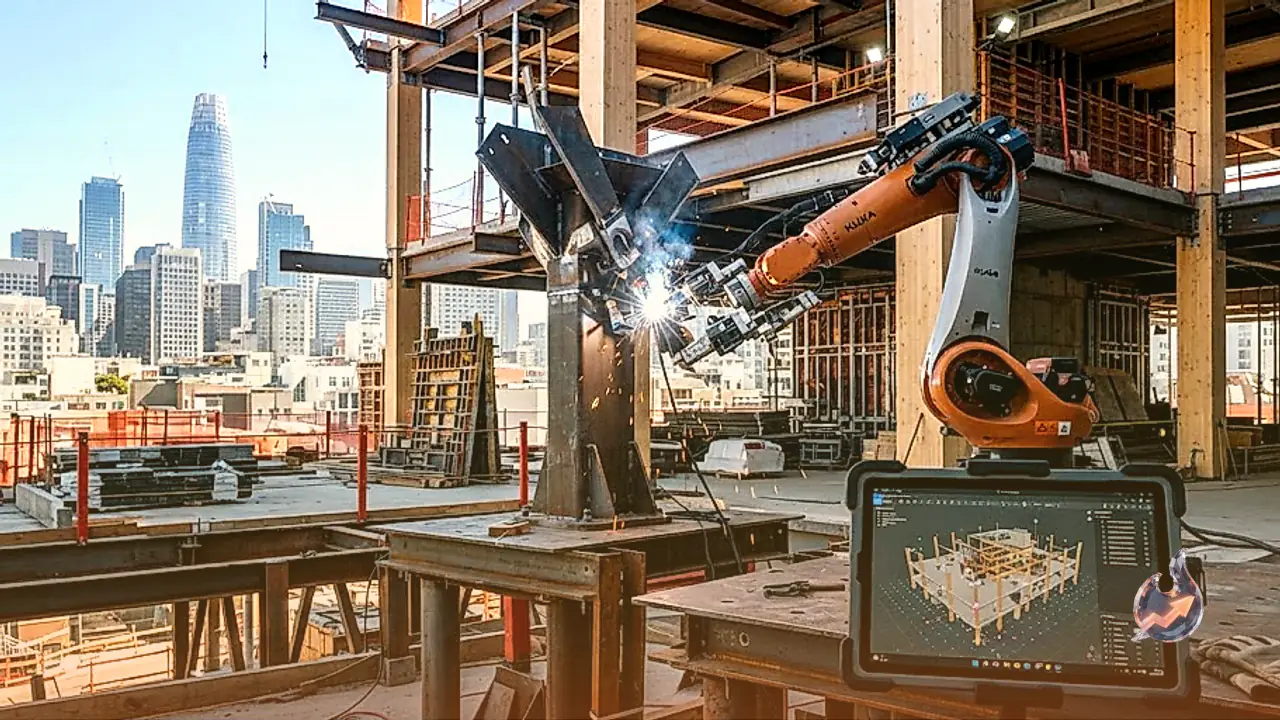

Aiming to modernize decades-old architectural software and accelerate building development, two former tech operators have unveiled an artificial intelligence platform built specifically for the physical world. Former Palantir executives Andy Elder and Arjun Mathur, who previously shared a room at Stanford while studying computer science, have launched Dream after spending roughly a decade at their previous employer. The startup has emerged with $17 million in seed financing led by venture capital firm Andreessen Horowitz, with additional participation from SV Angel, XYZ, and Zigg Capital.
Tackling Stagnant Productivity Across the Built Environment
While neither founder comes from an architectural background, their venture addresses a persistent macroeconomic bottleneck: rising construction costs have led to fewer buildings being erected in the United States today compared to several decades ago. While computational power evolved from dial-up internet to frontier artificial intelligence, the physical capacity to construct infrastructure failed to keep pace. Architects and structural engineers continue to draft every element part by part using legacy platforms such as Autodesk AutoCAD and Revit, leaving standard generative AI largely detached from everyday structural workflows.
How Structural Cognition Moves Beyond Standard Generative AI
Conventional large language models like ChatGPT can render digital imagery of buildings, but those visual outputs lack structural integrity and violate basic building codes. Dream approaches design through physical grounding and engineering rigor rather than superficial image generation. The startup trained its world model on more than 100 million square feet of real building records gathered from municipal permit archives across the United States.
Through an approach the founders term structural cognition, the software understands the precise composition of structural walls, the load-bearing limits of beams, and the exact building materials involved. Crucially, the model generates end-to-end designs that seamlessly incorporate essential internal mechanical infrastructure, including plumbing networks and heating, ventilation, and air conditioning systems.
Commercial Deployments and Industry Landscape
Developers and design professionals have already started adopting Dream to generate conceptual building layouts and calculate early cost projections. The platform is currently deployed across 10 live development projects located in Texas and California, signaling early commercial adoption among real estate operators.
Other emerging startups, such as Motif, Snaptrude, and Arcol, are also working to bring cloud and modern computational capabilities to architectural design. However, Elder and Mathur maintain that Dream is the only platform utilizing an autonomous world model capable of generating full, buildable structural designs instantly. Kimberly Tan, a partner at Andreessen Horowitz, noted that the startup has pursued an entirely distinct technical direction by developing proprietary models from the ground up rather than relying on existing generic frameworks.