






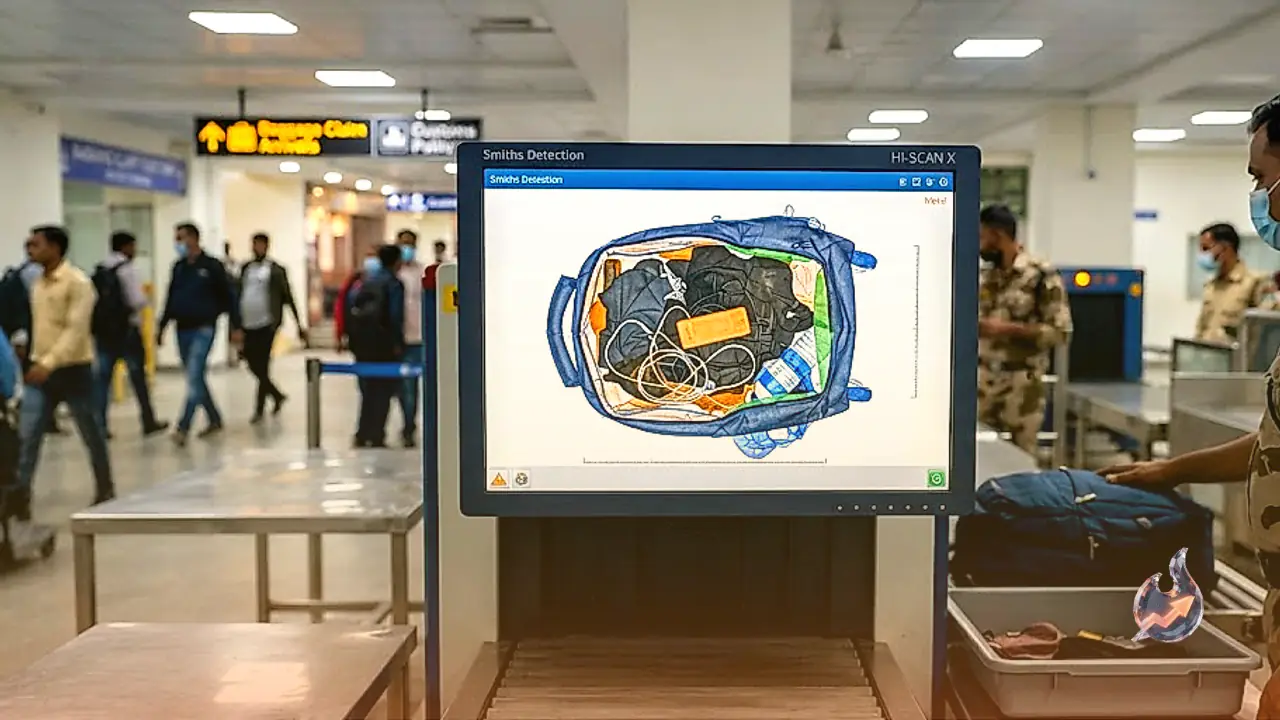














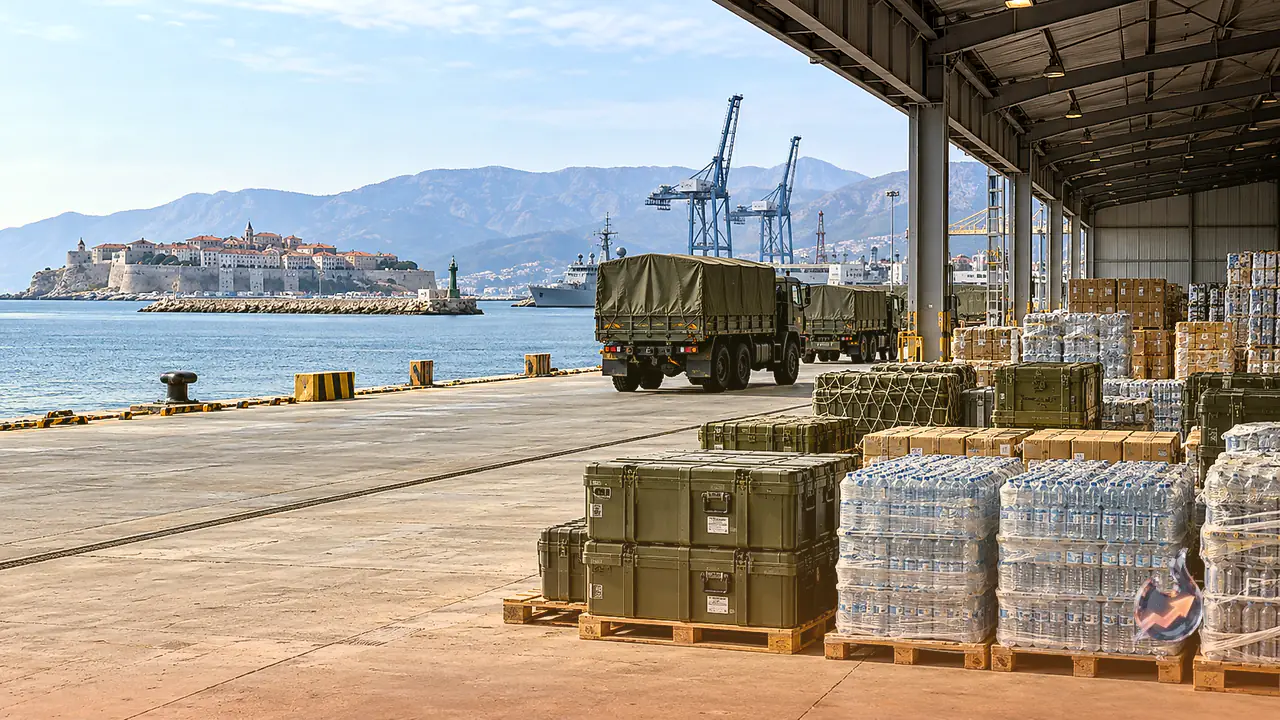

A coordinated wave of civil preparedness advisories is quietly sweeping across major Western democracies and Asian allies. Authorities in the United Kingdom, the United States, Japan, and several European Union member states have recently advised households to stockpile essential rations, potable water, independent battery reserves, and primary medical supplies. Concurrently, armed forces are overhauling their operational logistics to withstand protracted disruptions, prompting widespread public scrutiny over whether world powers are bracing for a catastrophic geopolitical breakdown.
Britain Launches the Be Ready Drive for Domestic Resilience
The British government formally inaugurated its 'Be Ready' civil initiative on 22 October, creating a centralized public portal that outlines baseline survival standards. The advisory urges every household to maintain self-sufficiency for a minimum of 72 hours, bridging the critical window before organized disaster relief teams can navigate widespread chaos. Officials pointed out that during simultaneous large-scale disasters, emergency responders cannot deploy everywhere at once, leaving individual survival contingent upon domestic stockpiles.
The recommended British emergency inventory prescribes 9 litres of bottled drinking water per person, three full days of non-perishable foodstuffs, high-output flashlights, replacement batteries, basic first-aid provisions, contingency physical cash, high-capacity power banks, hygiene products, warm blankets, physical photocopies of vital identification papers, and a battery-operated radio receiver. The reliance on terrestrial radio reflects official recognition that telecommunications networks and cellular infrastructure are exceedingly vulnerable during modern crises.
Defence Secretary Wes Streeting underscored the gravity of the underlying intelligence while addressing national defense requirements. He cautioned that targeted sabotage by hostile powers could cripple core public utilities, stating, "These threats are no longer imaginary; they are real." The British government explicitly categorized the primary dangers as armed international conflict, coordinated cyber strikes on power grids, major acts of terrorism, and disruptive climate shocks.
The Pentagon Implements Project Fortress for Military Bases
Across the Atlantic, the United States Department of Defense is systematically reorganizing its core domestic and international military installations to sustain total operational autonomy for 90 days. Under directives finalized by Defence Secretary Pete Hegseth, the Pentagon launched an infrastructure defense master plan titled 'Fortress' on 30 September. The program mandates that frontline bases must continue offensive and defensive missions even if the commercial civilian power grid and local municipal services are entirely obliterated.
Under Project Fortress, designated military garrisons are installing self-contained microgrids capable of generating localized electricity without reliance on regional public utilities. The defensive architecture guarantees continuous operation even if national fuel distribution centers and urban transformers suffer extensive physical or electronic destruction. Parallel investments are securing closed-loop water extraction facilities and hardened communications systems that function without relying on the public internet or terrestrial power cables.
The Pentagon is also building strategic warehouses packed with critical munitions, rare-earth minerals, semiconductor parts, replacement military hardware, and trauma pharmaceuticals. To eliminate vulnerable choke points in the defense industrial supply chain, military regulations now mandate dual-sourcing for all essential hardware, guaranteeing that operations continue uninterrupted if a primary factory is disrupted. On the civilian front, the federal government has scheduled a nationwide test of the Emergency Alert System across all broadcast networks and mobile carriers for 17 November.
Continental Europe and Japan Fortify Civil Defenses
In East Asia, the Japanese government has advised the public to secure between three and seven days of emergency food and water reserves. Scheduled for formal public announcement on 2 November, the directive addresses both intense seismic hazards and worsening regional military friction. Disaster Management Minister Goshi Hosono highlighted the necessity of personal reserves, urging residents to store enough provisions, sanitation products, and backup hardware to manage without immediate governmental intervention.
Simultaneously, the European Union is expanding its overarching 'Preparedness Union Strategy', which was adopted last year to ensure that European citizens can maintain basic subsistence unassisted for 72 hours during severe systemic disruptions. Strategic grain reserves in Finland have reached a level sufficient to feed the entire population for nine months, representing one of the highest levels of national food security on the continent. Sweden has expedited modern upgrades across its territorial defense networks.
Eastern European nations along NATO's eastern frontier, including Poland, Finland, Estonia, Latvia, and Lithuania, have renovated civil bomb shelters, upgraded blast fortifications, and expanded compulsory community rescue drills. In Western Europe, Ireland rolled out its 'Be Emergency Ready' campaign in August 2026. Irish authorities have urged citizens to maintain home rations, learn the immediate manual shutdown protocols for domestic gas and electricity lines, secure matches and lighters, and pack vital documents inside heavy-duty waterproof plastic pouches.
The 1,000-Day Defense Window and Expanding Battlefronts
These synchronized preparedness measures coincide with explicit official warnings regarding imminent armed conflict. On 24 October, British Defence Secretary Wes Streeting delivered a sobering assessment regarding ongoing Russian hybrid warfare against NATO allies. He emphasized that the industrial rebuilding and strategic economies of adversarial states could position them for direct military offensives by 2030, leaving Western powers with a narrow 1,000-day window to prepare and modernize their combat readiness.
General Sir Patrick Sanders, former Chief of the General Staff of the British Army, has echoed these concerns, warning that global instability now exceeds the tensions witnessed during the height of the Cold War. In July 2025, Sanders asserted that the UK possessed less than five years to prepare for a prospective direct confrontation with Moscow, calling for urgent state investments into hardened underground bunkers and robust anti-air missile shields. NATO Secretary General Mark Rutte similarly observed that Russian ambitions could extend into wider European territory, requiring member states to recondition their societies for high-intensity industrial conflict.
At the same time, Donald Trump has repeatedly asserted that the ongoing war between Russia and Ukraine risks escalating into a full-scale Third World War if left unchecked. Furthermore, Donald Trump has indicated that wide-scale military strikes could be launched against Iran following the United States midterm elections on 3 November. The Pentagon has communicated with Gulf allies via secure diplomatic and military channels to prepare for an intensive, rapid campaign targeting Iranian assets. The United States has already bolstered its regional posture across the Middle East, stationing 20 naval warships, fighter squadrons, and Patriot missile defense installations across Gulf bases.
Cyber Infiltration and the Vulnerability of Digital Networks
Compounding the risk of conventional warfare is the pervasive danger of asymmetric cyber operations targeting critical national infrastructure. Japan's Defence Minister Shinjiro Koizumi stated that the defense perimeter around the Japanese archipelago is experiencing its most perilous stress since the end of the Second World War. Koizumi identified Beijing as the primary strategic challenge, cautioning that a military conflagration akin to Ukraine could erupt across East Asia, especially given the intensifying security coordination between China and Russia.
Major intelligence bodies, including the United States National Security Agency, have issued elevated alerts regarding hybrid tactics that weaponize artificial intelligence, automated drones, and malicious network code against civilian populations. French President Emmanuel Macron explicitly highlighted an uptick in Russian hybrid maneuvers against France and wider Europe, noting documented intrusions across national airspace and critical data repositories. German and French authorities have advised corporate networks and individual citizens to reinforce their digital defenses against imminent disruptions.
Three recent real-world technological breakdowns highlight these vulnerabilities. A critical flaw detected in the widely used PHP programming language forced the emergency shutdown of 32 government portals across the United Kingdom, with parallel outages striking state servers in France, Finland, and the Netherlands. At sea, naval units from the United Kingdom, Norway, and the United States intervened during 2026 to halt a clandestine Russian naval drill in the Arctic Ocean, where specialized submersibles attempted to sever undersea fiber-optic data cables that carry intercontinental web traffic. Meanwhile, on 12 October, unidentified cyber actors compromised automated cooling systems across hundreds of French supermarkets, remotely raising freezer temperatures to 50 degrees Celsius and ruining massive quantities of perishable food.
A Fractured World Order and Unconstrained Algorithmic Warfare
Data gathered by the conflict monitoring organization ACLED indicates that full-scale war or dangerous civil conflicts are actively expanding across 10 distinct geographical regions worldwide. The organization documented an average of more than 550 violent confrontations every single day over the past year. Expanding foreign involvement by North Korea, Iran, and China in support of Russian operations in Ukraine has elevated the risk of an unintended horizontal escalation directly drawing NATO into open warfare. German Chancellor Friedrich Merz, speaking in December 2025, drew explicit comparisons between current Russian expansionism and early Nazi conquests, insisting that a Ukrainian defeat would merely invite further territorial aggression across Europe.
Simultaneously, the volatile confrontations involving Israel, Gaza, Lebanon, and Iran threaten to drag European allies into Mediterranean naval actions. Across the Indo-Pacific, Taiwan remains a critical geopolitical flashpoint. Japan's Prime Minister Sanae Takaichi has declared that Japan would not remain passive if China launched an invasion of Taiwan, an eventuality that would likely trigger joint military engagement by the United States, Australia, and regional partners. Severe internal wars are also tearing through Sudan and Myanmar, accompanied by persistent armed violence across Yemen, Somalia, Nigeria, and the Democratic Republic of the Congo.
A recent strategic assessment by the Heritage Foundation concluded that the threat posed by the contemporary Chinese-Russian alignment substantially outstrips the operational challenges posed by the Soviet Union during the Cold War. Beijing possesses industrial capacity and financial resources far beyond what the Soviet bloc ever commanded, presenting an existential test to the Western-led global order. Layered on top of these geopolitical rifts is the unregulated emergence of autonomous weapons systems and artificial intelligence. Despite stark warnings from AI developers regarding the existential risks of autonomous weapons, United Nations Secretary-General Antonio Guterres warned that the world is edging toward a perilous red line where lethal robotic platforms could target human beings without human authorization.